I have been thinking about what possible future topics I might cover – I even carry a moleskin sketchbook around with me now so when a topic strikes me – I can write it down. Actually, I am pretty sure that between the time I have the idea, to the time I can write it down, I have forgotten what it was or lost track of the concept. Considering how hard it is for me to come up with something worth reading, that and along with the fact that I don’t have that many good ideas – this is a problem and when it happens it literally devastates me.
What I can share with you is my list of potential future post topics. These are literally all in the germination phase of my brain (which means that they might never escape that black hole). Currently festering:
- Why I like residential work and why I don’t – give the popularity of “top ten” lists, this one would probably be broken down into two entries.
- My thoughts on fences – now that I have written it down, it sounds pretty dull – maybe this one won’t make an appearance after all.
- Update on the CASA Playhouse competition with a focus on my entry – I would include some sketches and 3d images.
- There are two or three projects from my office that I am planning on posting, they all have a soft contemporary feeling to them. By soft, I mean we mostly followed the maxims of modern architecture but we deviate enough so that you have a place to store all your stuff. These are projects that I don’t think would ever win any awards but our core business is built upon designing projects that work for people and how they live rather than parti diagrams of a concept in built form.
- I have been receiving a number of requests for some of the details we use – makes me a little nervous to put those out there for fear that someone might actually try and build from them. Since I couldn’t include the specifications that accompany and fill in the gaps on these details, I am hoping I can find a way to diagram them so people can still see what we did.
- When not to listen to your client.
- A list of some of the unusual lengths we go through for our clients. I have a case study on a cabana project that I think would fit the bill nicely here
That’s all I have – when those are done I’m dry and I am a little nervous about what might come next. I suppose everyone will just have to see…will I crash and burn? or will something come to me. It will probably be something in the middle.
You might even have noticed that today’s topic isn’t really a real topic either; other than being a day in my life and I didn’t have the time to even attempt something clever. I was talking with contractor this morning who reads my blog and we had a conversation that went like this:
“Where do you get your ideas for what you write about”
“I don’t know, other people’s blogs? Driving down the road, talking to my wife…..I honestly couldn’t tell you.”
“What are you going to write about tomorrow?”
“Nothing – I don’t have anything prepared yet and I don’t have the time to think it through, write it, and find some images to support a topic. I have two projects going for permit this week, the CASA charity event to coordinate, and I have a continuing education class tonight. By the time I get home, I will probably need to get drunk or visit with Michelle, not write tomorrow’s post.”
“Why don’t you tell people all that?”
“You mean write a post explaining why there’s no post? Hmmmmm…That’s actually not a bad idea. I can type it up while I am on the phone to one of the engineers I work with, they never listen to me, why should I listen to them?”
So I apologize sweet and valued readers, this turned out to be a post about why there wasn’t a post today. I will try to do a better job in the future. Even when trying to figure out what title to put on this post, the ones I rejected included:
Are you kidding me? or
I’ve got to try harder or
Jokes on you (definitely not)
I’m thinking about outsourcing this blog to India….
That’s why I went with “Enter Post Title Here??”
Feel free to chew me out in the comment section.
.
And by my favorite things, I’m going to say that these are materials and products that I would like to use on my own house (yes, I am aware that if I used them all it would look like a student project but I might try anyways).
After installation and exposure to normal weather the surface of the panel develops a gorgeous rustic finish and texture. Cor-ten contains copper, chromium, manganese, and nickel which makes this material more expensive. Cor-ten resists the corrosive effects of rain, snow, ice, fog, and other meteorological conditions by forming a coating of dark brown oxidation over the metal, which inhibits deeper penetration and negates the need for painting and costly rust-prevention maintenance over the years. Cor-ten will last longer and would be more desirable in harsh climates. Metal roofs in a galvanized, galvalume, or painted finish are normally 24GA to 29GA but with bare (untreated), cold rolled, or Cor-ten products, never use a gauge lighter than 22 GA.

Polycarbonate Paneling
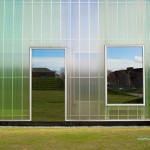
Made from polycarbonate resin and is inherently stronger than both glass and acrylic. Polycarbonate is 200 times stronger than glass, and30 times stronger than acrylic. If you specify sheets in thicknesses greater than 16mm, it meets most thermal requirements (i.e.SHGC of .25). This product is inexpensive when compared to other assemblies and I just love the ethereal qualities you can achieve. I am currently looking to use this product in a tenant finish-out project for ballroom dancing.
Walnut
Really not to much to say on this. I think walnut is beautiful and when properly sealed and finished looks as though it’s internally illuminated
CaesarStone Quartz Surface (Blizzard)
I like the way white countertops look in modern kitchens and bathrooms but I am nervous about specifying marble due to the maintenance and chemical exposure they receive (acids like lemon juice will etch marble). There are several composite countertops available on the market, CaesarStone is my favorite because the aggregate used in the resin base are small and it makes the product look more refined to me.
The Random Light by Bertjan Pot
Glass-fiber drained with resin was coiled around a big balloon. Sounds simple but it took 3 years to develop. (Sold through distributor Moooi in three sizes)
modwalls glass tile (Brio Blend Gimlet)
I’ve written about glass tiles before, this brand is my favorite for the balance they have between quality and cost – it’s a great value. The glass tiles are well made and the pitting in the glass is fairly minor. This means that when you grout the tile, the color of the grout stays off the tile allowing the color of the tile to remain front and center in your design.
Hybrid Stucco
Stucco, when done correctly, takes on a monolithic finish that is hard to achieve with any other product. We use a hybrid system in my office so it’s a true 3/4″ masonry 3-coat stucco but we set it set on top of a 1″ polystyrene insulation board. To finish it off, we apply a thermoplastic top coat finish similar to those used by Dryvit or Sto on EIFS (exterior insulation finishing system) so that the texture and finish is consistent across the surface. The insulation board helps isolate movement across the surface so fewer expansion and control joints are needed.
Standing Seam Metal Roofing
We do a lot of standing seam metal roofs in our area (Dallas, Texas). They are practical in our climate, durable, lightweight, weather-tight and you could argue that they are environmentally friendly since the roof material can be reclaimed and reused. I like the way they look and compared to other roofing products, they aesthetically fit in well with the modern style residences we design.
Ipe Wood
Also known as Brazilian walnut, ipe (pronounce ee-pay) wood is typically reddish brown, sometimes with a greenish tinge, often with lighter or darker striping. Much of what I have seen looks similar to a teak wood. Ipe wood comes in good long lengths with limited warp. Ipe wood products contains no added harmful chemicals so it can be used near water without potential contamination, although its dust can cause a number of respiratory and contact dermatitis allergic reactions in humans. Bugs don’t eat it, it doesn’t rot, and if left untreated it will weather to a beautiful iridescent silver. It can be difficult to work with, especially with hand tools.
Burnished Block from Featherlite
I feel like I’m giving away a secret with this one – burnished block. You can get these units is several sizes and all 3 5/8″ thick. The product is remarkably consistent and due to it’s size (we used it here in a 12″x24″ module, stacked bond pattern) people frequently mistake this utilitarian product for something far more luxurious. You can also get this product in a very dark grey, almost black color. Since this product isn’t seen very often, people don’t know what it is and the perception is that the the material can’t be a large brick. Oh, but it is.
There are clients I like and then there are clients I love. There are loads of reasons why but the best clients always seem to share some of the same characteristics. These reasons might seem obvious to some but in most cases, my favorite clients have every single one of these traits. Feel free to leave your own favorite qualities in the comment section.
1. Involved in the process:good architecture is the result of a back and forth process, needs versus wants. Clients that participate in the process of evaluating and setting priorities are in a better position to make a diminishing scale of values. This type of client involvement helps create ownership of the process, and ultimately the end product.
2. Understand their budget:this is not the same as knowing your budget. It’s sort of a glass half empty versus glass half full mentality – but with money. One has an empty “budget bag” that they think they can put stuff in until it’s full; the other has a bag with their budget in it and they take things out until the budget is expended. It might seem like the same thing but it’s not. The group putting stuff in the bag will continually try and jam more stuff in, well beyond when the zipper will close (just sit on it and then try…). The other, well, when you take the last thing out, that’s it, there’s nothing left. Whenever we have clients that stress quantity over quality, it’s a harbinger of things to come. It’s not the clients job to know what things cost, but when they keep increasing the square footage of the project, or continue to add program requirements without ever thinking that these things have costs associated with them, it’s shows that they aren’t thinking about the very base fact that everything has a cost associated with it.
3. Challenge the norm: the best projects are a result of clients who push the envelop, those who are not interested in what everyone else is doing but rather interested in getting something that is uniquely theirs. Again, it’s an indication of ownership, both in the process and in the result.
4. Willing to Change:these clients will listen to the advice of the experts they have hired. Just because you have lived in a house your whole life does not necessarily make you qualified to design one. Let’s take a look at the simplest of spaces – the bathroom. In a nutshell it’s a toilet, a sink, a shower, bath or some combination of the two. Used one before and you pretty much have the essence of the thing. Let interject some variables; finish materials, cabinetry, door locations (one door from a hall or single room or shared access between multiple rooms), accessories (bath towel, hand towel, toilet paper roll, etc.) do you have a warming drawer (like you might see in kitchens), is the mirror configured to not steam up, or is there a TV behind a portion of it? I could keep going on – and half of this list involves technologies that weren’t available a few years ago. We even joke with some of our clients that we get at least one “Do what I say” card that we get to play at some point, ha ha right? We always use it.
5. Don’t already have it all figured out: This one seems pretty obvious. If we have someone who comes in and tells us that they already know what they want, they just need someone to draw it up….I’m out. If this is you, don’t even bother calling me because I’m not interested.
6. Expectations change as the process evolves:This is really about enjoying the process. Part of the design process will be discovering the unexpected; which is really the best, most exciting part. Some clients get as excited as we do when there is a struggle to find a better way, to explore the possibilities of what we think we know. There is typically a “Ah-Ha!” moment when things come together and the results look so obvious and simple, you wondered how it was that you only just know figured it out. These are great moments and are always the best part of any day.
7. Flexible:This is sort of an extension of #6 but I’ll focus on something that goes wrong; because something always goes wrong during construction. There are too many moving parts with dozens of separate individuals working on a project for there not to be misunderstandings, gaps in the documentation or even omissions. A good project requires everyone working together towards a common goal, a great project requires everyone to be on the same page and collaborating. The by-product of this collaboration means that as the project is getting built, things will require the input of the individuals working and sometimes that input requires change. Clients who understand the value of collaboration have the ability to be flexible – it’s an extension of teamwork.
8. Enjoy the construction process:Instead of waiting for the project to simply be done, the clients who come out and do more than project their lives into the building. They want to understand and see what’s happening. When you see clients on the job-site, some might think, “oh no, what are they doing here…”. I think, awesome, let’s walk around and see how things are turning out. I really enjoy explaining what people see on a job site (“see that piece of wood right there? That’s a fire stop”). The construction process is another part of the process and I like clients who are as involved during the building as they were selecting appliances. In some cases, I enjoy the clients who come out to the job-site during construction a lot more.
9: Sum of the whole is greater than it’s parts:We have all heard this phrase but putting into action can be tough. The items listed #1 through #8 all contribute towards an great client and the more of those traits (to me) the better. All of these characteristics have value and I don’t have them listed in any particular order. That having been said, the benefit of these traits seem to exponentially compound on one another and more time than not, when a client exhibits a few of these traits, they tend to exhibit them all.
10: Owners with Ownership: This is sort of the tally line for the entire list. Clients that go through and invest themselves into this process validate the end result because they didn’t just order this project, they helped create this project. Being involved and knowing why a thing exists they way it does, helps support it’s justification for being that particular way. Every owner I know who has committed themselves to the experience through their involvement has turned into my greatest advocate. I believe this to be true because they choose to get involved and be a part an act of creation – but they didn’t just “place an order” for a product, they came along for the experience and the “product” just happened to be the end result.
I already wrote a post on why modern style residential projects cost more to build (here) but I thought it would be nice to look at one of my firm’s projects to see if the proof of the pudding is in the eating. Take a look at these photos and look for the little details. You will find that soffit vents align with architectural features and window mullions; window mullions line up with masonry joints, windows extend up to the ceiling and the interior ceiling and exterior soffit are in the same plane (no header sticking down to interrupt your eye moving from inside to outside).
We also spent time working out the foundation grade beam around the koi pond so that the house cantilevers out over the water. This wasn’t an easy detail and despite looking great, it actually served a purpose: the fish need a place of shelter to protect them from winged predators.
We paid attention to the soffit materials and the layout of the vents, look for how the exterior structure relates/ penetrates. There are a lot of little moving parts in this project that go a long way in making the spaces feel “right”. We adjust ceiling heights throughout the house to relate not only to the function, but the role the spaces place as points along a line of experience (sounds like architecture talk…uh-oh). Once inside the front door, the window in the entry vestibule is lowered to the floor, closing things down (and focusing your eye towards the koi pond beyond) so that as you turn to the major public spaces to either side, the windows extend from floor to ceiling, enlarging the space and extending it out into the terrace and sculpture garden. Even the act of entering and turning to the right is a considered experience – far different than if you entered to one side of the public room.
- Floor Plan
-
Our project description reads like this:
After looking for years, the owners found a densely wooded urban lot to build a home for their family of six. The challenge to the program was that he wanted an extremely modern home to feature the art collection while she wanted a warm and inviting home to entertain a large extended family. We met their goals by incorporating the earthiness of rough-back limestone and warmly toned rift-cut white oak millwork with extensive open walls of custom steel window assemblies. The large expanses of glass visually connect the interior spaces to the exterior terraces, sculpture gardens, and reflecting pools. The low slope and neutral tone of the standing seam metal roof integrates into the canopy of the surrounding trees and landscape while the deep overhangs protect the large openings in the wall from the direct rays of the summer sun. Close collaboration with the landscape architect facilitated a comprehensive and cohesive design that extends this home into its surroundings.
Hourly Fees
I received some questions about hourly fees that I didn’t address the first time around so let’s revisit hourly fees – it’s just like it sounds. There will be a hourly chart for different level positions and you are charged that rate for the time spent. My office has set up hourly rates something along these lines:
Principal – $175 Project Architect/ Associate Principal – $135 Project Manager- $95 Intern Architect II – $80 Intern Architect I/ Drafting 1 – $65The only time we use this format is when the scope of the work is unknown but anticipated to not be very comprehensive but it doesn’t always work out that way. Most people don’t like being charged hourly for fear of getting a surprise when the bill comes but this manner generally benefits people who know what they want and make quick decisions. Even when the work is charged hourly, we try and reduce concerns for the client by capping the amount or identifying financial milestones that indicate progress along the way. The good part for me is that I am guaranteed to make my profit margin although my expertise is mitigated and I am precluded from working extremely efficiently, getting the work done in a fraction of the time and exceeding the built-in profit margin of my hourly rate.
Per-Square -Foot Fees
I find this method unreliable and unreasonable. There are too many moving parts to assign a per-square-foot fee value to designing and producing documents that could be used for bidding, permitting and construction. Since I mainly work on modern style projects, the amount of coordination I go through to detail a masonry building,\; sizing openings to align with the module of the selected masonry unit, water weeps, expansion joints, brick molds on windows, etc. versus the effort to work with a monolithic material like wood siding, or better yet, stucco. The amount of drawings required to properly coordinate one versus the other would not justify a single value cost. As a result, one of two things would most likely happen; since the fee would not be enough to compensate me for my time and overhead, either the quality of the drawings would diminish to reflect the fee, or I would be forced to work at a loss (which hopefully I would figure this out and either change my fees, cut corners, or go out of business). Everybody losses with this fee structure.
Combination Fee Structures
I have an old boss of mine that loves this particular structure. Basically it’s a combination of the hourly and the per-square foot. The schematic and design development portions of the project are hourly. This gives an incentive to the client to be available, make efficient, timely, and decisive decisions. It also protects the architect because regardless of the client, you know that your going to be compensated appropriately for your time. Some clients need to see iteration after iteration of possibilities, need a lot of counseling and reassurances, endless meeting, etc. and there’s no way to know beforehand.
When you move into construction documents, after having secured sign-offs on the designs along the way, the project has a more definable scope and a fee based per-square-foot cost can be used. Any changes to the design during the construction drawings phase needs to be identified as an additional service and the fee reverts to the hourly rate schedule.
Once you are out of construction documents, the fee goes back to an hourly rate during the construction administration portion of the project. This way, the architect can be as available as the client wishes during this time period for project meetings, site visits, installation coordination’s,etc.
For me personally, I have a problem with the combination fee structure method because it rewards the incompetent architect for doing a bad job, because there is a lack of accountability. Let’s say the client gives good instructions, a clear program and a appropriate budget. If the architect doesn’t listen and has to produce multiple designs to get to where the clients has asked, they get paid their hourly rate. Continuing along (and yet another reason this is a bad system) what happens if the architect prepares a poor set of construction drawings? They will be rewarded, again at their hourly rate, for the extra on-site coordination, preparing additional construction documents ”requested” by the contractor, and for checking shop drawings for design work they didn’t resolve during the initial construction document phase. This is one of those instances where the system works with a competent, ethical architect; but fails miserably when you get something or someone else. If you were the client, how would you know ahead of time which one you were working with?
Skin in the Game
I like tell clients that everyone needs to have skin in the game, that both architect and client are accountable to one another and while we both have something to gain, we both also have something to lose.
1. I am going to treat you fairly with my fees and you’re not going to waste my time. 2. I am going to make myself available to you and you’re going to make yourself available to me. 3. You will tell me your “real” budget and I will be accountable for designing a house that meets that budget. 4. If I design a house that comes in over your budget, I will revise the drawings at my cost. 5. If I tell you that you have changed the program and are at risk for exceeding your budget, and you ignore this advice, you should expect to pay me to revise the drawings 6. If you tell most architects that your budget is $500,000, they will assume that this means your construction budget. Make sure that your budget includes monies for professional fees, landscaping and contingency 7. Make sure that you have a conversation in the beginning what scope your stated budget will cover.When everybody has something at stake in the process, and this should not be a surprise, the dialog is markedly improved; clearer goals are identified as a by-product of this process.
If you have any particular questions, please feel free to email them to me: bob@lifeofanarchitect.com. There are many ways fees can be charged, we try and make them simple for our clients but occasionally we have to “revisit” some items along the way and they are almost always associated with one of the 6 items listed above.
-
-
I have been struggling with the popularity of a post I wrote listing reasons “not” to be an architect. I am also learning that the effort I put into my writing is out of balance with the rest of my life so, if you are thinking about starting your own blog of original content, be warned - it’s a lot of work. I thought it would be interesting to share an email exchange I had with one of my new friends – Paul Anater. Paul writes the blog Kitchen and Residential Design and has helped ferry me along these first few months of writing my blog. Whenever I have a question on the zen of blogging, Paul’s my go-to guy.
-
From: Paul [mailto:saintpetepaul@gmail.com]
Sent: Tuesday, March 23, 2010 11:22 AM
To: Bob Borson
Subject: angst
Bob,
The post about the crappy mosaic you just left a comment on is my number one hit generator of all time. In the year since it first appeared, it’s been translated into at least four languages and even now generates about 20 direct hits a day. I marvel at its ability to generate traffic and buzz. It’s hardly something I want to be known for, but the people who come looking for that post usually stick around to see what else is on my blog. The value in K&RD comes from my archives, not any one particular post. The same holds true for Life of an Architect. The popularity of your top ten reasons NOT to become an architect seems to be gnawing at you. Congratulations, you’re normal. Be grateful for the attention and keep writing. People always gravitate to the negative (ask anybody in TV) and the trick is to use snark as a hook from time to time. Cynicism is like dessert. It’s nice from time to time but a steady diet of it isn’t very satisfying. You do a great job of using your wit to lure people in but it’s your intelligence that makes them stay. Chin up!
Paul
-
From: Bob Borson [mailto:bob@lifeofanarchitect.com]
Sent: Tuesday, March 23, 2010 12:02 PM
To: Paul
Subject: angst
Paul,
As always, thanks for the words of encouragement. Like all things (it seems), I start with great enthusiasm and immerse myself into learning something new…. but eventually my interests fade and I move on to a new “hobby”. I am surprised that I enjoy this as much as I do but the amount of time it takes is shocking. I don’t know how anybody actually gets any work done – between the blogs, twitter, responding to posts, and preparing and editing the photos I use, I might be spending 20 hours a week on this. The quality of my sleep has definitely diminished because I lay in bed worried that I don’t have anything to write about, or my latest effort will provide the evidence that finally proves I am an idiot. I will be exposed as a fraud and the men in heavy-rimmed glasses will come take away my architectural license. To then have one of the most throw-away posts (Top Ten Reasons to NOT be and Architect) be the main generator for the rest of my site…uughhh. Why kill yourself trying to generate original content when I could pull a top ten list out of thin air in 30 minutes or simply repost other peoples efforts?
When my wife came in from out of town last night (at 10:30pm) her third or fourth question was “What have you been doing? Your blog?”. There wasn’t a tone to this question but I still bristled at the question and got defensive. I thought I could be doing something positive with the time I spend on my blog; feeding homeless people, rescuing people from burning buildings, learn CPR, or even (gasp!) talking to my family.
I have really enjoyed writing my posts and have been amazed at the number or quality individuals I have come to know in such a short time – I don’t plan on stopping but there needs to be a balance and I question my ability to find it.
As a matter of fact, would you mind if I posted this email exchange for tomorrow’s post?
Bob
-
From: Paul [mailto:saintpetepaul@gmail.com]
Sent: Tuesday, March 23, 2010 12:16 PM
To: Bob Borson
Subject: Re: angst
No Bob, I wouldn’t mind at all. A blog can easily become a full time job if you let it. The key is that you can’t let it. The other key is to let go of your posts as soon as you hit the publish button. A blog cannot be the last word on a particular subject. I take my posts seriously but not so seriously that I think they are anything but the meanderings of some guy in Florida. Some people find me amusing, some people learn a thing or two from me and that’s really great. More than anything though, I keep my blog going because it’s fun and it opens the door to opportunities and people I could have never been exposed to otherwise.
You’re doing great with all of this and if you ask any blogger, they’ll tell you that they go through and have been through everything you’re experiencing now. Like I said before; congratulations, you’re normal. Now get back to work! Hah!
-
From: Bob Borson [mailto:bob@lifeofanarchitect.com]
Sent: Tuesday, March 23, 2010 12:23 PM
To: Paul
Subject: angst
Hah! is right – in my office, we like to say “back on your heads”.
A man dies and gets sent to hell to spend some time for his sins. Upon arrival, he is met by a demon that tells him he has a choice on where he spends this time. The demon shows the man option #1 which is a room with people chained to rocks and bursts of fire burning them repeatedly.
“Oooh – uhmm, that looks bad. What’s my other choice?”
The demon walks the man over to another room which is full of people standing knee deep in fecal matter, drinking coffee and talking to one another.
“That doesn’t look so bad. I’ll take this room.”
So the demon leaves the man there in the room of poop. The man helps himself to a cup of coffee and goes to introduce himself to the nearest group. Just as he is about to say hello, the demon in charge of this room shouts:
“Break time is over, everyone back on their heads”.
I have to get back on my head, these posts aren’t going to write themselves.
.
.
The Saint Nicholas Eastern Orthodox Church transformed a generic shop building into a place of worship and fellowship. The existing structure was oriented in opposition to the Eastern axis that typically prevails in an Orthodox Church, so a narrow addition was placed on the western side, allowing the narthex to be folded, ending at the base of the tower. The skylight tower pours red light down into the transition between the narthex and the sanctuary, giving a moment of pause before entering to worship. A narrow cross is suspended on the western side of the tower, back-lit by the morning sun to become a beacon for arriving parishioners. Once inside the sanctuary, a transom that spans the entire width of the space faces east and bathes the space in soft morning light during Sunday morning services. The exterior skin is a box rib metal panel, common in local industrial buildings, while the interior finishes are kept simple, though handled carefully. Portions of the existing building are still exposed, reminding visitors of the history of the site and the transformation the church has undergone. (descriptive text taken from the website of Marlon Blackwell Architect)
When I drove out to take a look at this project, I wasn’t exactly sure what I was going to find. When I spoke with Marlon, he gave me directions like I lived there (which I don’t), but they were good enough for me to find the place. Once I arrived, I recognized this building from the design sketches I saw when I was in his office. There was also a section of of the box ribbed metal siding they used for this project in the office and it was as interesting as promised. I was prepared to not like this building but to judge a thing without understanding it isn’t entirely fair. I have worked on a lot of projects where certain master strokes were removed from our control and as a result, aspects of the project become bittersweet.
If you go to the website for this religious group and read about their current situation – no worship building, limited budget, and a long list of needs – you can conclude that this project is a manifestation, or product, of their optimism, faith and budget. The day I went, it was cold, raining (and therefore cloudy…again) and the building was locked up but there were workers on site trying to spray down grass seed. I would have liked to really been able to understand more about the building and how the colored windows impacted the spaces inside. The design and final form shown in the pictures below all started with the existing 3 bay metal garage building. Still not sure if I like the final product but as a thing, there are parts that are well crafted and thought through. The scale of the building and the context of the materials can be rationally explained as things connected to this place and this time – I’m just not sure I understand it as a church. This may be harsh but it seems more a product of a predetermined style and budget not having experienced the inside. I would have enjoyed hearing how this project was described to the parishioner’s during the design phase because as an architect who likes boxy metal buildings, this is pretty far out there.
I have been struggling lately with a post I wrote some time ago about the top ten reasons to not be an architect and the top ten reasons to be an architect. When I wrote these, it was a response to another blog I saw where the author was really down on the profession of architecture and had prepared a list of reasons why someone should not consider architecture as a career. I thought the list was terrible and when I finished reading the list, I determined that he must not be a very good architect; if your terrible at your job, you probably don’t like it regardless of what it is. Right?
The only way I would write my own reasons for not being an architect would be after I had written one containing a list of reasons why you should be an architect – so that’s what I did. The problem since then is that these are the two most popular posts (or at least the most viewed) I have written – with the list of reasons NOT to be an architect in the lead – by a mile.
“Et tu Brute?”
Shakespeare wrote this now famous line describing the moment when Julius Caesar saw Brutus amongst the traitors who stabbed him; in my case, the role of Julius Caesar will be played by Architecture, I will be Brutus, and the first post I read that led to me writing my own list of reasons will be Cassius. If I remember my history, things did not go well for Brutus and he took his own life.
In the 23 days since I wrote the first list, it has had almost 8,000 views (that I know of). I have been contacted by several other sites asking if they could copy the list and add their own comments. A German design magazine wants to run it in their magazine. In addition, I know that it’s also been published in Italy, Portugal, and Brazil. At first I was really excited because I had just started writing my blog and these lists were generating a tremendous amount of interest in my site which lead to them being exposed to my other posts. I had no expectation that these two posts would be popular and quite honestly, I didn’t have anything clever to write about so I took the easy road and wrote these top ten lists.
Maybe the reason I feel so guilty about writing the list of reasons not to be an architect is that despite being a party to trashing the profession that I love, I am happy that people have found my blog. I told someone just a few days ago that I write my posts for other people to read and that it was important to me to get more and more people reading this blog, otherwise I should just keep a diary. I care about what I write and I want people to feel something when they read it – move them to thinking or understanding something differently. To stop writting now seems unfathomable, but maybe I am at a crossroads. Do I keep writing and try to stay relevant so people are interested and keep coming, keep writing but at my own pace and schedule (and unplug from the para-metrics that tell me if anyone is coming and what they are reading), or quit all together.
I’m not sure what I’d vote for just now, but I never thought that what people wanted from me the most was a top ten list…..I feel cheap, like veneer…
So if your reading this post, I would like for every architect (or architect in training) to list one reason in the comment section below, or email me at bob@lifeofanarchitect.com, about what you like about being in this profession. I will collect all the answers and publish them. Since I have so many readers from non-english speaking countries, I will do my best to translate your comment.
Thanks.
There are two more projects from Marlon Blackwell to look at but I might get sidetracked for awhile before I get to the second and far more controversial (it needs to stew in my pea brain for awhile…).
This project however doesn’t need much (other than better photography). This is Marlon’s own house and has been published in several periodicals (the now defunct Metropolitan Home did a nice spread about a year ago I think). He was here when I was taking these photos but I just couldn’t bring myself to take any inside the house – it felt too invasive - like I was peeking into his underwear drawer.
I asked Marlon how the neighbors responded to the house and he told me that they have an open door policy and I am pretty sure all his neighbors have been through to take a look. The house is the same scale as the other houses in the nieghborhood and the wood rainscreen that clads the house goes a long way to soften any perceive harshness of the forms. The house is a model of efficient space planning with the building being one room wide on both floors (the second rotated 90 degrees to the first). And just as the first floor spans and protects the creek bed, the second floors spans and protects the exterior patio space where the outdoor cooking area is located.
The first floor contains all the public spaces and the second all the bedrooms and a small second living space that his children have taken over with their games and school “stuff”.
I have an earlier post on my house (what will eventually be a series of posts) about a lesson in patience and how important an architect’s house is to that architect. You feel judged, your abilities put on display for everyone to see and evaluate. Marlon confirmed that this house has been a good calling card for him – how could it not? There are fantastic living spaces, two well utilized exterior patios, large windows, and a clear programmatic diagram. This house from a layout consideration is overly simple but the execution to me is sublime. The site has a creek bed running through it and was seen by others as a problem – clearly it became an asset.
- Marlon Blackwell’s Home
One of the highest compliments I can give another architect on a home they designed is that you can project the clients lifestyle into the environment created for them. Since this house was designed by it’s users, it was a safe bet that they knew how they wanted to use it. What makes this house so great to me is that I can project my lifestyle into this environment.
My time has been spent looking at buildings and context. I was interested in looking for inspiration that helped define the work of local architects who were interested in drawing on the past to help shape the future. In one of my conversations with Marlon Blackwell, I asked him how his work was received in this community; Did they care that he has an international reputation, won loads of design awards, and was the current Head of Architecture at the University of Arkansas? That this seems like an outwardly traditional community, not demonstrative, and that there are very few things that seem to intentionally draw attention to themselves. Marlon’s work, by it’s very nature, stands out. Marlon told me that he works from the traditional shapes of buildings that people already see here so they recognize that in his work, that it doesn’t look like it landed from outer space.
I’m not so sure I would have come to the same conclusion but I don’t know this area and it’s people very well. So I went out looking at older agrarian buildings to see if I could recognize some of the shapes. In some cases I could and in some cases I couldn’t (but I am no Marlon Blackwell). I did, however, find scale and material similarities, simple forms, spaces and volumes that were dictated by programming and a combination of the previously mentioned items.
I am going to need some more time to review what I have seen and take some time to do some reading. I did find most of the work inspiring. You can see the attention to scale Marlon puts into his projects, the palette of materials, his critical study of light – these things are obvious to anyone who stops and looks. The study of the forms, the positives and negatives, masses relocated, rotated and slipped into new positions – that will take more time (and sleep).
I would like to thank Marlon for taking time out of his busy schedule to accommodate me and my questions – he gave me more time than I expected. He set up a PowerPoint presentation for me (several actually). At one time, he took a phone call while I finished watching the slide show; he was talking to a client who was trying to decide who to hire, Marlon’s office or another firm. Marlon’s design inspired the client but the other firm addressed the specific functions of the programming. What to do? When given that choice, I choose inspiration. Can you imagine the different conversations the client would have between the two architects? Your design is really inspiring, can you make it more practical? versus Your design is really practical, can you make it more inspiring? Inspiration is important to what we do and I think the client will come around.
If you were to ever meet Marlon you would like him, it’s really hard not to….Here are some photos of Marlon’s work and some local context. I will try and isolate some specific projects later. Right now I’m tired and don’t have the brainpower to do this (and this post is really rambling).
This is the Srygley office building by Marlon Blackwell (2003-04) in Johnson, Arkansas. If I hadn’t passed a sign that read ‘City of Johnson’, I would have still thought I was in Fayetteville (albeit on the rural outskirts).
This 4,000 square foot office building is tucked back in an office park and is demonstratively unique compared to the other buildings in the development (most of which look more like tract housing than office buildings). The front facade of the building does not face the street but that is far from the the only thing that makes this building different than most commercial buildings. The front entry way is easy to find but not so easy to see – Marlon calls this a “slipped entry”. At the knuckle where the masonry base rotates off from the metal clad two-story, the fissure that is created is where visitors enter the building and are met by the most acrobatic dog I have ever seen in my life (white dog seen at doorway above). I swear that this knee-high tall dog went from standing by the door, to being 6′ off the floor about 25 times in a row. The whole time I was thinking “how do I change the f***ing setting on this camera to catch that dog in mid-air! I am seriously thinking about going back tomorrow just for that picture…
You enter into a double height lobby and to your right (in the masonry portion) is a collection of offices, a large workspace, and as seen through the large glass panes above, what was originally programmed as a telemarketing room but is now apparantly the 1990 census paperwork. To the left of the lobby is the service core (bathrooms, closet and reception), an office, and exercise room – both of which empty out onto a cantilevered concrete deck the extends out over the receeding ground plan putting your view intot the trees. On thee second level there is for all extents, an apartment that contains a kitchen, bathroom, a general purpose room (bedroom) and a large space created for the purpose of smoking cigars, drinking wine and generally enjoying yourself. There is another exterior patio off this large second level room that would put you right at the tops of the trees – there is a Nana door system in place so the entire glass wall separating the inside from outside can slide out of the way (probably a good thing considering the room was purposed for smoking cigars).
I spent a majority of my time on the outside of the building but one of the things that I really appreciated, is that this building didn’t seem precious, intrinsic-most definetly, but not revered in a way you put something precious in a glass case for protection (like a Babe Ruth baseball card). Several of the rooms had evidence of use, even mis-use . Things were stacked up everywhere and placed in front of windows, along walls – literally everywhere. When touring the cigar shop earlier, I learned from the shop owner Angel that this owner liked to hold onto things….that’s okay. I prefer buildings that look like their occupants use them and that the buildings evolve and adapt beyond the original programming.
These are incredibly self-indulgent photographs but I have to get better at using this camera sooner…I am wishing that I took some pictures of the development around the building to show you. Lesson learned.

I got up early this morning so that I could get things going only t o see that it was gray and gloomy outside – bummer. Trying to practice with my new camera and overcast isn’t going to give me very many options (at least not at my skill level). The haze burned off around 2:00pm but I had already hit my first three destinations so let me apologize now for the photos.
The first place I went was the Wedington Liquor Store (insert easy joke of your choice here). Actually it was to see a project Marlon Blackwell had completed recently in 2009. This was an unusual project because from the outside it looked like any other beverage center in anywhere strip mall, but on the inside, the owners decided to let Marlon have some fun and divide the space up with this entry piece that essentially partitioned off the store into two sides – wine one on and beer/ liquor on the other. The fact that the owners allowed this entry feature to be fabricated is telling to either their personality or Marlon’s salesmanship abilities in convincing them they needed this feature. Since I am not going to see Marlon until Wednesday, I suppose the truth will have to wait…..or will it?
Next door to this store was a tobacco and cigar store that Marlon did and by chance, it is owned by the same people who own the liquor store. So I go over and once again, introduce myself, tell them I am an architect and that I came to to look at their project and how great it is, etc. The woman I am speaking to is super nice and she introduces herself as Angel Srygley, the owner. We are talking for a few minutes and she asks me if I had been to 1845 Shelby lane? No, I don’t know where that is but that I was planning on going to the Srygley office building next…….what?! Yes, 2+2 is easy for some people but I apparently I need a little more time. It dawns on me that the owners name is the same as the building I am about to go visit and she confirms that yes indeed, that office is also theirs and that it is on Shelby lane. Nice.
Turns out Marlon has done at least three projects for the Srygley’s and that they were the three I was going to be looking at today. So the anwser to our question re: is Marlon a good salesman or do these folks have an interest in design and architecture that goes beyond functional problem solving? – the anwser is yes to both.
Tomorrow I will post some pictures and we’ll take a look at the Srygley Office Building. I also made a trip through the University of Arkansas School of Architecture, spent a few minutes with Dean Jeff Shannon and learned that there are big things planned.
Thanks for reading – Bob
Surprise! – I wasn’t planning on being in Arkansas but here I am. I have some unexpected business to take care of but luckily for me, I have a sister who lives in Fayetteville I so I get to spend time with her and her family (4 kids!). My business will only tie me up for the afternoon on Tuesday so I will be spending time looking around and exploring some of the local architecture (I hope they have an old brew house…).
Another exciting benefit to this trip is I will get to spend some time with award winning architect Marlon Blackwell on Wednesday. I originally met Marlon for the first time some 9 or 10 years ago when he came through Dallas and visited with a college friend of his – and my employer at time – Michael Malone. Marlon spent the day with us and we drove him around and showed him some of the projects we were currently working on. I gave Michael a call this last Sunday to see if he would do me the huge courtesy of calling Marlon to see if he had time for me to visit. I remember Marlon being generous and easy-going and Michael assures me that he is still the same - I am really looking forward to the visit. I will post photos and any interesting bits from conversations later in the week.
If you are not familiar with Marlon Blackwell’s work, you should take some time and get familiar. You can view several of his award winning projects directly from his website here. He is also widely published and has a monograph out on his work: ‘An Architecture of the Ozarks: The work of Marlon Blackwell‘. A quote from to opening passage from the book:
“I live, practice, teach, and build in northwest Arkansas, in the foothills of the Ozark Mountains. It’s a place considered to be in the middle of nowhere, yet ironically close to everywhere. It is an environment of real natural beauty and, simultaneously, one of real constructed ugliness. Abandonment, exploitation, erasure and nostalgia are all aspects of this place and are conditions as authentic as its natural beauty and local form. This land of disparate conditions in not just a setting for my work — it is part of the work. By choosing to live and work here — to call it home — I’ve been able to get beyond the surface of things, to turn over the rock and discover the complex and rich underbelly of my place — its visceral presences and expressive character — that so informs and sustains my efforts. I am working from the conviction that architecture is larger than the subject of architecture.” – Marlon Blackwell
My good friend Michael is no slouch either and has recently written a book based on his lecture, “So you wanna do houses?” – one of the AIA conventions most popular. The book “The Architect’s Guide to Residential Design“ is published by McGraw Hll and while originally geared towards architects looking to break into the residential market, this is a hands-on working manual that is proving to be a valuable resource to architects and owners alike who are looking to gain a better understanding of the intricacies of various methodologies involved in the process of creating a residence. There are several real-world case studies used in the book to illustrate typical residential design issues. This is a fantastic book and should be on the desk of every architect who practices in the residential market.
So, this should be an exciting week as I will also get to practice with my new digital camera (Nikon D90). Hopefully my learning curve will be swift and I will be able to get some great photos from my trip and of Marlon’s work.
I would be happy if glass blocks were never used again. I have always hated them, everywhere, every time, every circumstance, forever and ever in perpetuity.
Person I don’t know: “Howdy, sure is nice weather we’re having ain’t it?”
Me: “Glass blocks are terrible and should never be used again”
I blame architect Pierre Charreau and Maison de Verre by for starting this fascination with glass block. Maison de Verre (House of Glass) was built in 1932 and was constructed in the early modern style. (I wrote a post of the working man’s rules of modernism here). Maison de Verre stressed honesty of materials, adoption of the machine aesthetic, express the structure of the building, and rejection of ornamentation. This is actually a really great house and a case study of early modernism. This project warrants attention now for many reasons, most notably could be that it is a urban adaptive re-use and renovation of an existing building. The patron owner had wanted to tear the entire building down but the tenant on the top floor refused to sell so Maison de Verre had to be built underneath the top floor.
This is a great project and if glass blocks had never been used again, I would probably still like them. The French invented glass blocks in the early 1900′s and sometime around the 1930′s developments in machine production made a project like Maison de Verre possible. Maybe if you’re French you know how to design with them, otherwise I challenge anyone to show me a project where the use of glass blocks actually improved the architecture where no other building material could have worked with far better results.
So why would someone want to use glass block? It is typically used for creating some sort of visual screen (like glaucoma) between spaces to provide privacy while allowing light to pass through. That description sounds like a window to me, so let’s look at some visual examples of the variety of uses for glass block.
Them: “If only we had a glass block wall here then this space would be great!”
Me: “That chair should have been the bigger priority.”
Why did the family pictures on the wall go away and why did someone think there needed to be a wall here? Do you suppose the person who routinely sat in the chair was worried about being attacked from the rear?
I am going to assume that these are both toilets….unless the designer thought it would be a good idea to have the owner use the toilet, waddle like a duck, sorta hunched down with your pants around your ankles, presumably through the shower space, over to the bidet. There are other clues here that bring the owners taste into question; fuzzy toilet covers, black and white motif, surface mounted track lighting from aisle 12, the subtle ceiling coffers above each toilet (is that a basket of fruit on the right?). I could write an entire piece about this one photo. This could be a bathroom from the movie Scarface.
Aahh, technology has been introduced to update the look of glass block. Hot pink fiber optics always make the right design statement but when combined with the sophistication of glass blocks – unstoppable!
You knew it was just a matter of time before the curved glass block wall made it’s appearance; and just like the wildebeest roaming the serengeti, it’s numbers are in the millions.
This is the very definition of velvet rope design. Have something that doesn’t quite work out? (like a hallway you don’t want people going down that you put in a place where everyone wants to go down – just solve that pesky problem with a velvet rope). The space might not have been very pleasant with half the ceiling over your head is sloping down onto your head so some glass blocks, laid out in a soothing geometric pattern, will let in oodles of natural light and make everything mo’ better. Notice the conflict of angles between the sloping ceiling and the stair-stepping glass blocks. All that is missing from this picture is a dusty fabric plant sitting in a plastic pot. And some ant bait back in that corner.
Have I made my point? Glass bocks should never, ever be used again….unless you’re French.