
It’s one thing to be busy and another to be productive – and most of us are far better at the first than the second. The reality is that architects live in a world of deadlines, meetings, and endless to-do lists, but somehow there’s always time to check Instagram, rearrange your desktop icons, or spend twenty minutes deciding which playlist will help you focus before actually doing the work. Procrastination has a way of disguising itself as “just five more minutes” until suddenly tomorrow is looking a lot worse than today. This week, Andrew and I are taking a closer look at procrastination – why it happens, how it disrupts even the best-laid plans, and what you can actually do to keep it from derailing your work. Welcome to Episode 185: Procrastination: Today’s Problems Tomorrow.
[Note: If you are reading this via email, click here to access the on-site audio player] Podcast: Embed Subscribe: Apple Podcasts | Spotify | Android | iHeartRadio | TuneIn

The Struggle is Real jump to 4:09
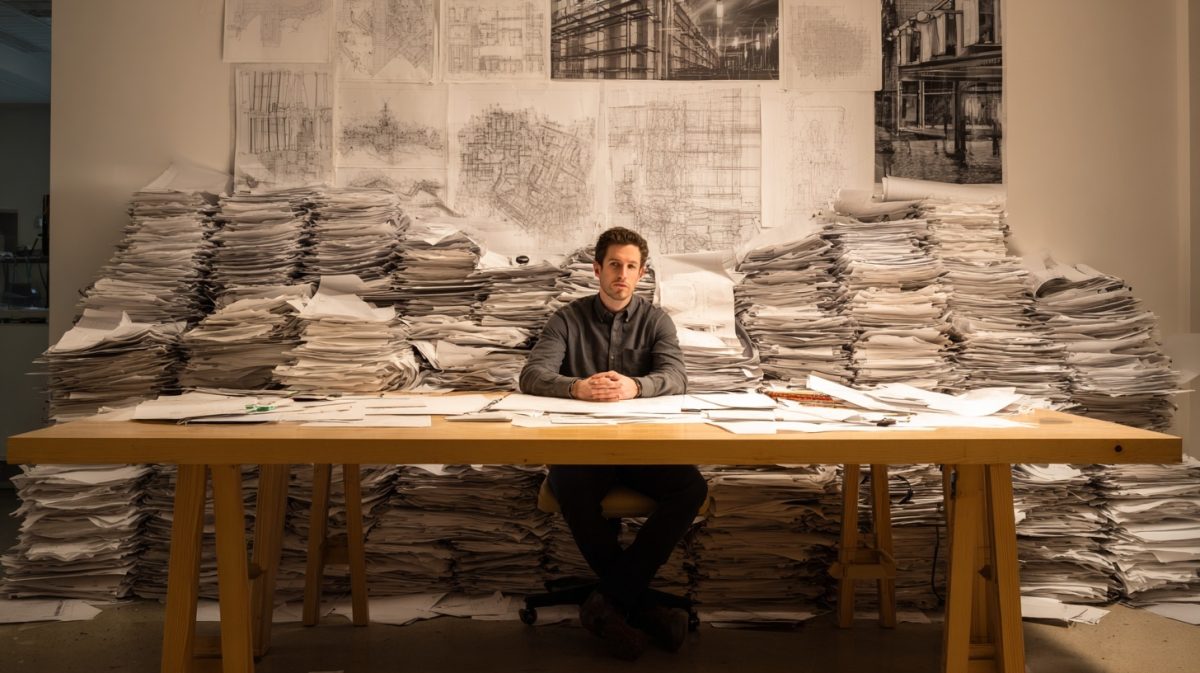
Procrastination is not about a lack of discipline or effort, it is more like a default response that shows up once the to-do list starts outpacing the hours in the day. Think of it as that urge to tidy up your inbox, check social media one more time, or find anything else to do besides the one task that really matters. It is less about bad intent and more about a short-term survival instinct. I would not describe myself as someone who avoids work, but I can admit there are times when I put things off until there is no other choice, and I suspect that puts me in the same company as most people reading this.
There is research that connects personality traits with procrastination, and some of it feels uncomfortably familiar when applied to architects. People who score high in conscientiousness usually do well in professional settings, but that same trait often brings with it a strong tendency toward perfectionism. When you are wired to want things done at a very high level, it can be easy to delay getting started until you believe conditions are “just right.” The irony is that the higher the standard, the harder it becomes to begin, and procrastination finds a perfect opening. Other personality studies using Myers-Briggs categories found that INTP (Introversion, Intuition, Thinking, Perception) types were among the highest procrastinators. Those individuals tend to be analytical, independent, and comfortable living in their heads, which can be useful qualities for architects, but those same strengths can also create a pattern of putting things off. When you are wired to keep analyzing and refining your ideas, starting the work can feel less urgent than thinking about it just a little longer.
There is another angle to consider, which is that procrastination can actually act as a coping mechanism. Psychologists describe it as a form of avoidance, but not always in a destructive sense. Putting something off can create short-term relief, and that breathing space can sometimes be what allows a person to function in the moment. The problem is that the stress does not go away, it simply accumulates and grows heavier with time. For some people, that mounting pressure even becomes the fuel they rely on to finally act, which is why procrastination is not only common but oddly effective for those who claim they “work best under pressure.”
Architects are Busy jump to 16:03
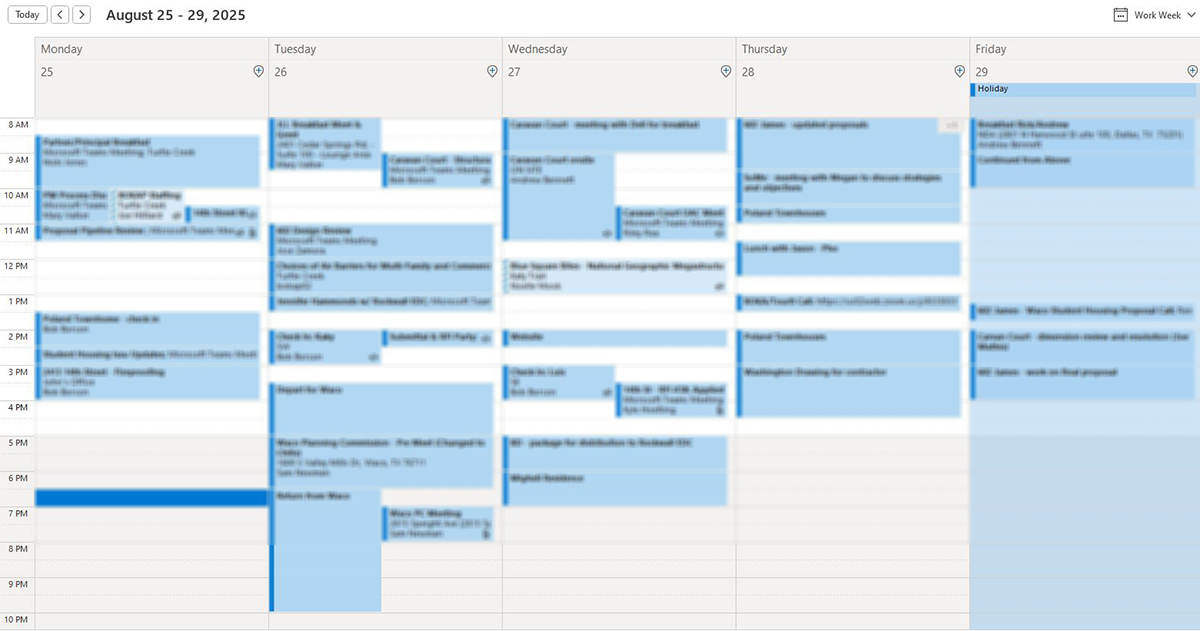
Procrastination is not always about laziness, and more often than not it shows up as the result of overload. Nobody in this profession plans to avoid their responsibilities, but when the day fills up with meetings, deadlines, and emails, something is going to slip. That delay might look small in the moment, like moving one task to tomorrow’s list, but it still qualifies as procrastination. It is not intentional avoidance, it is triage, and triage always comes with consequences. Architects are especially vulnerable to this because so much of our time is spent in coordination mode, and what little space is left on an already congested calendar is rarely left alone. Any open gaps are quickly filled by others, often with another conversation about the work rather than time to actually do the work, and the result is that the very moments that could have helped move things forward disappear before they can make a difference.
The real trap is that this kind of procrastination often feels productive. Answering emails, cleaning up a spreadsheet or proposal, or working on staffing assignments might feel like progress, but in reality these tasks are just distractions from the harder thing that needs attention. Hours can pass in this cycle and the needle never moves, yet it feels like work has been accomplished. The cost of those small delays is rarely contained to a single person’s to-do list, because architecture is collaborative and every missed step sends ripples through the team. An internal delay means consultants receive drawings later, coordination gets compressed, and suddenly the client’s submission deadline has become a sprint. What seemed like a minor shuffle on Monday can balloon into a project-wide scramble by Friday, and the result is that procrastination rarely stays personal, in this profession it multiplies.
Add in a podcast and helping friends out with their home renovations and you can quickly feel like you are capable of doing 100 things, but are currently under-performing on 95 of them.
Tips to Avoid Procrastination jump to 29:27
Break Big Tasks into Smaller Ones jump to 30:00
Procrastination thrives when the mountain looks too high to climb, so the trick is to stop staring at the peak. Take the 200-page spec you’ve been ignoring and just outline the headers. Draw one wall section instead of the entire building envelope. The smaller the step, the harder it is to rationalize avoiding it — and once you’re in motion, momentum does the rest. Architects know better than anyone that a building is just a lot of little details stitched together, so treat your tasks the same way.
Set Deadlines Before the Deadline jump to 32:44
If the submission is due Friday, convince yourself it’s really due Wednesday. This isn’t lying to yourself, it’s self-preservation. Architecture deadlines rarely move in your favor, and waiting until the eleventh hour is a guaranteed way to spend your Thursday night ordering bad pizza and hating your life. By setting mini-deadlines earlier in the process, you create a buffer for the inevitable “oh, we forgot about that” moment.
Eliminate the Easy Distractions jump to 35:28
Most of us don’t procrastinate by taking a nap – we procrastinate by doing things that feel like work. Checking emails, reorganizing CAD layers, or hunting down the “perfect” precedent photo is just a form of procrastination. To combat it, shut down the browser tabs, turn off email notifications, and admit that scrolling LinkedIn isn’t research. Architects are good at justifying busywork, but being busy and being productive are not the same thing.
We covered a lot of ground in Ep 178: Under Pressure, where Andrew and I unpacked how stress impacts both our process and our priorities. One of the things that came up again and again was how distractions multiply when deadlines get tight. Every email suddenly feels urgent, every notification pulls you off course, and before long you’ve lost an hour to things that don’t matter. Managing those distractions is less about discipline and more about survival when the pressure is on.
Use Time Blocks Instead of “Free Time”
Free time isn’t free – it’s where procrastination sets up camp. Instead of telling yourself, “I’ll work on this after lunch,” carve out a specific window: “1:30 to 3:00 is wall section time.” Time blocking creates structure, and structure is what architects live on. Treat your own calendar like a construction schedule: nobody pours concrete with “sometime Thursday” as the milestone.
Start Ugly, Fix Later jump to 39:09
Perfectionism is procrastination in a tuxedo. The sooner you admit your first draft will be a little ugly, the sooner you’ll get it out of your head and onto paper. Architects are notorious for obsessing over line weights before the design even makes sense. Resist that urge. Start with the messy version, then clean it up later – that’s why trace paper and revisions exist.
If you’ve been around here long enough, you might remember my post on 10 Mistakes Architecture Students Should Avoid, where I admitted that architects are practically trained to procrastinate. That early conditioning often comes from the pursuit of perfection – the idea that you shouldn’t show your work until it’s flawless. But the truth is, progress comes from putting something down and then improving it. Waiting for the “perfect” first draft is just procrastination in a bow tie.
(for those of you that are interested in seeing the stone drawing I mentioned where I procrastinated by adding the individual stone pieces on an outdoor shower, you can find it here)

Prioritize the Hard Thing First jump to 42:08
We’ve all got one task that looms larger than the rest. Get it out of the way before the day gets away from you. Knock out that painful code review in the morning instead of circling it all day like a nervous cat. The reward is twofold: you get a boost from having done the hardest thing, and suddenly everything else on your list feels easier by comparison. Architects are professional plate-spinners, so it’s critical to keep the heaviest one from crashing first.
Set Public Commitments jump to 43:09
Accountability works wonders when procrastination is whispering in your ear. If you promise your project manager you’ll have the drawings on their desk tomorrow morning, you’ve just raised the stakes. Nobody likes walking into a meeting empty-handed, and architects are allergic to public embarrassment. Use it to your advantage: set commitments that force your hand. Future-you will complain, but present-you will deliver.
Use Tools to Track Progress (Not Just Tasks) jump to 44:28
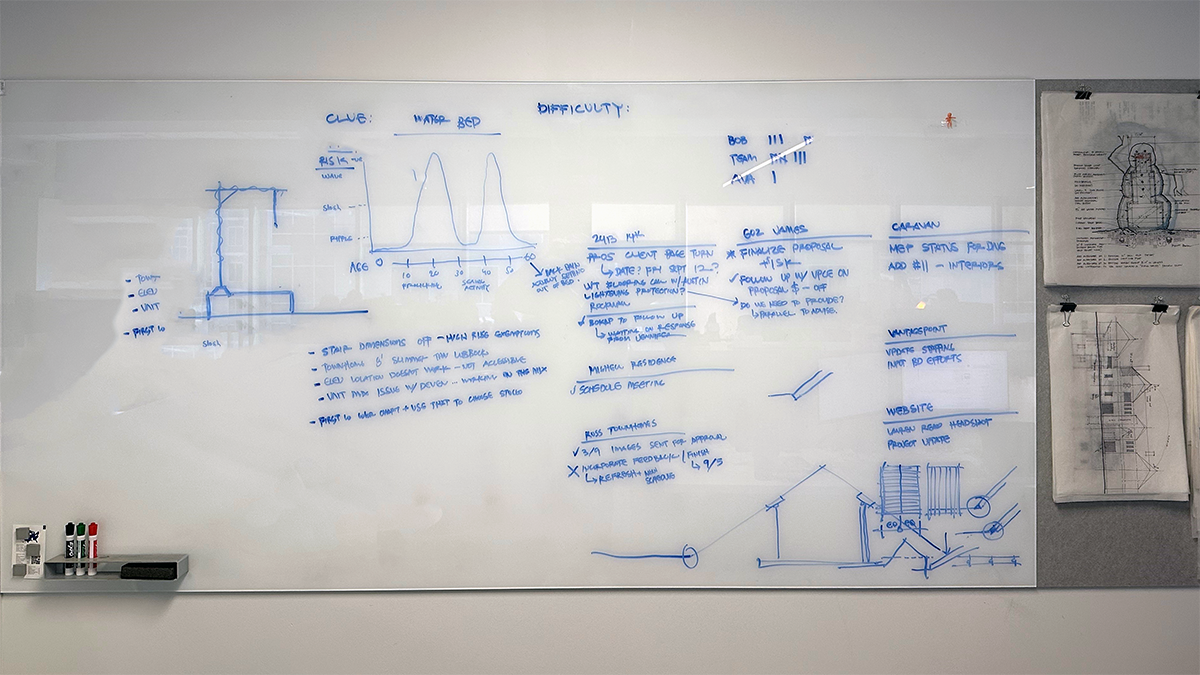
To-do lists are great, but tracking what you’ve finished is even better. There’s a reason architects cover their walls with sketches and printouts – seeing progress keeps motivation alive. Use digital tools or even a simple checklist to mark off completed items. The act of crossing something out isn’t just satisfying; it’s proof you’re moving forward. And no, reorganizing your desk doesn’t get to go on the list.
Reward Yourself for Finishing jump to 46:51
You’re not a machine, and sometimes you need a carrot at the end of the stick. Finish the redlines, then grab that coffee you’ve been eyeing. Wrap up the renderings, then step outside for a ten-minute walk. Small rewards turn completion into a habit instead of a grind. Architects love milestones – topping out ceremonies, ribbon cuttings, champagne toasts — so why not give yourself a mini version every time you beat procrastination? (but not the champagne toast every time … that seems problematic)
Stop Waiting for “The Right Time” jump to 48:39
There is no right time – there’s just right now. The perfect block of uninterrupted hours you’re waiting for doesn’t exist, and if it does, something else will fill it. Start where you are with the time you’ve got. Architects can dream about the ideal project schedule all day long, but in reality, you move dirt when the trucks show up. The sooner you start, the sooner you finish, and tomorrow’s problem stays where it belongs.
Would You Rather jump to 52:19

This is just ridiculous ,,,
Would you rather have circus music at a barely audible level start playing every time you enter a room, or always smell faintly of wet dog?
The rules associated with this question can make or break your answer … when we say “room” what exactly are we talking about. There is a scenario here that essentially means that this circus music will play almost endlessly, and anytime “endlessly” enters the chat, it means madness isn’t far behind.
Ep 185: Procrastination – Today’s Problem Tomorrow
Procrastination isn’t a character flaw, it’s a habit – one that architects are especially good at, since we often confuse “thinking about it” with “doing it.” Sometimes procrastination shows up because we’re overloaded, sometimes because we’re chasing perfection, and sometimes because scrolling through emails feels safer than tackling the work that really matters. Whatever the reason, the cost is predictable: today’s delay grows into tomorrow’s bigger problem. In the end, the question is simple: will tomorrow’s version of you be relieved or irritated? The choice belongs to the present you, and the work will wait only so long before it comes knocking.
Cheers,

“Special thanks to our sponsor Construction Specialties, maker of architectural building products designed to master the movement of buildings, people, and natural elements. Construction Specialties has been creating inspired solutions for a more “intelligently built” environment since 1948. Visit Mastering Movement dot net to learn more.”