
Every rule was made to be broken, except in architecture, where even the act of breaking rules seems to come with its own set of rules. Modernism promised liberation from the past, but it quickly wrote its own commandments into the story—flat roofs, open plans, white walls, and exposed structure became the expected vocabulary. A movement that arrived as rebellion soon carried the weight of convention, and those conventions still shape how we design and judge buildings today. This week, Andrew and I are taking a closer look at the commandments of Modernism—where they came from, why they matter, and what they mean for the way we practice now. Welcome to Episode 186: The Rules of Modernism.
[Note: If you are reading this via email, click here to access the on-site audio player] Podcast: Embed Subscribe: Apple Podcasts | Spotify | Android | iHeartRadio | TuneIn
If you are interested in seeing just a few of the houses I mentioned on the podcast, you can see them listed on the Realtor.com (here and here are just a few of them)
The Roots of Modernism jump to 6:30
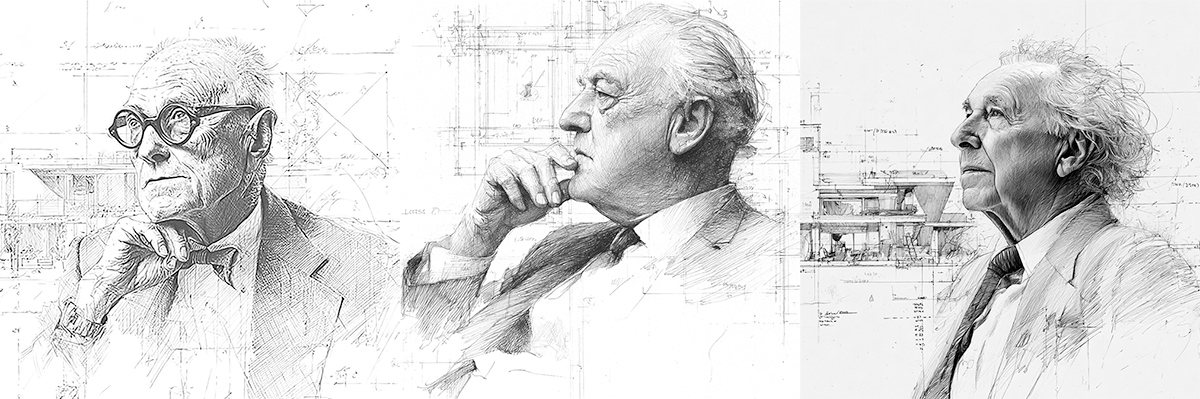
Modern architecture did not emerge in a vacuum. It was a response to seismic shifts in society, technology, and culture that took place in the late nineteenth and early twentieth centuries. Industrialization had transformed the way people lived, cities were expanding at unprecedented rates, and new materials like steel, reinforced concrete, and large sheets of plate glass were suddenly available to architects. These inventions were not simply practical tools, they were symbols of a new age. Architects began to ask why they should keep designing buildings that looked like medieval castles or classical temples when the world around them had become faster, lighter, and more efficient. The very idea of progress seemed incompatible with copying the past, and so Modernism positioned itself as the architecture of a new century – an architecture that would represent industry, rationality, and optimism for the future.
This rejection of the past was more than an aesthetic preference, it was a manifesto. Ornament was not just unnecessary, it was cast as dishonest and wasteful. Historical references were treated as evidence of cultural stagnation. In their place, Modernists put forward ideas of functional clarity, open planning, and structural honesty. The promise was bold: architecture would no longer serve as a backdrop for tradition, it would become a tool for shaping a better society. Housing would be healthier, cities would be more efficient, and design would finally align with the realities of modern life. It was not only about how buildings looked, but about how they could transform the way people lived … and that is why the roots of Modernism matter to this conversation. The movement began as a radical break from the architectural traditions that came before it, yet it also established a new set of values that quickly hardened into conventions of their own. Before we can explore the “rules” of Modern design, we need to understand the cultural and historical conditions that gave rise to them. Only then can we appreciate the irony that a movement born from revolution became one of the most codified design languages of the twentieth century.
By the time Modernism had established itself internationally, the movement that began as rebellion had already created its own set of unwritten rules. Architects may not have published them in a single manifesto, but they were understood all the same. You could look at a building and know whether it was ‘Modern’ or not, based on a handful of essential qualities. These rules were never carved into stone, yet they became the code that defined the movement for decades. To understand Modern design, and to really grasp how it operates, we need to lay out those unspoken commandments – the ideas that quietly dictate what belongs inside the Modernist tradition and what falls outside of it.
The Ten Commandments of Modernism jump to 13:42

Modernism never published a rulebook, but anyone who studied it – or even just walked through a few of its buildings – could tell that certain expectations were always in play. These weren’t written down in manifestos or carved into stone tablets, yet every architect seemed to know them. They became the quiet commandments of Modern design, the guidelines that told you when a building belonged to the movement and when it strayed too far. What I want to do is call them out, one by one, and see how they’ve shaped our understanding of Modern architecture.
- Thou Shalt Embrace Function
When people talk about Modern architecture, the first thing they always bring up is ‘form follows function.’ That phrase is almost a commandment in itself. The idea is that buildings should be driven by purpose, by use, not by ornament or whim. On paper it sounds simple, but in practice it gets tricky. What happens when function alone doesn’t make a building beautiful, or when the function is flexible? The irony is that many of the architects who pushed this commandment the hardest were also the ones who added their own stylistic flourishes. Corbusier gave us pilotis and roof gardens, and Mies obsessed over proportions in ways that went far beyond pure utility. So yes, function is at the heart of it, but we also know that the story is more complicated. This is where Modernism becomes less about a single rule and more about a shared belief system.
- Thou Shalt Honor Simplicity
Simplicity is the soul of Modern architecture. Clean lines, restrained geometry, uncluttered spaces. But don’t mistake simplicity for easy. The cleaner a design is, the more difficult it becomes to execute. When there’s nowhere to hide, every joint, every alignment, every proportion has to be perfect. That is why Modernism often feels more expensive, not less. A perfectly simple box can take as much effort as a Gothic cathedral, just in a different way. The lesson is that simplicity is not about doing less, it is about doing things with greater discipline.
- Thou Shalt Reject Ornament
This is the commandment everyone remembers. Modernism declared war on ornament. For centuries, buildings had been covered in carved details, cornices, moldings, scrollwork, all of it. Modern architects came along and said, ‘Nope, none of that. Strip it away.’ A wall should be a wall, not a canvas for decoration. But here’s the thing, removing ornament didn’t mean removing expression. It just shifted expression to proportion, detail, and material. And I’ll argue that sometimes those ‘simpler’ details are actually harder to pull off. A Modernist railing detail can cost more than an entire set of classical moldings, because the tolerances are tighter and the craftsmanship has to be flawless. So, rejecting ornament didn’t make architecture cheaper or easier, it just made it more precise.
- Thou Shalt Express Structure Honestly
Modernism elevates structure into aesthetics. Columns, beams, slabs—these are not things to be hidden, they are things to be celebrated. You are supposed to be able to read how a building stands up just by looking at it. Mies made this an art form, and Corbusier turned structure into a sculptural gesture. But let’s be honest, structural honesty is often more of an idea than a reality. Plenty of Modern buildings cheat a little, exaggerating one element or concealing another to tell a clearer story. So this commandment is less about literal honesty and more about the appearance of honesty. It is about making the building feel like it is telling the truth, even if you are editing the story behind the scenes.
- Thou Shalt Be True to Materials
Concrete should look like concrete. Steel should look like steel. Glass should be transparent, not painted to imitate something else. This commandment is about authenticity, a refusal to disguise or imitate. That honesty elevates materials into beauty. Brutalism is the most extreme example, celebrating raw concrete in all its roughness. But the challenge is that technology complicates this purity. Today we have coatings, composites, high-performance materials that don’t always look like what they are. So being ‘true to materials’ becomes less about absolute purity and more about staying within the spirit of authenticity, even in a world where materials are rarely simple.
- Thou Shalt Embrace Light and Openness
Light is sacred to Modern design. Think ribbon windows, glass curtain walls, open floor plans. These are not just aesthetic moves, they are about a new way of living. Healthier, brighter, more transparent. This is where Modernism broke radically from the past—away from dark, compartmentalized interiors, toward spaces that felt connected to the world outside. And this commandment is still alive today. Every client, whether they know it or not, is chasing light and openness when they say they want a ‘modern’ home or office. It has become so fundamental that we forget it was once revolutionary.
- Thou Shalt Respect the Grid
The grid is the invisible backbone of Modernism. It provides order, clarity, and discipline. Whether it is structural bays, window spacing, or floor tile layout, the grid is sacred. It’s one of those rules where most people never notice it, but architects do, and we get irritated when someone breaks it. A mullion that’s out of alignment or a window that doesn’t land on the grid can ruin the entire composition for an architect. Respecting the grid is about more than geometry, it’s about communicating that the building is orderly, rational, and disciplined. It tells you that someone cared about how the parts fit together.
- Thou Shalt Flatten the Roof
The flat roof might be the most recognizable symbol of Modernism. You can look at a building from a hundred yards away, see that crisp horizontal line, and know what you’re dealing with. But here’s the dirty little secret, flat roofs leak. They always have. Contractors hate them, homeowners eventually learn to hate them, and yet architects keep drawing them. Why? Because they are pure geometry. They signal that a building belongs to this family of Modern design. They give you that clean box, that clarity of form. It’s one of those rules where architects have decided that the risk of a leaking roof is worth the price of admission.
- Thou Shalt Blur Inside and Outside
Modern design is obsessed with dissolving boundaries. The glass wall, the terrace, the courtyard – all of these are devices for blending the interior with the landscape. The goal is to live more freely, more connected to nature. It feels liberating, and it gives Modern buildings that unique sense of transparency and lightness. But here’s the catch: blurring inside and outside comes with trade-offs. Privacy disappears, energy use goes up, and sometimes comfort is sacrificed for the sake of purity. This commandment captures the tension between the dream of Modernism and the reality of everyday life.
- Thou Shalt Innovate (Within Reason)
Modernism was born out of progress. New materials, new technologies, new lifestyles – it was all about the future. To be Modern meant embracing change. But here’s the paradox. Modernism itself has become a canon. Push innovation too far and people stop recognizing it as Modern. Stay too rigid and you are just repeating the past. This commandment is a reminder that Modern design is a balancing act. Innovation is required, but it has to be disciplined, it has to still read as part of the family. That is why Modernism keeps evolving, yet never fully lets go of its roots.
Spelling out these commandments, it makes it clear that Modernism was never the free-for-all it liked to present itself as. The style was guided by a set of shared expectations, and those gave architects and the public a way to recognize what belonged. What matters now is understanding the role those rules play in design. They give structure, they create coherence, and they set the stage for the bigger question of why they matter, and what happens when we push against them.
Why These Rules Matter jump to 44:38
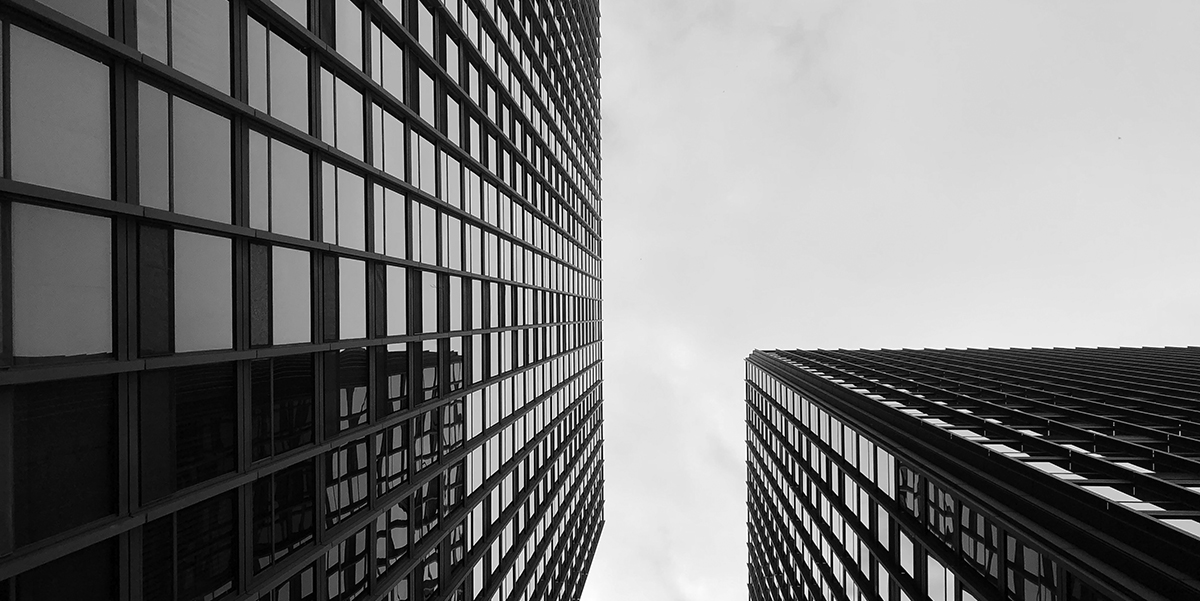
Rules are not the enemy of creativity, even though architects sometimes like to pretend they are. Rules are what give a style its coherence and allow it to be understood as part of a larger movement. They provide the vocabulary that makes a Modern building recognizable as Modern, or a Gothic cathedral recognizable as Gothic. Without that framework, architecture dissolves into a collection of personal gestures that may not hold together in any meaningful way. Rules act as a kind of grammar, setting the stage for design to be interpreted and appreciated by others. Modernism, for all its talk about liberation and progress, still depends on this framework. It is the boundaries that make the work legible and that allow a broader audience to engage with it.
Rules also carry a danger when they harden into clichés. What began as revolutionary in the early decades of Modernism quickly became reduced to a set of predictable moves: white walls, flat roofs, ribbon windows, and open plans. These elements were once the markers of radical change, yet they turned into formulas that could be copied without much thought. When architects cling too tightly to the rulebook, they stop solving problems and start repeating answers. That diminishes both the creativity and the cultural relevance of the work. Architecture that was once about challenging convention becomes about preserving convention, which is a contradiction at the core of Modernism itself. Recognizing this tension is critical if the work is going to remain vital.
The real skill lies in knowing the rules so completely that you can bend or break them with intention. A designer who ignores the rules entirely is not being inventive, they are simply being uninformed. On the other hand, when Corbusier curved a wall or Mies offset a column, those moves carried weight because they emerged from a deep understanding of the system they were playing within. This is where the tension of architecture lives: between structure and freedom, between discipline and imagination. The best work does not deny the rules, it engages them and tests their limits. When handled with intelligence and precision, that balance produces architecture that is both recognizable and original, both grounded in history and alive to possibility.
Would You Rather jump to 50:05

Andrew put together today’s question and it falls into the abstract a bit, but you will have to work yourself through this one as there are some unforeseen considerations.
Would you rather have your voice change after every time you wake up from sleeping, or have some random number of fingers on each hand (you might not even always have ten in total …)?
Andrew’s loophole to this is that you can always take a power nap if you have some unfortunate voice or finger combination … but I tend to think that people make a personal connection to people based on the familiarity of their voice. If that is different every time I have a conversation with someone, I am of the opinion that people will almost treat me as a different person each time.
Ep 186: The Rules of Modernism
Modernism claimed to be a clean break from history, yet it gave us some of the most clearly defined rules architecture has ever known. Those commandments shaped a century of design, and they continue to influence how we think about buildings today. Rules provide order, clarity, and coherence, but they also test our ability to innovate and push boundaries. The best work is not about ignoring them or following them blindly, but about knowing them well enough to bend them with intention. That balance between discipline and imagination is where architecture truly comes alive, and it is the reason the rules of Modernism still matter.
Cheers,
