
Retirement is one of those ideas that sounds simple right up until you apply it to architects, and then it starts to fall apart almost immediately. The idea itself seems straightforward enough – work for a long time, reach some undetermined age, and then walk off into the sunset … except architects don’t really seem to follow this script. When you identify who you are with what you do, there is no clean break. What happens now – do we even know what the word retirement means? Welcome to Episode 196: Do Architects Retire?
[Note: If you are reading this via email, click here to access the on-site audio player] Podcast: Embed Subscribe: Apple Podcasts | Spotify | Android | iHeartRadio | TuneIn

Today we are going to be talking about retirement for architects – which if you ask around, they don’t actually seem to retire which could make this a very short episode today. Just to provide some entryway data that may or may not influence opinions expressed during today’s conversation, let’s put our own retirement plans on the table … Do you want to retire or is your current plan to die at your desk? Andrew said he would like to retire but it stills feels pretty far away. For me, I think about it pretty regularly (because planning is required) but I haven’t settled on an age yet.
Do Architects Retire jump to 5:01
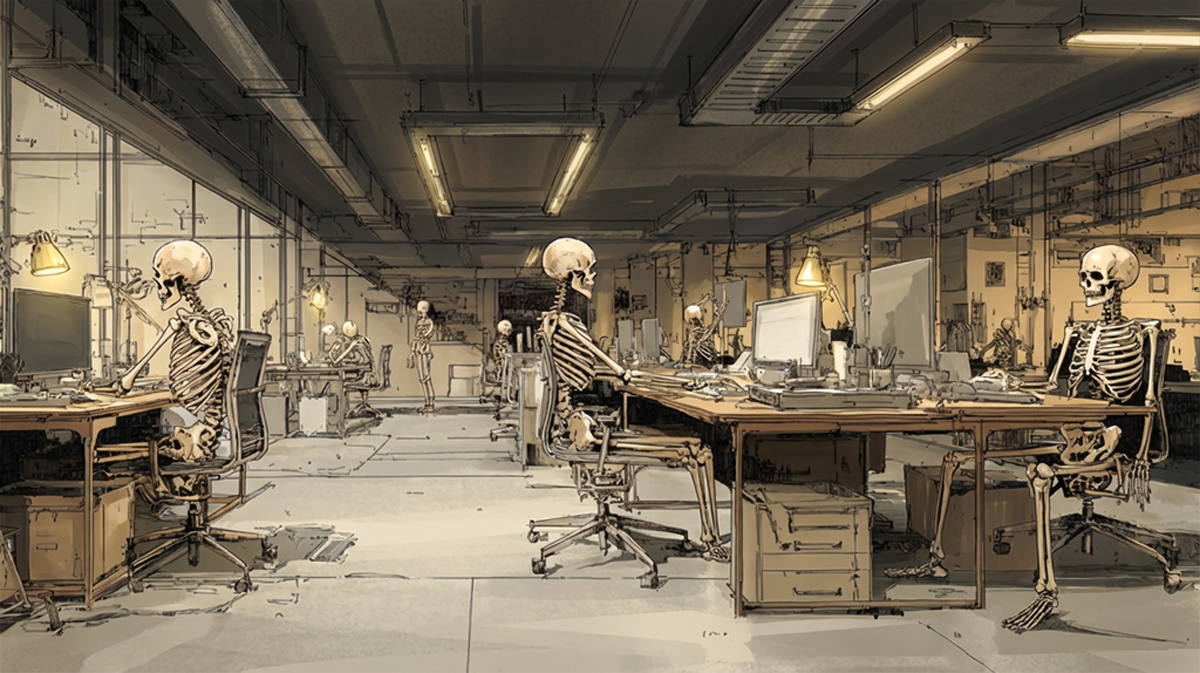
Architects are not good at retiring. “Most” people picture retirement as a clear handoff point where a person reaches a certain age, finishes a last week of work, gets a handshake and a sheet cake nobody really wanted, and then moves into a life that is separate from the profession that defined the previous fifty years. Architecture rarely behaves that way because architects rarely behave that way. Work in this field has a habit of spilling out of the office and into identity, routine, relationships, and self-worth, which means stepping away from practice can feel less like ending a job and more like taking apart a framework that has organized adult life for decades. Plenty of architects who are called “retired” are still teaching, mentoring, consulting, reviewing drawings, serving on boards, advising younger staff, or taking the occasional call when something complicated shows up and everyone in the room suddenly wants the person with judgment instead of just energy. Value in architecture often increases with experience, which makes later-career architects harder to separate from the work even when they are tired of the pace, the liability, or the politics. A better opening question for this section, then, is not simply when retirement happens, but whether architects ever really retire in the way people imagine, or if they mostly change their role, their pace, and their distance from the center of practice.
A second question belongs right next to “Do Architects retire?” because leaving it out would make this whole thing sound a little too romantic for my taste, and retirement is not a topic that benefits from romance without math. Some architects keep working because they love the work, and that is real. Some keep working because they still feel useful, still enjoy solving problems, and still like being in rooms where decisions get made. Some keep working because the structure of practice gives shape to their days and they are not eager to trade that for unstructured time they are not sure they actually want. Economics is part of this story too, and it deserves to be named even if we do not try to settle it in this first section. Architecture is a high-skill, high-education profession, but it does not always produce the same financial outcomes as other cerebral careers people often compare it to, especially once you factor in fee pressure, uneven ownership opportunities, late starts, debt, firm size, market conditions, and family obligations over time. Career path matters a lot here. Ownership matters. Timing matters. A person can work longer because they want to, and a person can work longer because they need to, and most architects who stay in the game later in life are probably standing somewhere in the overlap between those two truths. Section one should not solve that tension, and it should not drift into the later parts of this episode where we talk about identity after practice, meaningful next chapters like teaching, and financial preparation in more personal terms, but it absolutely needs to establish that the reasons architects continue working are not all noble and not all forced, which is exactly why the conversation is worth having.
Here’s some research for you …
National retirement data helps confirm that this is not only an architecture problem, even if architecture may be an especially good example of it. Gallup reports that the average retirement age among retirees is now 61, up from 57 in 1991, which is a useful reminder that retirement timing has already been moving later for years. Transamerica’s 2025 workforce survey adds to that picture, reporting that 39% of workers expect to retire at age 70 or older or do not plan to retire at all, and that 52% plan to work in retirement, which tells you the clean-stop version of retirement is getting less universal by the minute. Social Security does not really simplify the conversation because the ages people reference most often are benefit milestones, not magic answers. The Social Security Administration states that benefits can begin as early as 62, full retirement age is generally between 66 and 67 and delaying benefits can increase the benefit amount up to age 70. Architect-specific data points in the same direction, and maybe a little more sharply. NCARB reports that architects over age 65 still make up nearly 13% of the total architect pool, while also noting that many older architects have traditionally held on to a license long past “official” retirement. That does not explain motive by itself, and I do not want to pretend it does, but it does support the premise that retirement in this profession is often a transition rather than a binary event. That is strong evidence that architects often stay engaged beyond a conventional retirement age, but it is not the same thing as an average retirement age.
What Happens Next jump to 26:10
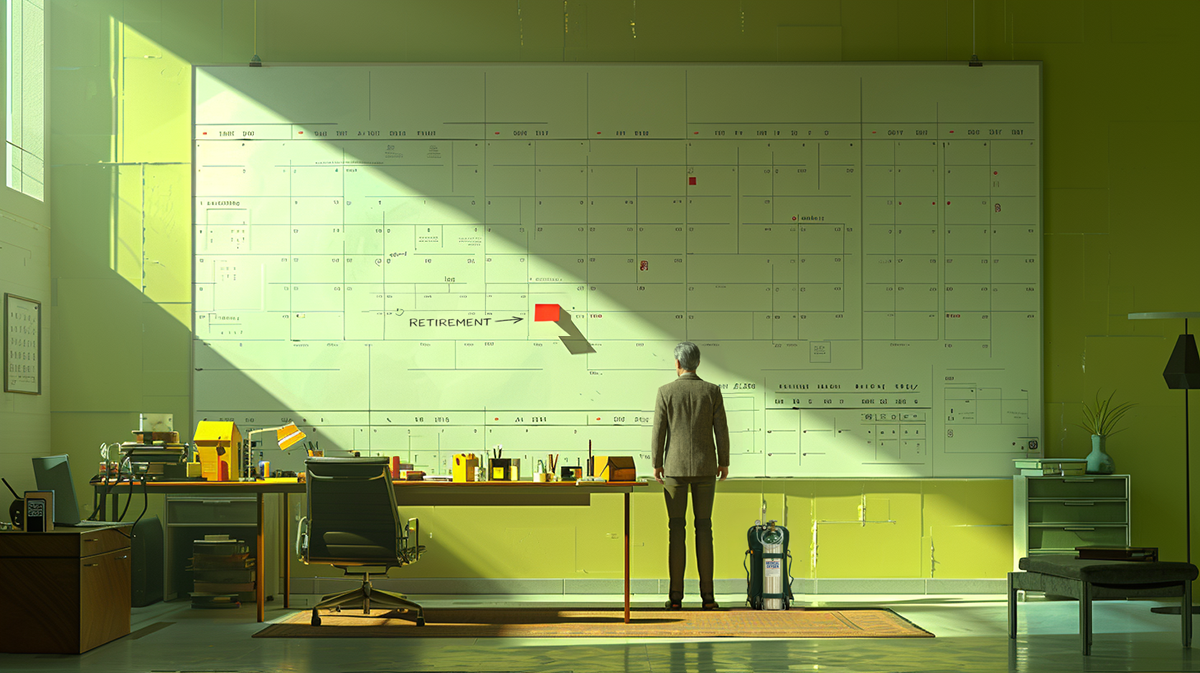
“What Happens Next?” is where this starts to get practical. Asking whether architects retire is one thing. Figuring out what your life actually looks like when the pace changes is something else entirely. Most people talk about retirement like the challenge is finding enough things to do, but for architects that is usually not the problem because we are almost never short on things we could do. The harder part is structure. Practice gives you a built-in rhythm whether you like it or not – meetings, deadlines, emails, site visits, decisions, people needing answers, and a steady stream of problems that let you end the day feeling like you did something that mattered. Remove all of that at once and what sounds like freedom can start to feel a lot like drift, not because something is wrong, but because the framework that has been shaping your days for decades is suddenly gone. A blank calendar looks amazing for about fifteen minutes, and then Tuesday shows up. Most architects are not trying to retire from contribution nearly as much as they are trying to retire from pressure, liability, constant urgency, or the version of practice that no longer fits how they want to live. That distinction matters because it changes the question from “How do I stop working?” to “What kind of week do I want to have now?” That is a much better question, and it turns retirement into a design problem instead of some vague lifestyle fantasy, which is probably the only way architects are ever going to trust the conversation enough to have it honestly.
Once the question gets framed that way, the conversation stops being about disappearing and starts being about choosing the kinds of involvement that still feel meaningful without dragging all the old stress in through the side door. Teaching deserves real attention here because it may be one of the best bridges available to architects. It gives you structure, purpose, and connection to younger people while still letting you stay involved with ideas, process, critique, and professional growth without carrying a full project load or living inside deadlines the same way you did in practice. Mentoring can do something similar, whether that happens formally through a firm or informally through relationships built over time, and the same goes for consulting, peer review, board service, advocacy work, writing, speaking, design juries, and pro bono work that lets you contribute judgment without carrying production. Hobbies belong in this conversation too, even if a lot of architects spent so much time building a career that they never built much of a life outside of it on purpose, which feels less like a character flaw and more like an occupational hazard. Some people will want a phased transition with a little work, a little teaching, and a little breathing room. Some people will need rest first and purpose second. Some people will discover they like having fewer responsibilities more than they expected. “What Happens Next?” does not need to prescribe a right answer because there is not one, but it does need to make one thing clear – retirement works a lot better when it is not just an exit plan, but a plan for what still deserves your time, attention, and energy after the deadlines stop running your day.
Identity and Relevance jump to 37:55
One of the more uncomfortable parts of this whole retirement conversation has nothing to do with money and nothing to do with calendars. It has to do with usefulness. Retirement changes more than your schedule and more than your workload. It changes the way you experience being needed, and for architects that can be a bigger adjustment than people expect because work in this profession rarely stays inside a job description. It becomes a way of thinking, a way of talking, a social network, a source of competence, and often a source of proof that your time matters to somebody besides yourself. That is part of what makes architecture meaningful, but it also means stepping back from practice can feel less like reducing your workload and more like changing the system that has been giving you feedback for decades. Retirement research has paid attention to this for good reason, and the findings are a lot more nuanced than the usual assumption that leaving work automatically creates an identity crisis. A large U.S. study following more than 8,000 adults found something that is worth paying attention to, especially if your default assumption is that retirement automatically wrecks your sense of purpose. It did not. The researchers found the opposite trend, with the biggest gains in sense of purpose showing up in the first few years after retirement … did this research mention how this sense of purpose manifested? Not really in a concrete, behavioral way, and that is an important distinction. The study did not say the increased sense of purpose showed up as “more volunteering,” “more teaching,” “more hobbies,” or any specific retirement activity. It measured sense of purpose as a psychological construct using a multi-item scale about direction, goals, and whether daily life feels meaningful or trivial, and the answer was a conclusive “yes”.
Retirement research is helpful here because it complicates the tidy story we tell ourselves. It pushes back on the lazy assumption that stepping away automatically creates an identity crisis, while still leaving room for the fact that plenty of people do experience a real disruption when the old rhythms and signals of relevance go quiet. Architects may feel that shift more sharply than some because the profession rewards accumulated judgment, and many people spend years being the person others call when something is complicated, urgent, or politically delicate. A person can be completely ready to leave the pace, the liability, and the constant demand and still miss the feeling of being needed in a visible way. Relevance is often the hidden issue under the surface, not because usefulness disappears, but because the familiar evidence of it changes.
Retirement does not move everybody in the same direction, and that is part of what makes this conversation tricky. For one person it can feel like relief., yet for another person it can feel like disorientation. Most people are probably going to experience some version of both at different times, which is why I do not think there is much value in pretending there is one “right” way to do this. Health, finances, relationships … these things all matter. The reason someone leaves work matters. The kind of work they were doing matters. All of that changes how the transition feels. The useful part of this conversation is not deciding whether identity disappears in retirement, because it does not. The useful part is figuring out how identity gets edited. Architects do not suddenly lose judgment, pattern recognition, communication skills, or design thinking just because they are not carrying a full project load anymore, but the way those things show up may need to change. Relevance can shift from production to transmission, which is part of why teaching, mentoring, advisory work, writing, and selective consulting can feel so meaningful later on. None of that means everyone needs a formal second act to justify their existence. It just means that if retirement is a redesign of role and time, part of that redesign probably includes deciding how you define usefulness when your title is no longer doing as much of the talking.
Retirement Money jump to 45:38
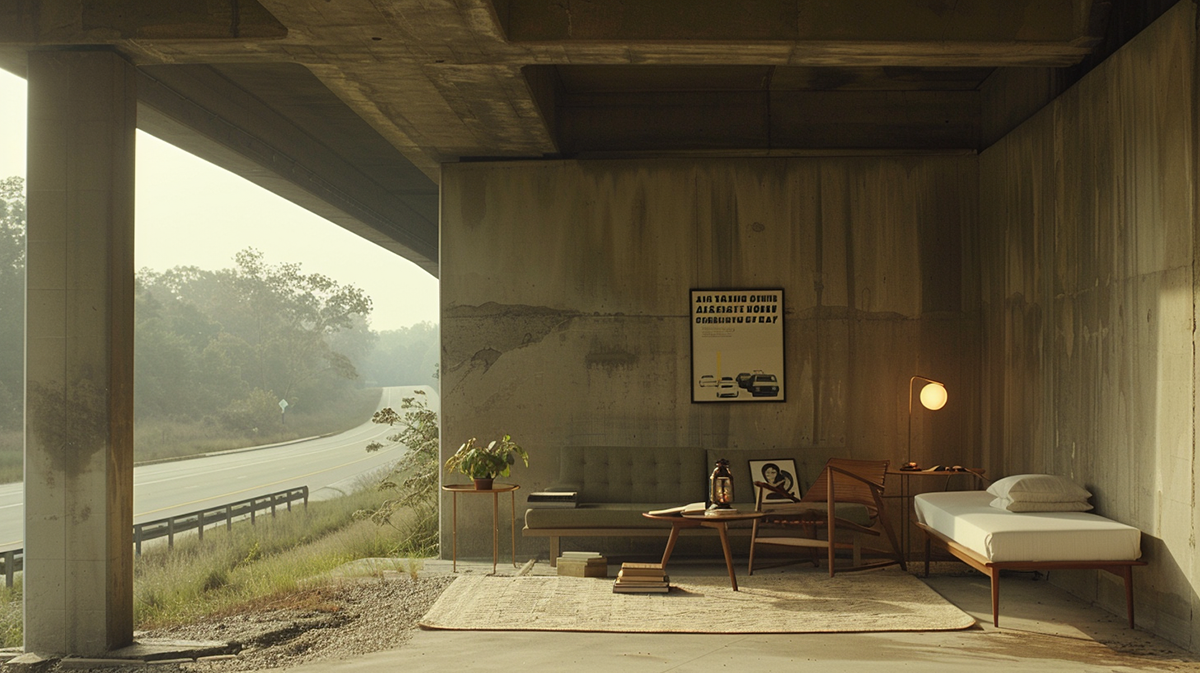
Let’s talk money – retirement money. I cannot pretend to know everyone’s situation, and I am definitely not trying to hand out a universal plan here, but that is not a good enough reason to avoid the topic altogether. I have a line I use when talking about retirement planning and it usually goes something like this: I do not need to live in a mansion with Tibetan monks on call to take care of my every need, I just do not want to live under a bridge, and if I do end up under a bridge, I want it to be a 6-lane bridge and not a 2-lane bridge (because I still have standards). That is mostly a joke, but just barely. What I am really talking about is options. Money in retirement, at least the way I think about it, is less about luxury and more about choice – choice in how I spend my time, where I spend it, and how much stress is attached to the decisions I make. I have generally been pretty conservative with money because apparently, I have had these 6-lane bridge ambitions for a while, but even with that mindset I still find myself wishing I had done more, and done it sooner. That is really the point of this part of the conversation. The value is not in pretending there is one answer – the value is in paying attention early enough that you still have room to make better choices.
Part of paying attention is learning what the moving pieces actually are, because a lot of people use retirement language without really understanding what the terms mean, and that can get expensive. Social Security is a good example. The Social Security Administration notes that benefits can begin as early as age 62, that full retirement age depends on birth year and generally lands between 66 and 67, and that delayed benefits increase only up to age 70. Those are milestones, not instructions, and treating them like they are the same thing is one of those mistakes people make because they assume they will sort it out later. Broader retirement expectations tell a similar story. Transamerica’s 2025 workforce research reports that many workers expect to keep working later, with figures in their 2025 reports showing large shares expecting retirement at age 70 or older or not planning to retire, and more than half planning to work in retirement in some form. Some of that is preference, some of that is purpose, and some of that is necessity, but all of it points to the same reality – retirement choices are shaped by financial conditions whether people enjoy talking about them or not. In the last few years, I made a point of learning more about savings and investment strategies, which is not exactly architecture school material, and I also tracked down a financial planner to help me work through what I actually need based on my goals rather than whatever vague assumptions I had been carrying around. That process did not hand me certainty, but it did hand me clarity, and clarity changes behavior. This is where I would encourage people to start, not with panic and not with comparison, but with curiosity, because retirement gets easier to design when you understand the constraints and harder to design when you keep hoping the constraints will introduce themselves politely at the end.
Ep 196: Do Architects Retire
Retirement is not a finish line in architecture so much as a change in authorship, where you stop letting deadlines and other people’s emergencies write your weeks for you. The goal is not to prove you are still relevant, and it is not to vanish quietly so nobody has to adjust their org chart. A better goal is to decide what deserves your effort now that you get to be picky, and to accept that being picky is not selfish, it’s overdue. Some people will stay close to the work, some will run in the opposite direction, and most will do a little of both depending on how much sleep they got and how annoying their last meeting felt.
Cheers,

Special thanks to our sponsor Construction Specialties, maker of architectural building products designed to master the movement of buildings, people, and natural elements. Construction Specialties has been creating inspired solutions for a more “intelligently built” environment since 1948. Visit MasteringMovement.net to learn more.