
Listeners have spent the last few days sending in their questions, which means this episode is either an act of generosity or a poor choice on my part. Ask the Show always feels a little like opening the door and letting the entire internet wander through my business, but I suppose that’s kind of the point to this episode. The topics jump from the serious to the unhinged with the kind of enthusiasm only architects and design nerds can muster. The questions remind me that the profession is still alive, still curious, still trying to make sense of itself. End of the year is good for this sort of episode because people get reflective, work gets strange, and everyone seems just tired enough to ask the questions they actually want answered. That is what we are doing today. All this and more on today’s episode as Andrew and I answer your burning questions … Welcome to EP 191: Ask The Show Fall 2025 Edition
[Note: If you are reading this via email, click here to access the on-site audio player] Podcast: Embed Subscribe: Apple Podcasts | Spotify | Android | iHeartRadio | TuneIn
Question 1 jump to 3:31
What will the future of the profession look like since we are not a professional degree now?

Bob
The short answer is that nothing happens. Not in the real world where buildings get built and drawings have to be correct or gravity will cause problems for you. Presidential proclamations do not rewrite state licensing laws, NAAB accreditation, NCARB standards, or the quiet machinery that actually defines what makes someone an architect. The profession might feel fragile some days, but it is not so flimsy that a political stunt can knock it over.
The longer answer is that architects are in the middle of an identity problem they did not choose. People outside the profession already struggle to understand what we do, and this kind of noise only deepens the confusion. The future of the profession will look like what it has always looked like: a slow, stubborn march toward better buildings, better processes, and better ways of explaining to the public why our work matters. The degree still qualifies you to sit for licensure. The work still requires competence, judgment, and a working relationship with building codes that borders on dysfunctional romance. None of that changes.
It is irritating to have the word “architect” treated like a decorative label instead of a regulated title, but irritation has never stopped architects from doing what they do. If anything, it will push us to advocate harder, teach clearer, and remind people that you cannot simply wish a profession out of existence because the optics are convenient.
The future looks the same as it did last week: plenty of problems to solve, plenty of responsibilities no one else wants, and a profession still standing because its foundation is built on law, education, and practice – not on declarations.
Andrew
This is a tough one. At the moment, I do not know. I am not even certain it will change. This entire notion really revolves around the availability of educational loan amounts. So, at most, it limits the people who can attend architecture school. But it is also not “finalized” yet and may still change. I think it is good that we are talking about it and people are wilding out over it, but at the moment it is, in my opinion, too soon to tell what impact this could have. I mean, we can go down a terribly deep rabbit hole of tragedies, but it’s just so uncertain.
As this could potentially impact my current occupation of professor, I have been keeping an eye on this and have read multiple viewpoints on the issue. Some even see this as a possible positive impact to the education process. I am not sure if that is the case, but it has definitely shaken both the profession and academia into a seeking a new sense of awareness with themselves. But I will end this again by saying, I think it is too early and no matter what the decision, it may take a decade to truly comprehend.
Question 2 jump to 7:47
Does being an architect make you a more attractive partner as a single person?
Bob
Maybe? I suppose based on your interests, this could either be a red or a green flag profession. But my attempt at a real answer is pretty direct. Being an architect probably helps in the way good posture helps. It doesn’t do the work for you, but it changes how people read the room when you walk in. The job carries signals that matter to some people – creativity, competence, and the ability to finish something that takes years and still argue about it calmly. None of that guarantees attraction, but it does suggest you can commit, problem-solve, and survive long stretches of uncertainty. For reasons that have nothing to do with looks, those traits tend to age well.
Things tend to get dicey because most people tend to think architects get paid extremely well and there could be some disappointment when the reality comes to light.
Andrew
Yes, but only from the point of view that I think, we as architects have a good sense of style. Of course not every architect does, but in general I like to think we do. Also we can be very observant and attentive. For some partners that is a positive, for others a negative.
Now on the flipside, No, if they know anything about how much you work or how technical your job actually is. How much we can be ruled by deadlines and how much we tend to pour ourselves into projects and often “neglect” other aspects of our lives. It may not be necessarily about the hours of work, but the hours of pre-occupation with that work, whether we are in the office or not.
But it does usually sound damn cool to say you are an Architect.
Question 3 jump to 10:31
What is your best piece of advice for preparing BBQ?

Bob
The best advice I can give about barbecue is to cook the meat you actually want to eat, not the version the internet says is more “authentic.” Baby back ribs beat St. Louis every time if the goal is pleasure instead of dental resistance, and brisket does not need to be wrapped to be respected. What matters is patience and follow-through, especially the rest, which is where most people get lazy and then blame the cook. A twelve-hour rest at 140 degrees fixes more sins than any rub ever will.
… and don’t use rub on your brisket – kosher salt and 18-mesh black pepper is all you need.
Andrew
Low slow and build a good bark. But I tend to prefer to eat it and not cook it. I like variation of styles and flavors and the like to get into cooking it. I would rather explore the craft of BBQ from as many points of view as possible. I understand how the cooking process works and have a high regard for the craft, but my joy comes from the tasting of it all.
Question 4 jump to 14:10
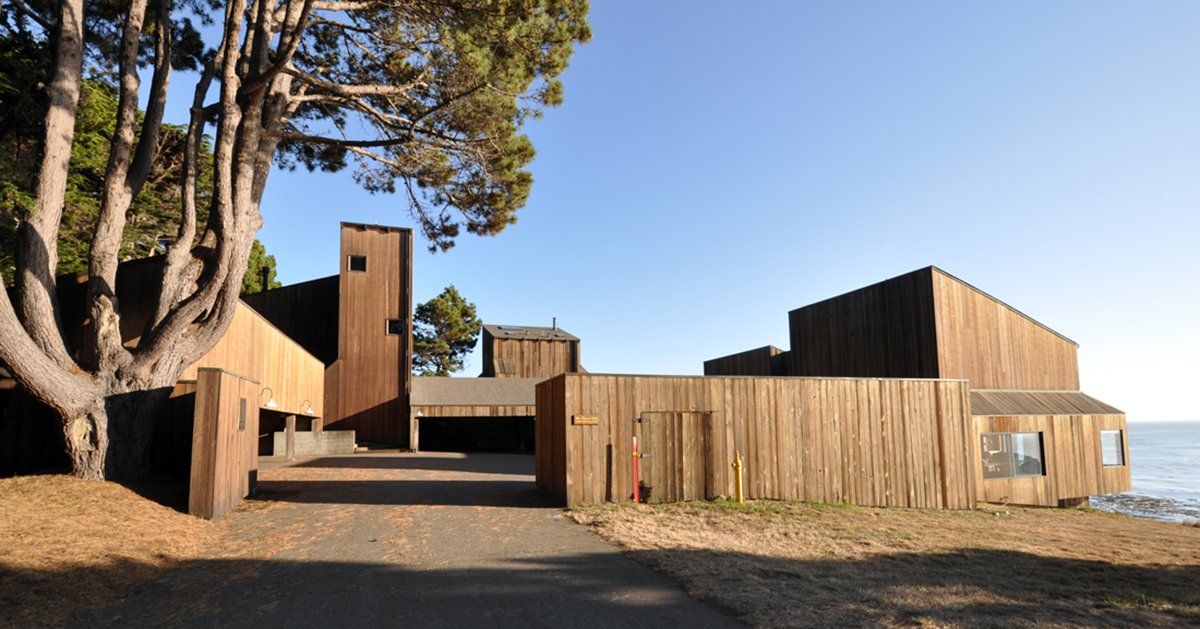
Going to Sea Ranch soon?
Bob
No plans at the moment. Sea Ranch is architecturally significant in a way that only works because the buildings know when to defer to the landscape. The success is not about iconic forms or moments, but about how carefully the architecture fits into the natural environment instead of competing with it. The result is a place that feels calm, restrained, and oddly instructive. You leave with a clearer sense of how much architecture can do by doing less.
It also helps when you fly into San Francisco, drive up Highway One through wine country, and load up on wine that makes sitting in a hot tub looking at the night sky even more rewarding.
Andrew
Nope. I have never been to Sea Ranch. I would like to go one day. I enjoy that part of the country
Question 5 jump to 16:08
If you could live anywhere and practice architecture, where would that be?

Bob
Living somewhere and practicing architecture are still separate ideas, but climate would shape both experiences. After living most of my life in Dallas, the appeal of four real seasons is less about escape and more about range (although I am getting tired of 100°+ degree summers that seem to last 7 months of the year). Seasonal change affects how you live day to day, but it also opens up design opportunities that simply do not exist in a mostly one-note climate. Buildings can respond to light, temperature, and weather in more nuanced ways when the environment actually changes. That kind of variation has a way of improving both your personal rhythms and your architectural thinking.
Andrew
Europe. Spain maybe? But most likely I would choose an island location as it seems like it could be good for me. While it might not be the best for business and costs, the allowances that type of climate affords you as a designer is intriguing and appealing. It can provide a real opportunity to blend and blur the interior and exterior on projects which is pleasing to me. So that would be the main reason for this choice. Another reason, I must admit, is that my days off would be nice. So even if business was slow, I would still enjoy myself.
Question 6 jump to 19:10
What is the most iconic James Bond villain’s lair, and why?

Bob
Every Bond villain has a lair that looks like it was designed by an architect who finally snapped from too many OAC meetings and decided that budgets don’t exist. There is one that stands above the rest, mostly because it set the template for every overwrought supervillain hideout that came after it: Stromberg’s oceanic monstrosity, Atlantis, from The Spy Who Loved Me.
The thing rises out of the water like a Futurist seashell built by someone who hated budgets and feared right angles. It takes the whole “master of the world” posture and translates it into architecture: isolated, gigantic, impractical, and completely divorced from any known building code. The place is a structural engineer’s night terror. It is also visually unforgettable. The silhouette alone feels like it belongs on the cover of a paperback that swears it will change your life if you read it on a plane.
There is something honest about Atlantis. It does not bother pretending to be anything but a monument to ego. The villain wants to rebuild civilization underwater, which is exactly the kind of scheme that requires an architecture firm willing to ignore liability and the concept of moisture management. The lair is spectacular because it commits, without apology, to scale and drama. No half measures. No tasteful restraint. Just pure, uncut villainy rendered in concrete, steel, and hubris.
Architecturally, it is the only Bond lair that feels like someone tried to design a culture instead of a hideout. It is ridiculous. It is magnificent. It is iconic because it understands what the audience already knows: if you are going to be evil, at least build something worth touring.
Andrew
While my choice is not necessarily a “lair” but the Elrod House in “Diamonds Are Forever” is the most iconic bond house in any film I think. In the movie, it is owned by the millionaire, Willard Whyte, and Bond The house was designed by one of my favorite architects John Lautner and is located in Palm Springs, CA. It was built in 1968 and it something that I might call Futuristic Brutalism. Plain cool.
But if I had to select a villain’s lair, I would choose the “Stealth Ship” from the first movie “Dr. No.” I find it interesting that the notion of a black boat on the ocean could ever be considered stealth. It was seemingly patterned after stealth aircraft which I am not sure works on the water. Also they used it best a night, so how does that matter or even work? So many things about it seem strange, but I like the idea of a cross-over I guess. Plus, it was hollow underneath and I thought that was really cool.
Question 7 jump to 23:32
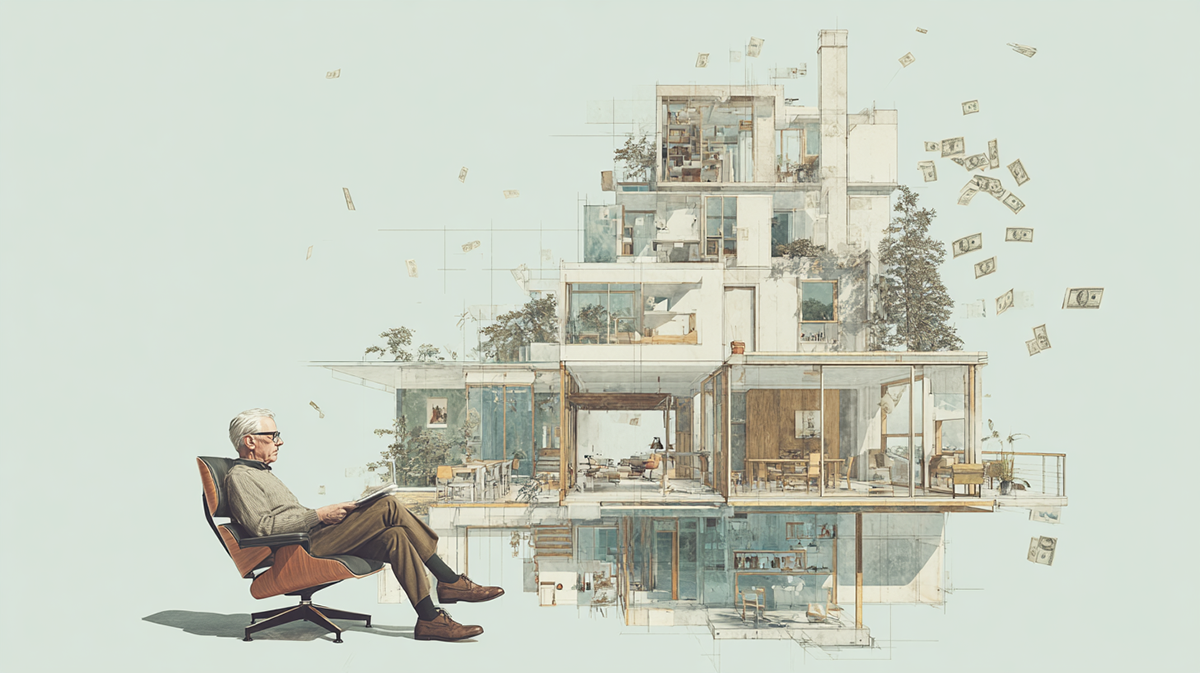
If you won $3 million dollars, how would you spend it?
Bob
The responsible answer is investing it and retiring early, which is hard to argue with and even harder to romanticize. The fun answer is designing a retreat rather than a house and treating it as a chance to slow down and be deliberate. After decades of designing homes for other people, it would be something that reflects how I actually live, not how the market expects someone to live. It would not be for everyone, and that would be the point.
The emphasis would shift away from square footage and toward restraint, proportion, and detail, the parts of architecture that take time to notice and even longer to get right. Spaces would exist because they earn their place, not because they improve resale comps. At this stage of life, the freedom to design without explaining, justifying, or future-proofing would be the real luxury.
Andrew
Invest and try to live off the interest as best as possible. I am fairly certain I could mange to live off the investment returns and maintain a decent lifestyle. If we do a small amount of simple math, $3,000,000 @ 10% return per year would equal $300,000 per year. I think I could manage. Even at 7% ($210,000/year) or 8% ($240,000/year) returns I would be able to do most anything I would want. More than enough money for me. Then every bit I did not spend/use, would go towards my children and working to generational wealth. I don’t really need a lot of things these days and would like to have more freedom to travel and such. So I think I would be able to make all of that work within the limitations of returns on the investment of three million dollars.
I know it’s not a lot of fun, but it would be the smartest move to make in my opinion. I wanted to make some extravagant purchase; I would still be able to or save from one or two years to then make that big purchase.
Question 8 jump to 27:05
Any tips on how to get your boss canned?

Bob
I don’t really have a good answer to this question, and I’m not sure I would make it known to the world if I did. I know that this question was phrased with their tongue slightly engaged with their cheek, but it was a real question. so here is a real answer … Most bosses do not get removed because someone outmaneuvers them, but because the broader environment can no longer ignore the pattern. Leaving only makes sense when the problem is systemic, not when you are just frustrated with the person above you, otherwise you risk trading one bad situation for another with a different name on the door. If you are doing strong work and your boss is not, that gap tends to surface on its own, given enough time. The harder question is how long to wait before patience turns into stagnation, and that answer usually has more to do with your growth curve than their shortcomings.
Andrew
Lie? Hahah. No I am not sure why this is even a thing. Granted I know that many people can scheme and plot towards this end. My advice, if things are that bad and not looking to change soon, start looking for a new office. If that is not an option, then look to rally others to your cause. If more than one person reports issues or seeks the same end, it tends to be easier to make things happen, at least in my experience of trying to change course. But I think first and foremost, I would make some self-assessment and determine if this was worth it in the end. It would be a definite risk/reward situation to evaluate thoroughly. Good luck!
Question 9 jump to 30:36
What are the perfect proportions of a snowman?

Bob
The perfect proportions of a snowman are one of those design questions that reveal how architects can overthink anything, including frozen spheres meant to melt into a puddle by Tuesday. There is a classic ratio people trot out like it is gospel: 3:2:1. Big ball, medium ball, small ball, stacked like a chilly Vitruvian diagram of domestic joy.
The truth is that 3:2:1 works because it mimics the proportions of a human body without veering into realism. Too equal and the snowman looks like a stack of dryer lint. Too exaggerated and it starts reading like a municipal art installation with a committee problem. The base should feel grounded, the middle should hint at shoulders without suggesting the snowman spends time at the gym, and the top should be small enough to look whimsical but large enough that a carrot does not resemble a construction defect.
A good snowman has a silhouette that can survive the indignity of children attacking it with sticks … it needs a base that resists collapse, a midsection that can accept a scarf without looking like it works as a barista, and a head that accepts coal/rock eyes. The magic of 3:2:1 is that it hits the sweet spot between stability, charm, and structural sanity.
Andrew
3:2:1 I do not think there is more to say.
Question 10 jump to 31:36
Favorite Christmas song?
Bob
O Come, O Come Emmanuel – and I would be surprised if you could hum this tune just based on the name … even though you all know this song. By the way, the album I pulled this from (which is the Youtube video below) is also my favorite Christmas albums. IT is about as traditional as they come and that is exactly how I like my Christmas songs.
Andrew
White Christmas by The Drifters
Carol of the Bells – almost any format. Choir versions are usually preferred though.
Question 11 jump to 36:16
What was your nickname in middle school?

Bob
When your given name already sounds like a nickname, people tend to accept defeat early. “Bob” leaves very little room for improvisation, so nothing ever really stuck in a meaningful way. A few low-effort attempts like “Dr. Bob” floated around, and “El Presidente” existed only within a very small, self-contained audience. The closest thing to a creative swing was “Bullet Bob,” used briefly by a handful of older students who clearly had Dallas Cowboys football on the brain.
Andrew
Hawk. Very logical and quite easy. Sometimes I would get Hawkman. But none of them ever really stuck
Question 12 jump to 37:59
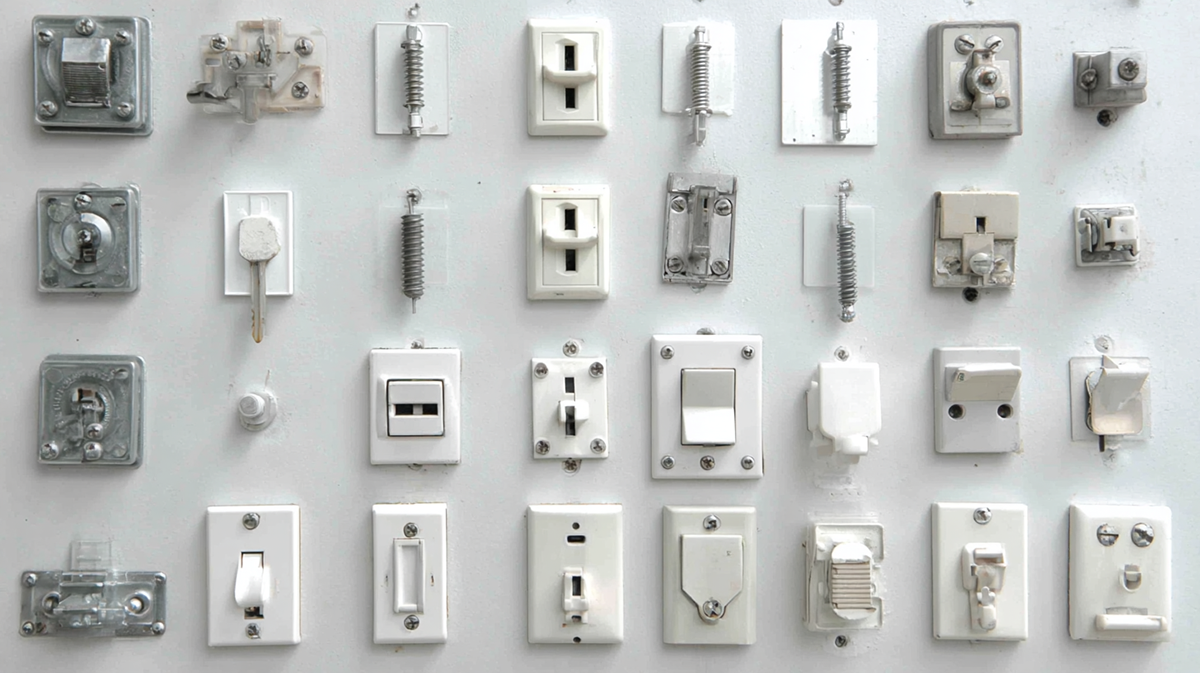
How do you orient Phillips-head screws in your wall plates? Vertically or horizontally?
Bob
Vertically. Not because it is morally superior, but because it shows someone was paying attention for the extra three seconds it takes to care. Horizontal is acceptable if consistency is maintained and you are okay with people recognizing that you care, but not like 100% care. Anything in between is a cry for help and that person should just wear a sign that reads “meh”.
Alignment matters less than intention, but intention should still look intentional.
Andrew
Depends on the material of the wall plate. But I do not have a true preference other than perfectly vertical or perfectly horizontal. There is no need for any of the chaos in between. Alignment is everything.
Question 13 jump to 39:29
Best documentary architecture film?
Bob
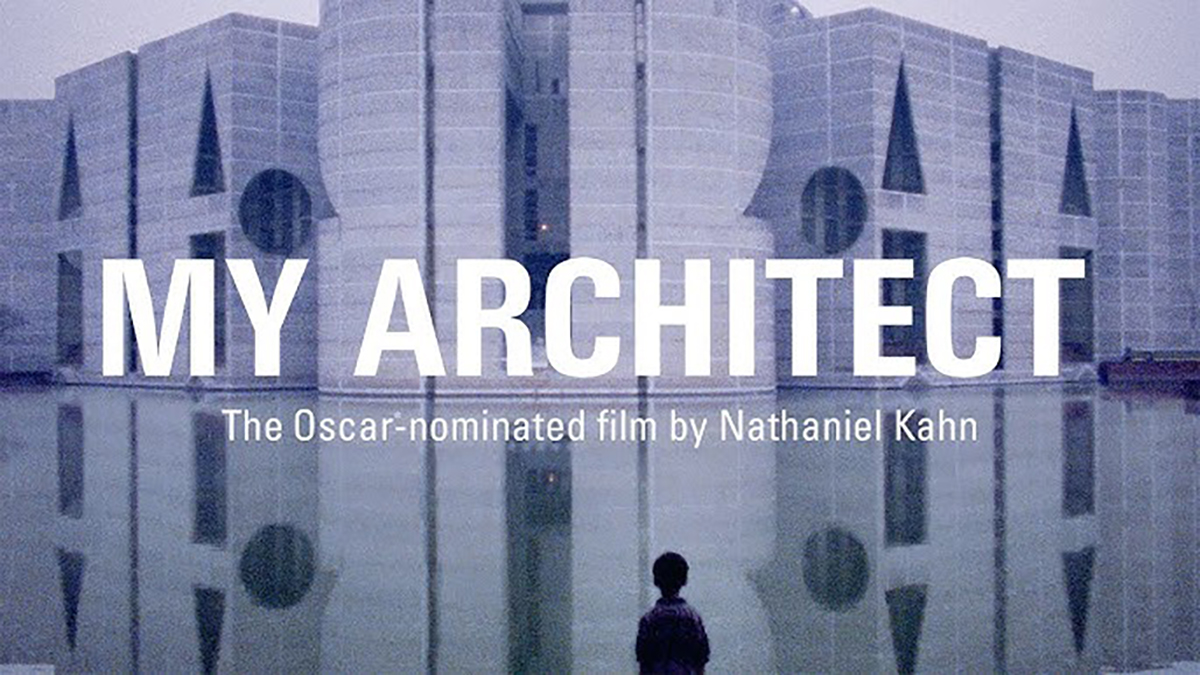
My Architect sits at the top of the pile for a reason.
It is not a film about buildings, at least not in the conventional sense. It is a film about Louis Kahn, which means it is a film about ambition, brilliance, secrecy, and the very specific kind of loneliness that follows people who dedicate their lives to making things larger than themselves. The documentary carries this strange emotional weight because it is told by Kahn’s son, who is piecing together a man who was both a giant in the field and a ghost in his own family. Few architecture films have the nerve to show both the beauty and the collateral damage.
The buildings are there, of course. You get the trinity: the Salk Institute, the Kimbell, the National Assembly in Dhaka. They are filmed with a level of patience that lets you actually register the light, the texture, and the quiet control behind Kahn’s work. The film understands something most architecture docs miss: buildings are slow, silent creatures. You cannot zip through them with fast cuts and dramatic narration. You need time to sit with them, to let them unfold.
It is the best because it refuses to flatter the profession. The film is messy and human, which is a refreshing contrast to the glossy hero worship that usually passes for architectural storytelling. It leaves you impressed but unsettled, which is exactly the emotional cocktail that good architecture tends to produce.
Andrew
I have written a few blog posts about architects on film. One is more about documentaries and the other is about movies and tv with architect characters.
Best Documentary: My Architect (2003). This is a documentary about Louis Kahn that was done by/through the perspective of his son, Nathaniel. This is about the man a little more than his work as it goes into his family life and other such personal elements. It still covers his work and, as expected, there are architects speaking about Kahn and his architecture. Currently only available for purchase in the U.S. Not streaming.
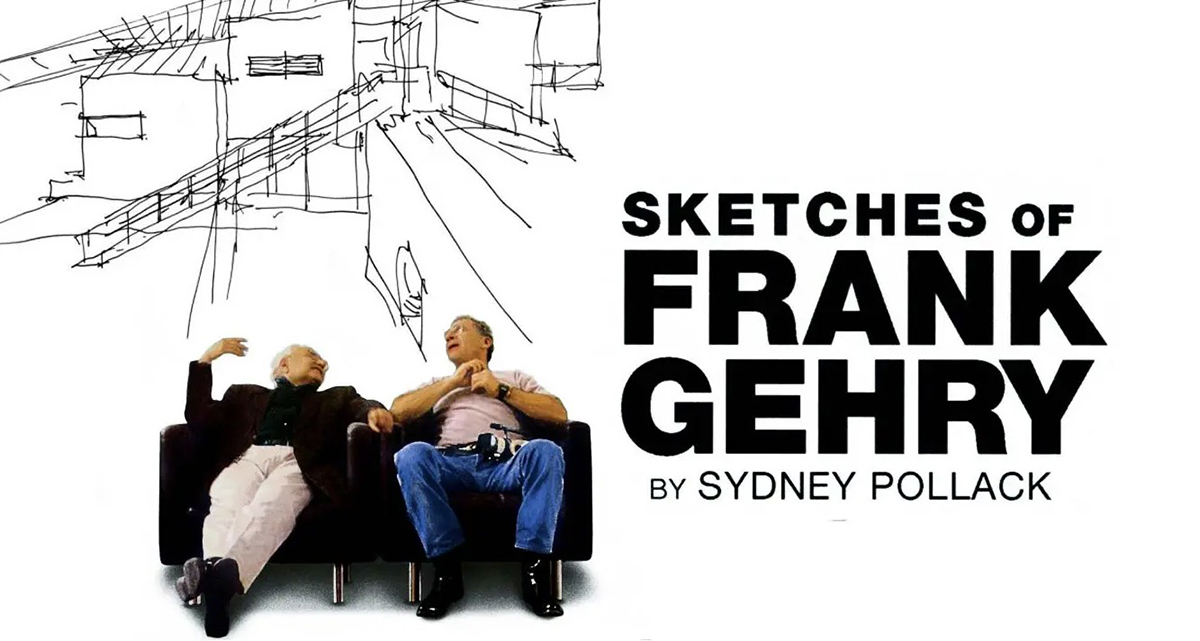
2nd place just due to recent events: Sketches of Frank Gehry (2006). This is a documentary about Frank’s career up to that point. Cover Disney, Bilbao, his residence and some other projects. It was directed by actor Sydney Pollack and also has some other actors in it. Of course, it also features architects speaking about Frank and his work. This was Pollack’s last film before his death, I believe. It was also screened at Cannes Film Festival. Currently only available for purchase in the U.S. Not streaming.
Those previous posts with lots to watch. Architects on the Screen and What Architects Should Watch
Question 14 jump to 40:53
How important is the “be the best” mentality in university or in the industry?
Bob
There is really a balance you are trying to achieve on this one – a consideration towards healthy behavior and “I want that promotion” type of behavior.
Trying to be the best is a fast way to torch your mental health and lose sight of the actual work. Architecture is a marathon disguised as a sprint, and the people who survive are the ones who pace themselves. You need ambition, but it has to be the kind that sharpens you instead of hollowing you out. Being goal oriented is healthy when the goals are aligned with growth. Getting better at drawing. Getting better at communicating. Learning how to solve problems without sacrificing your sanity. Those are goals that will help you for decades. Chasing the title, the promotion, the external gold star… that is where people start to fall apart. Those markers matter, but they cannot carry your identity for you. The myth says that the hardest worker gets the promotion. The truth is that the person who works consistently, communicates clearly, and does not implode under pressure tends to move up. Firms reward reliability long before they reward theatrics. You do not get promoted for burning yourself out. You get promoted because leadership trusts you to handle more without setting the office on fire.
Andrew
Not sure exactly how to read this one. Are they competitive? Of course. We are always competing in one way or another; for jobs, for projects, for positions, for promotions, for budgets. I would say in the academic setting the students are no longer as competitive as they used to be, that seems to decrease almost annually. But the faculty and the University are always pushing to seek out the “best” and be the “best” but I think that mainly goes back to money and prestige for the School and the dept. But Academia certainly prides itself on having the “world expert on X” in their pool of faculty. That pressure in academia is quite real from my perception.
But to really respond to this question I would say that you should always want to “be the best” version of what you can be for yourself. This may not be the best at “X” but being the best you can manage to be. I think in our profession it is difficult to be the singular best at anything. It is easier in academia to focus on one narrow specific topic and be the world’s expert on “Neoclassical stone structures in York County, Maine from 1800-1850”. But in practice, that kind of granular expertise is not common. So being “the best” is a more difficult task. But I would also add that being the best at one thing does not make you the best overall. So, again, I reiterate the goal of being the best version of yourself that makes you feel the best about yourself. If you do that, I think the consequences of that will positively impact your life. Sorry to sound like such a life coach here.
Question 15 jump to 45:23
What does your dream project look like (residential, a house I would want to live in) Any market, scale, or client.

Bob
It would be a residential project, and it would be a house I actually want to live in, which simplifies things immediately. In a true dream scenario, I would also be the client, removing the usual translation issues between intent and outcome. Since this is still reality-adjacent, there would be a realistic budget that ideally supports good decisions instead of fighting them (restrictions in the sense I believe actually make for a better outcome). The result would be obviously strong, highly desirable, and full of unique, clever detailing without relying on excess.
Andrew
A museum. Easy. And I will say this because they tend to have a large public impact. They are high profile. They tend to reach a certain level of status that most projects do not. They tend to be preserved and protected. It would allow for the longest time frame of impact of my work. While they do invite public scrutiny and opinion, I am confident enough to endure this and prefer to focus on the positive aspects I mention. I am not even talking about a huge, world renowned museum even, but simply one that is valued enough by the public at large to endure as part of the architectural and public collective after I am no longer alive. For me, that is a dream project. Ahhh to dream.
Question 16 jump to 47:24
If you could choose a country outside of the US to practice architecture, which country would it be and why? Follow up – do you think it would impact your design philosophy?
Bob
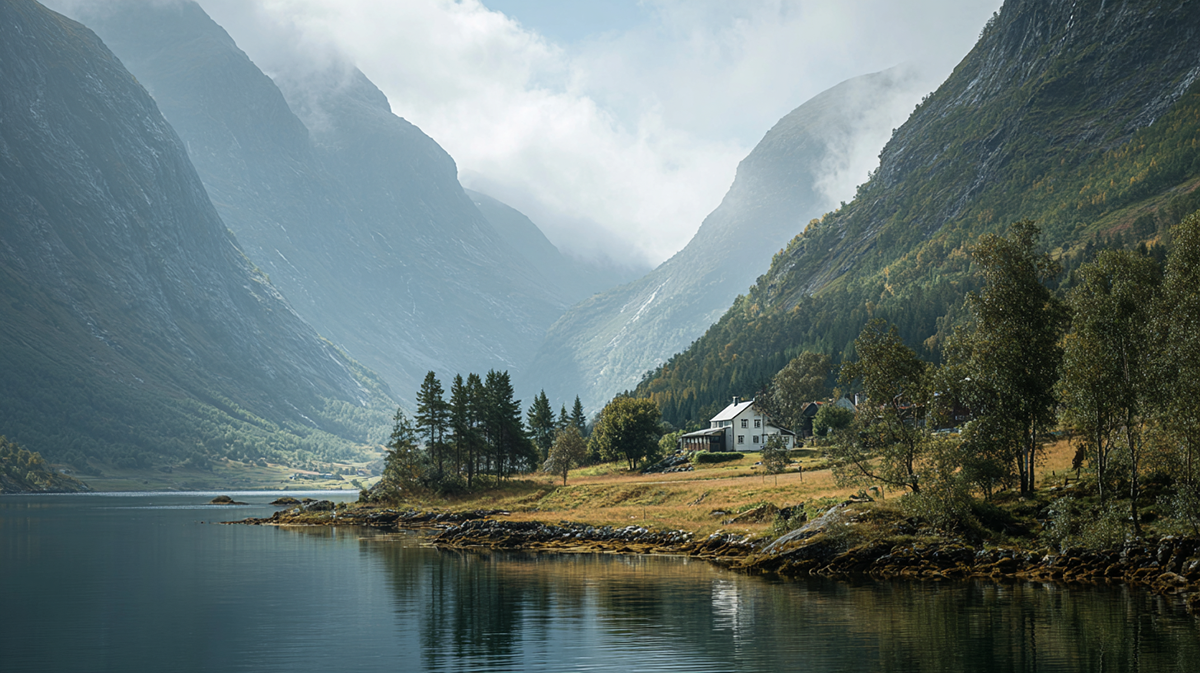
Some countries treat architecture like a public utility, others treat it like a luxury accessory, and a few manage to see it as a cultural asset worth investing in. If the assignment is to pick a place that values design, pays architects like me enough to buy groceries without weeping, and does not expect you to sacrifice your personality and interests at the altar of overwork, then Norway is the obvious answer. That and I am Norwegian.
Norway sits in that rare category of places where the built environment is treated like a collective responsibility rather than a profit-driven afterthought. It has the Scandinavian cocktail of design literacy, civic investment, and an almost suspicious amount of respect for daylight. You could do good work there without having to justify every design move to someone who thinks architecture is just expensive decoration.
The country has a healthy architectural culture. You see a lot of clarity in the work because Norwegians seem allergic to nonsense. The compensation is livable and work-life balance is not just a slogan; it is built into the culture. People actually leave the office at reasonable hours, like they have lives beyond drawing wall sections. Shocking, I know.
Norway is one of the few places where an architect can do serious work, earn an adult salary, and still step outside to see mountains, water, and buildings that look like someone cared. That combination is rare enough that it deserves a long look.
Andrew
Again, maybe I would choose Spain here. I just enjoy a lot of the work I see going on in Spain. The architecture and architects seem to jive with the way I think about architecture. There is also a greater appreciation for our profession by the public in Spain, I believe. It tends to be more revered and seen as essential to public good as opposed to a service like here in the US. It leans into the more classical notion of “Architect”. But I also know that the economics are not great in Spain. So it may not be an “easy” choice.
I might place Australia as a close second or tie for similar reasons but different aspects of my thoughts on Architecture. I think the views on architecture climate responsiveness and responsibility is also aligned with my thoughts and preferences, but a different set than those from Spain. Also Australia is a middle ground between the US and Spain I think in relation to practice structure, public perception, and economic viability. It has better economic performance than Spain, but not as much design freedom from risk. It would be a middle ground with improvements in perceived value while not losing the economic opportunities.
As for the impact on my design philosophy, the goal for any choice would be that the changed did not impact my philosophy, but actually align with it better. I chose the location based on my philosophies and the opportunity fo them to flourish.
Question 17 jump to 50:36
Thoughts on the passing of Frank Gehry? Favorite and least Favorite Gehry buildings?
Bob
The real loss is not just the work – it’s the jolt to the profession’s collective imagination. Gehry represented a version of architecture that still believed in surprise, joy, and the occasional act of beautiful irrationality. He reminded us that buildings could have personality instead of just performance metrics. He worked like someone who never got the memo that architecture is supposed to be joyless.
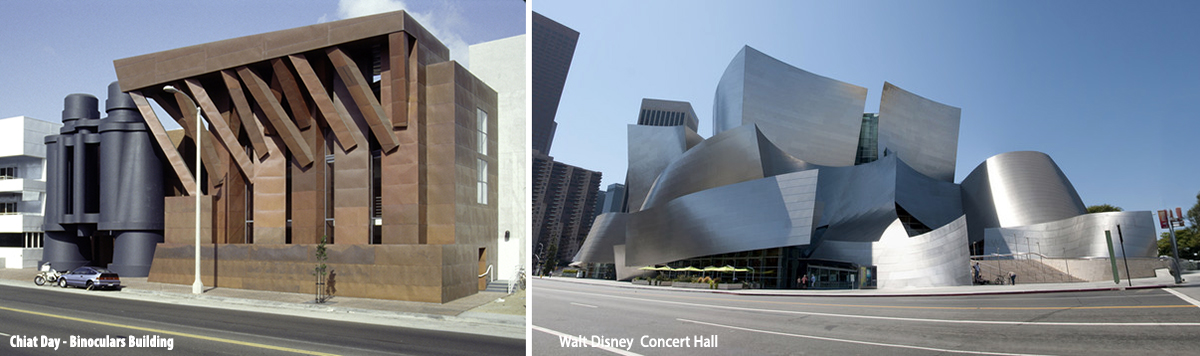
Favorite is Walt Disney Concert Hall and my least favorite is the Chiat/Day Building (otherwise known as the Binoculars Building – even though the Giant Binoculars were designed by Claes Oldenburg and Coosje van Bruggen.)
Andrew
His early works are more my favorite. Let’s say all the projects pre-titanium. To me they were much more interesting. The Fish, Dancing House, his own residence. Yes, they were building towards his later work, but it just seems to me that he shifted his focus/mentality in the Post-Titanium era. While I enjoy Walt Disney Concert and Guggenheim Bilbao, they are the last of his projects that I tend to greatly enjoy. I cannot truly describe it, but it became more about the spectacle than the architecture from my point of view. He was an influential figure during the years of my architectural education. But, as stated, his work was different then. It was a bit more anti-establishment for the “normal” architect. As he moved into “Star-chitect”, in my opinion, he was still anti-establishment, but for the aristocracy and not the common man per se.
But regardless of my feeling about his work, his passing is certainly a moment of impact for our profession. For many he was one of the longest and esteemed careers during our lifetime. So this loss is big. Also, for the profession, he was one of the most recognizable names to the general public. So there is also a bit of a cultural impact as well. He seems to have garnered more attention that Robert Stern who recently passed as well.
Question 18 jump to 56:20
If you could revive a historical figure to be your client, who would it be and why?
Bob
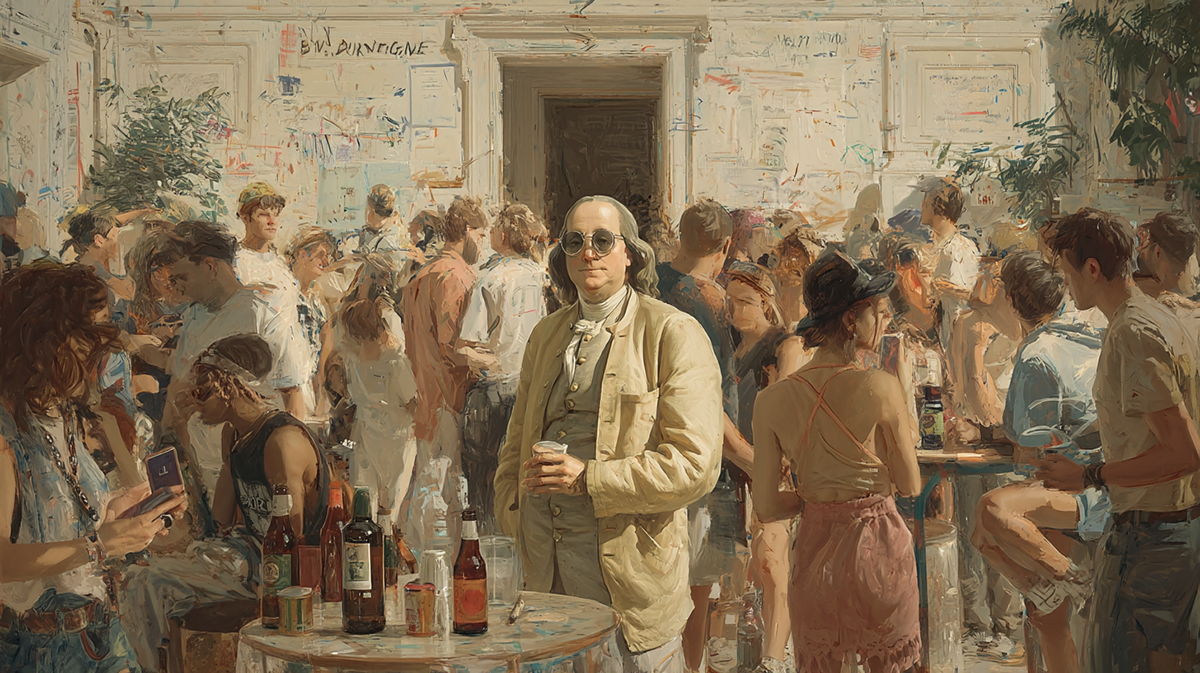
After a fair amount of ruminating, I am going to go with Benjamin Franklin … and since I didn’t actually know him personally, this is based on an autobiography that I read.
He had a restless mind that wanted to poke at how things worked, which is half the battle with any client. He would ask real questions because he could not help himself, and he would actually listen to the answers because he did not mistake curiosity for weakness. Franklin loved buildings in the way practical people love them: as devices for living, working, scheming, and occasionally avoiding responsibility. He also had the social metabolism of someone who could drink you under the table, debate you on aesthetics, then invent bifocals before breakfast. He would absolutely host a dinner where half the guests were brilliant, half were questionable, and all of them would have opinions about your façade. Your job would be to survive the evening with your dignity intact and your design unbutchered.
The real appeal is that Franklin lived in that rare space between intellect and mischief. He understood the value of good company, he appreciated craft without snobbery, and he would talk about architecture the way people talk about weather patterns they think they can improve. You would get a client who wants to engage, who wants ideas, and who is game for a celebration when things go well.
It is hard to imagine a better combination: a mind that cares, a temperament that indulges, and a willingness to raise a glass while questioning whether your stairwell detailing could be smarter.
Andrew
This one was not easy for me. But I had two options here. The first would be Theodore/Teddy Roosevelt. I have read a couple of books and watched a few documentaries on this man. He seems like an interesting character who lived an incredible life and lifestyle. So I would find that interesting as a client. Granted form what I know, he could be a bit bullish, so if we got along it could be great; but if not, it might not be the best client. Which I guess makes him like every other client.
The second would be Leonardo da Vinci. This would be mainly because I think he would also be a fascinating client. But for this one, I would actually want to have him as a “partner” in the process. This is a type of client I have never experienced in practice. It would be exciting to brainstorm, design, and develop with someone like him. I think there would be potential to create some of the best work of my career.
Question 19 jump to 59:50
Are Santa’s Reindeers Male or Female?

Bob
Biologically, they would have to be female. Male reindeer shed their antlers in late fall, while females keep theirs through winter, which neatly explains why Santa’s team is still fully antlered on Christmas Eve. Folklore never bothered correcting the record, probably because it ruins the vibe. The real takeaway is that the most important overnight logistics operation of the year is run entirely by a team of very capable ladies.
Andrew
A mix. Vixen? Blitzen? I do not see why it would not be both. But apparently there is a “thing” going around that they are all female due to a natural biological phenomenon. I still say, since they are imaginary anyway, they are a mixed flight crew of both male and female reindeer.
Question 20 jump to 60:34
Is having a pool in your backyard worth the cost and upkeep?

Bob
A pool is worth it if you actually use it. I grew up with pools, and they were part of my daily routine for long stretches of the year, from early spring through most of summer and into fall. When you are in the water that often, the cost and upkeep feel justified. If a pool is just something you look at through a window, it quickly turns into a lot of maintenance, ongoing chemical balancing, and a surprisingly expensive obligation.
Andrew
Depends on how much you actually get to use it. Of course. If you live somewhere hot with long summers or hot months, then sure. But I think it is always a tough call because they do require a great deal of upkeep. But as it is for every choice, you have to weigh your personal commitment. I say this because it also doesn’t take much neglect for the pool to turn into a frog pond. But I think the more it is used, the easy that upkeep feels and becomes “worth it”. I would say that, for me, it would take 3 times of use per week for a hour or more each dip. So that means 6-9 hours per week of use to begin to cross the line. But either way, they are typically a financial burden not only to build, but to maintain. I have always run into issues due to the “design” of the pool I want as it is not the typical kidney shaped, cookie-cutter pool.
Question 21 jump to 63:25
Is there a project type you absolutely wouldn’t work on, and why?
Bob
Yes, absolutely. Prison is a great answer and one I wish I had thought of first, but mine is production retail. Any project built around rolling out a fixed prototype across multiple sites drains the parts of architecture I actually enjoy. The decisions are already made, the variables are minimized, and the work becomes execution without curiosity. I understand why that model exists, but boredom is a perfectly valid reason to opt out.
Andrew
Prisons. That seems to be counterproductive. While you could take the approach of trying to “improve” their lives, I think the system is not conducive to that. No matter how good my intentions would ever be, the system of imprisonment and incarceration is not one that can currently be pushed into the positive. Yes I know there are some places that have changes the system, but those have been more about the process and not the architecture for the process.
Would You Rather jump to 64:39

You will be stranded forever on a remote island. You can only rely on the skills of two people to survive. Who is coming with you?
A. The one who can hunt any food & the one who can build stuff
B. The one who never panics & the one who knows lots of random survival facts
C. The one who is very physically strong & the one who’s absolutely good with directions and geography (altitude, aptitude, topo etc)
D. The one who always volunteers to help with any task & the one who actually listens when you assign them tasks
This feels like one of those questions that pretends all the options are equal when they clearly are not. Some of these answers sound comforting, some sound admirable, and some sound like they would make for good conversation while things go badly. One option actually addresses the two problems that end survival stories early. The rest are just ways to feel better while waiting for it to be over.
Ep 191: Ask the Show Fall 2025
This wraps up our run of Ask the Show. We made it through twenty-one questions, covered more ground than expected, and proved that this format has run its course. It was fun, occasionally useful, and just self-aware enough to avoid getting precious about it. We are ready to move on to the next thing, something that scratches the same itch without repeating the exercise. Ending it here feels about right.
Thank you for playing along with us through 12 episodes of Ask the Show – your questions were appreciated.
