
Every so often a topic comes up that sounds straightforward on the surface, but the longer you sit with it, the harder it is to pin down. Being your own boss is one of those ideas. It gets talked about like a destination, or a title, or a clean break from something else, even though most of the time what people are really reacting to is a feeling rather than a plan. That tension is where today’s episode lives. This isn’t a conversation about starting your own firm or quitting your job. It’s a conversation about control, responsibility, and the slow realization that the path you’re on might not be the one you ever actually chose. Welcome to Episode 194: Being Your Own Boss.
[Note: If you are reading this via email, click here to access the on-site audio player] Podcast: Embed Subscribe: Apple Podcasts | Spotify | Android | iHeartRadio | TuneIn

We’re talking about being your own boss because a lot of architects reach a point where their career is technically successful but strangely unexamined. Work keeps coming, responsibility increases, and from the outside everything looks fine, yet very few of the decisions that shaped that outcome were ever made deliberately. Roles form through repetition, expectations harden through reliability, and before long it becomes difficult to tell whether you are actively choosing your direction or simply responding to what keeps showing up.
That’s the problem this episode is circling. Not dissatisfaction, not burnout, and not the urge to quit and start something new. The issue is authorship. Many architects discover, usually mid-career, that their professional life has been assembled through momentum rather than intention, and that regaining a sense of control feels harder now than it did earlier, even though they are more capable than they have ever been. Being your own boss gets talked about as if it’s a business decision, but for most people it shows up first as a desire for fewer assumptions and more say. A say in how time gets spent, in what kind of work keeps repeating, and in how much responsibility feels worth the tradeoff. Independence might be one response to that feeling, but it isn’t the only one, and it often introduces constraints of its own. Money, structure, competence, and reputation all start shaping what feels possible long before anyone admits they’re part of the equation.
This conversation exists to slow that moment down and look at it clearly. Not to offer a solution, but to understand how momentum turns into identity, how control gets confused with independence, and how tradeoffs quietly accumulate without ever being named. Being your own boss, in the way we’re using the phrase here, isn’t about escape. It’s about recognizing when a career has been built for you, and deciding how much of it you still want to own.
Momentum Without Direction jump to 7:20
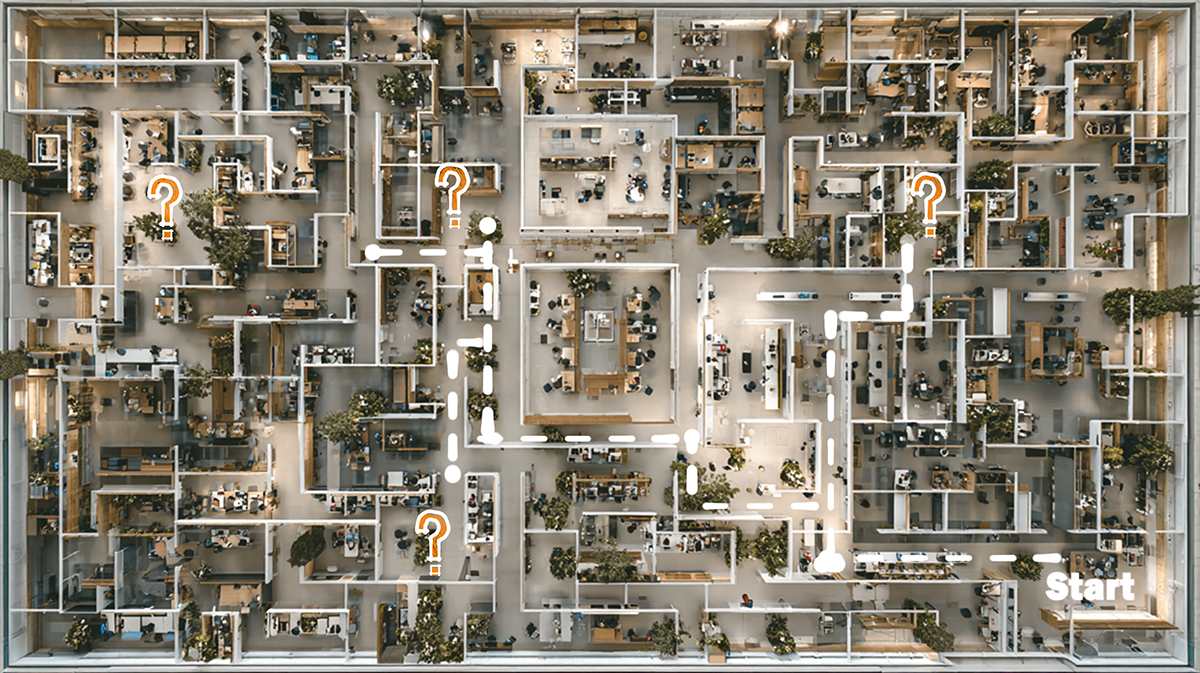
Most architectural careers begin with a kind of effortless momentum, where showing up, doing solid work, and learning quickly is enough to keep things moving forward. Competence gets rewarded, responsibility accumulates, and projects slowly grow in scale and complexity. Titles shift almost without notice, and none of it requires much strategy early on because the system itself is doing a lot of the work for you. Forward motion feels automatic, which makes it easy to confuse movement with direction.
I remember becoming aware of this not through a single moment, but through repetition. Work kept coming, people kept asking for my input, and opportunities kept presenting themselves, yet they all seemed to point in roughly the same direction. Nothing felt wrong, but nothing felt chosen either. Decisions were happening through momentum rather than intention, and while that momentum looked like success from the outside, it felt increasingly passive from the inside. That realization did not arrive with urgency, which in hindsight was part of the problem.
That dynamic works for a surprisingly long time, which is exactly why it becomes risky later. Somewhere along the way, progress without intention starts to feel less reassuring. Nothing is broken and the work might even be good, yet a subtle discomfort creeps in because authorship is missing. The path takes shape through habit and expectation rather than reflection, and it becomes difficult to say when that happened or who, exactly, decided this was the direction things should go.
This phase is easy to ignore because drift is rarely punished. Raises show up, trust deepens, and people rely on you in ways that feel affirming. Gratitude feels appropriate, which makes questioning the situation feel unnecessary or even disloyal. The absence of urgency creates the illusion that there is no cost to waiting, even though time has a way of turning passive decisions into permanent ones. Drift itself is not a failure, but it becomes a problem when it starts making decisions on your behalf, quietly shaping a future you never explicitly chose. The question that matters here is not what should change, but what is already being decided simply because no one has paused long enough to ask.
Competence Becomes Identity jump to 18:53

Being good at something in architecture almost never feels like a decision. It starts out as a series of small, reasonable responses to the work in front of you – you take on tasks others avoid, you solve problems without much drama, and you tend to be the person people turn to when a project needs to move forward without surprises. Over time, that behavior gets noticed, then relied upon, and eventually expected. None of this happens because you set out to define a role for yourself. It happens because repetition slowly teaches people what to associate with your name, and because being dependable feels like the safest possible way to move through the profession.
That association is where things begin to narrow. The work you do well keeps finding you, not because it is the only thing you are capable of, but because it is the thing everyone already understands you to be good at. Capability becomes reputation, reputation becomes expectation, and expectation quietly turns into momentum that is difficult to interrupt. Saying yes stops being a choice and starts feeling like the path of least resistance, not because the work is meaningful or aligned, but because declining it would require explaining yourself in ways you never had to before. The more reliable you become, the more effort it takes to be seen as anything else, even as your interests and ambitions continue to evolve.
What makes this phase especially persuasive is how reasonable it sounds when you talk yourself through it. Turning away from work you handle well feels impractical. Questioning a role that comes with trust and stability feels unnecessary, if not reckless. The profession reinforces this logic constantly, rewarding consistency and treating deviation as risk, even when the cost of staying put is a gradual loss of agency. Specialization itself is not the problem here. The problem is when specialization happens without consent, when habit replaces intention, and when identity forms around what you have been useful for rather than what you want to be responsible for going forward. That is the moment being good at something stops serving you and starts quietly deciding for you.
Control versus Independence jump to 31:09

This is usually the point where someone says, “Well, that’s why I want to go out on my own,” or at least admits they’ve been thinking it. Independence starts to feel like the obvious answer, the cleanest way to reset things, especially if you’ve spent years feeling shaped by expectations you never explicitly agreed to. The idea carries a certain clarity with it, fewer layers, fewer people in the middle, fewer compromises that feel like they belong to someone else. It makes sense to want that, particularly when your role has solidified in ways that no longer feel like a good fit. The mistake is assuming that stepping outside a structure automatically gives you more control, without first asking what that structure was actually providing.
What tends to get lost in that thinking is how quickly independence replaces one set of constraints with another. Responsibility doesn’t disappear, it concentrates. Decisions that used to be shared now land entirely on you, and consequences that were once absorbed by context arrive without much warning. Control shows up unevenly, sometimes as freedom to choose work, sometimes as pressure to accept it because turning it down feels more dangerous than saying yes. Independence can create space, but it can also compress it, especially when time, energy, and financial reality begin asserting themselves in ways that feel far less negotiable than expected. This is where language matters, because control and autonomy are not interchangeable. Autonomy is about separation, about fewer ties and fewer people weighing in. Control is about leverage, about influence over outcomes, and about the ability to make decisions without immediately destabilizing everything else you have built. Plenty of people inside firms exercise real agency without owning the firm, just as plenty of people on their own discover they have traded one form of dependence for another. The presence or absence of a boss turns out to be a poor indicator of how much control someone actually has over their work or their life.
Being your own boss, at least in the way this episode is using the phrase, has very little to do with independence as an end goal. It has far more to do with authorship, understanding which constraints you are accepting, which ones you are resisting, and why. Structure itself is not the enemy. Unexamined structure is. Opting into a system with open eyes can sometimes offer more agency than rejecting it outright, particularly when that choice is made deliberately rather than reactively. Control, in that sense, is not about escape, it is about ownership, ownership of the limits, the tradeoffs, and the reality of how decisions actually get made.
** I spoke about this in the podcast**
In World War Z, the 10th Man Rule is explained by Mossad Agent Jurgen Warmbrunn: “If nine of us who get the same information arrived at the same conclusion, it’s the duty of the tenth man to disagree. No matter how improbable it may seem, the tenth man has to start thinking about the assumption that the other nine are wrong.” This strategy is designed to combat groupthink and ensure preparedness for “black swan” events.
Money as Permission jump to 44:48

Let’s talk money. Money usually enters this conversation quietly, even though it has been influencing it the whole time. Rarely does anyone say, “I’m making this decision because of money,” at least not directly. Instead, it shows up as caution, hesitation, or a sense that certain options are not really on the table, even if they look appealing in theory. People talk about timing, stability, or responsibility, all of which are real considerations, but underneath them sits the same question, whether this choice leaves enough room to breathe if things do not go as planned.
The uncomfortable truth is that money functions less as motivation and more as permission. It does not tell you what to want, but it determines how freely you are able to act on what you already know. Financial margin creates options, not guarantees, and the absence of margin makes every decision heavier. Staying in a role that feels misaligned becomes easier to justify when leaving feels risky. Taking on responsibility you are not sure you want starts to feel necessary when saying no carries consequences you cannot comfortably absorb. None of this is dramatic or heroic. It is practical, which is why it is so easy to overlook how much influence it has.
What complicates this further is that architects are rarely taught to talk about money in neutral terms. Conversations tend to swing between avoidance and bravado, either treating finances as something vaguely distasteful or as a scoreboard that proves worth. Neither framing is particularly helpful when the real issue is agency. Money does not fix dissatisfaction, but it can prevent panic. It does not create clarity, but it can give you time to find it. That distinction matters, especially in mid-career, when the cost of change feels real but the cost of staying put is harder to quantify.
Being your own boss, in this context, is not about maximizing income or minimizing risk. It is about understanding how your financial reality shapes the choices you believe you have. Control grows when decisions are made deliberately rather than under pressure, and pressure is often financial long before it feels emotional. Ignoring that does not make someone more principled. It just makes their options narrower. Agency, here, comes from recognizing money for what it is, a constraint, a buffer, a source of leverage, and occasionally a source of fear, and then deciding how much influence you are willing to let it have over the direction of your work and your life.
Owning the Tradeoffs jump to 50:57

If you are still with us, one thing should be clear, whether you are prepared to say it out loud or not. Everyone is already making tradeoffs. Some of them were chosen deliberately, some of them arrived through momentum, and some of them were inherited without much discussion. The uncomfortable part is not that tradeoffs exist. The uncomfortable part is realizing how many of them have been framed as inevitable rather than owned.
It is easy to talk about responsibility as something imposed from the outside, by firms, by markets, by circumstances, by timing. That framing is comforting because it removes authorship. If the choice was forced, then the outcome is not really yours. The problem is that this story slowly erodes agency, even when the decisions themselves were reasonable. Over time, resentment starts to creep in, not because the tradeoffs were wrong, but because they were never acknowledged as choices in the first place.
Owning a tradeoff does not mean celebrating it. It does not mean pretending it was easy or that you would make the same decision again under different conditions. It means recognizing that you accepted something in exchange for something else, stability for flexibility, influence for certainty, responsibility for control, or the reverse, and that this exchange reflects a set of values at a particular moment in time. Values change. Circumstances shift. Owning the tradeoff simply keeps the door open to revisiting it later, instead of pretending it was locked all along.
Being your own boss, in the way this episode has been using the phrase, has very little to do with job titles or organizational charts. It shows up in the willingness to say, “This is the set of constraints I am choosing right now,” without apology and without denial. That stance does not guarantee satisfaction or success, and it certainly does not eliminate risk. It does, however, replace quiet resentment with clarity, and clarity has a way of making even difficult paths feel more livable. Control, in the end, is not about eliminating limits. It is about taking responsibility for the ones you live with, and accepting that authorship, even when imperfect, is still better than drifting into a future you never meant to claim.
Ep 194: Being Your Own Boss
Being your own boss, in the end, isn’t a finish line or a title you earn, and it isn’t reserved for people who step outside traditional structures. It’s a posture toward your work and your life that starts with admitting where choice still exists and where it doesn’t. Most careers are shaped less by bold decisions than by quiet defaults, and those defaults only gain power when they go unexamined. Responsibility has a way of narrowing options at the same time it sharpens priorities, which is why control often feels more complicated later than earlier. Ownership, in this sense, isn’t about freedom from limits so much as awareness of them. The real shift comes when you recognize which constraints are worth carrying and which ones you’ve simply been living with out of habit. That awareness doesn’t simplify the path, but it does make it yours.
Cheers,

Special thanks to our sponsor Construction Specialties, maker of architectural building products designed to master the movement of buildings, people, and natural elements. Construction Specialties has been creating inspired solutions for a more “intelligently built” environment since 1948. Visit MasteringMovement.net to learn more.