
Every so often a comment lands that sticks around longer than it should because it touches something familiar. The note that sparked today’s conversation came from a call I received from someone observing that architects often seem like they don’t enjoy their clients very much, as if clients are a necessary inconvenience rather than the reason the work exists. That observation isn’t entirely wrong, but it’s also incomplete, and that gap is where this episode lives. This isn’t a complaint about clients or a defense of architects. It’s a conversation about why the client experience so often starts off sideways, how much of that comes from misunderstanding rather than intent, and why architects have more influence over that dynamic than we usually want to admit. Welcome to Episode 193: The Client Experience.
[Note: If you are reading this via email, click here to access the on-site audio player] Podcast: Embed Subscribe: Apple Podcasts | Spotify | Android | iHeartRadio | TuneIn

So … a little back story on how this episode came to be. Maybe a week or two ago, it’s early evening and I get a call on my cellphone and for some reason, I decided to answer it (something I don’t actually do if no name pops up on the caller ID). This was from someone I didn’t know, but he tracked me down because he had listened to the podcast, actually lives here in Dallas, and he had some opinions to share – possibly topics for Andrew and I to discuss on the podcast. He was not trying to be provocative, he was simply observing that architects often sound like they resent the very people who hire them, as if clients are a necessary evil, and that we frequently come off as arrogant. I ended up talking with this gentleman for almost an hour and it was an interesting conversation. I will admit that I reacted to his comments initially in a defensive manner but as we talked, I understood what he was describing but still felt the need to explain why residential architects might act a particular way when someone calls them up out of the blue. His observations stung a bit because they were not entirely wrong, yet they also missed the weight of what architects are carrying when they show up to these initial conversations. The profession of Architecture asks for a high level of emotional investment, professional risk, and personal accountability, all while operating in a world where its value is not immediately understood or universally respected. Clients rarely arrive fluent in process, scope, or consequence, while architects rarely arrive prepared to teach those things without feeling defensive when asked to justify their process or the expense associated with doing the work. Somewhere between those two positions, a disconnect forms. This episode is not about assigning blame or airing grievances. It is about examining why that disconnect exists, how it shapes the client experience on both sides of the table, and why architects, whether they like it or not, are the ones best positioned to change it. Architects will hear familiar frustrations echoed here, and clients listening in may recognize themselves in ways they did not expect. Both are part of the same conversation, even if they do not usually realize it.
Why it Feels Adversarial jump to 10:01
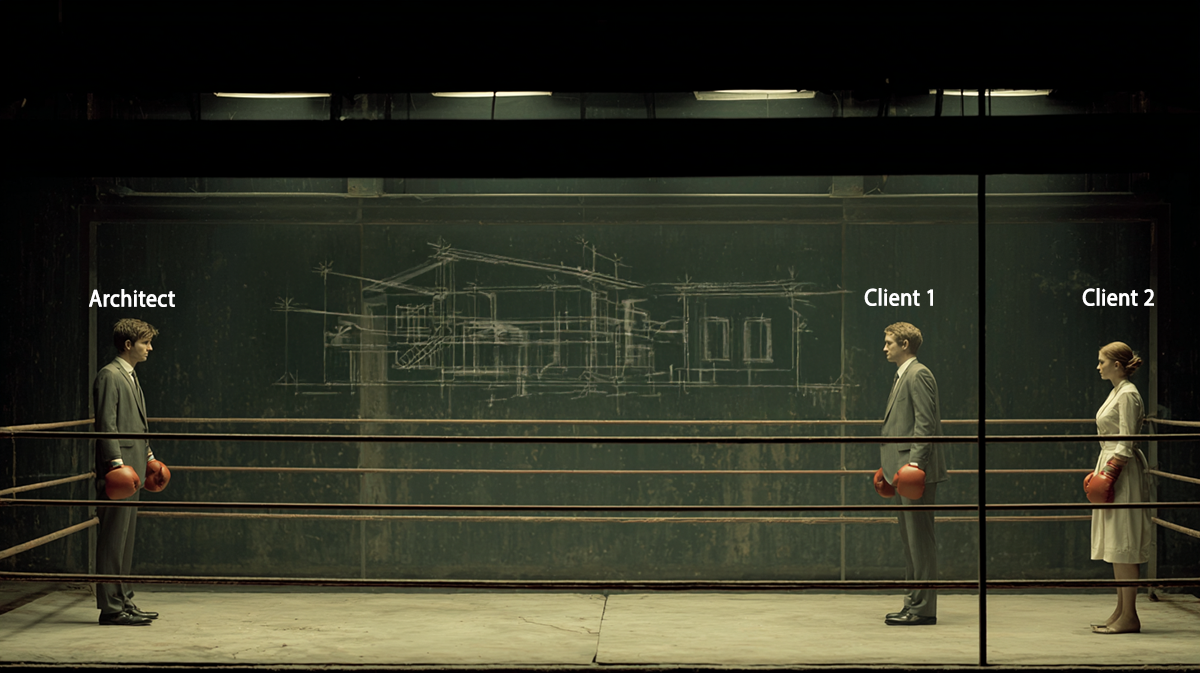
There is the potential for tension between architects and clients before they ever speak to one another. Frequently clients come into that first conversation carrying a vague but persistent stereotype of what architects are like. Architects are seen as expensive, opinionated, slow, and more interested in ideas than constraints. Whether that stereotype is fair or not almost doesn’t matter, because it shapes the questions clients ask right out of the gate. Budgets show up early, timelines get compressed, and there is an undercurrent of “how hard does this really need to be” baked into the conversation. Most architects, for their part, walk into that same exchange hoping to change that perception, to demonstrate professionalism, competence, and value. The problem is that those early questions from the clients perspective are often read as red flags rather than what they usually are, which is uncertainty from someone who does not yet understand the realities of the process. It is in the reaction to those questions, not the questions themselves, where the stereotype gets reinforced.
One of the easiest places to see this play out is in how architects talk when they believe the anre having some version of a conversation that they have had a thousand times before … and the stories all sound familiar. The meetings are difficult because time is spent explaining why this isn’t a 5-minute exercise. Next are the clients who are seen as not getting it and next up are those budgets that feel disconnected from reality. Ultimately, you end up attending to the expectations that seem wildly out of proportion to the fee. At first, those conversations feel healthy because they remind you that you’re not alone, that everyone else is dealing with the same thing. Over time, though, something shifts. Venting turns into posture. Guarded language becomes the norm. Explanations get shorter. Patience gets thinner. What starts as a coping mechanism slowly becomes a default way of interacting. To an architect, that often feels like professionalism. To a client encountering that tone for the first time, it can feel like distance or disinterest. The adversarial edge people sometimes hear from architects usually isn’t about dislike. It’s about fatigue mixed with feeling misunderstood, an experience and process repeated often enough that it shapes how architects show up.
Complicating this further is the fact that architecture does not present itself as a consistent product. Two architects can offer services that sound similar on the surface and arrive at dramatically different fees, scopes, and levels of involvement. From the client’s perspective, that looks arbitrary. They don’t see the difference between limited services and full services. They don’t understand why one architect includes coordination, cost modeling, and construction involvement while another does not. They are left comparing proposals based on the only thing that feels concrete, which is the sticker price. That comparison is not a moral failing, it’s a rational response to incomplete information. Architects understand that fees are directly tied to risk, effort, and responsibility, and clients do not. When clients ask questions that sound transactional, they are often trying to make sense of a marketplace that has not explained itself. When architects respond defensively or dismissively to those questions, the gap widens, and the confusion hardens into mistrust.
From the architect’s side, the reaction still makes sense. Most clients have no real understanding of what it takes to do the work well, and very few arrive with any appreciation for the process itself. Years of education, responsibility, risk, and liability collide with conversations that flatten everything down to drawings, finishes, or cost per square foot. Fee discussions are where this tension shows itself most clearly. Architects are routinely asked to justify their value in ways other professionals simply aren’t. Nobody negotiates with their doctor about how much diagnosis they actually need, and nobody asks their lawyer to trim off a little expertise to make the bill feel better. Architects, on the other hand, hear some version of that request all the time. After enough repetitions, you start bracing for it before the conversation even begins. Questions begin to sound like skepticism. Curiosity starts feeling like a challenge. When someone says, “I already know what I want, I just need you to draw it,” it lands as a quiet dismissal of the very thing an architect brings to the table. That weariness shows up whether you intend it to or not, and it often comes out as restraint or detachment.
Clients, meanwhile, are operating from a completely different emotional place. For most people, hiring an architect is unfamiliar, expensive, and tied to decisions that feel permanent. It’s not just money on the line, it’s how they’re going to live, work, or invest a significant portion of their future. Most have never hired an architect before and have no framework for how the process works or which decisions actually matter most. That uncertainty creates anxiety, and anxiety tends to look like control-seeking behavior. Questions are asked because the stakes feel high, not because expertise is being challenged. Hesitation around fees is usually about fear of escalation, not disbelief in professional skill. When architects respond to that anxiety by pulling back or tightening up, clients read it as arrogance or indifference. That’s where the loop locks in. Architects react to questions as threats. Clients react to distance by pushing harder. Both sides end up confirming the very stereotypes they were hoping to avoid. The uncomfortable truth is that the client experience is shaped early, often in the first few conversations, and architects have far more influence over whether that experience becomes adversarial than they might like to admit. Recognizing that is not about blame, it is about understanding where the leverage actually sits.
For those of you overachievers out there who listened to the podcast AND are reading this post, the article I mentioned where I received an angry phone call from a client asking if I was manipulating them … it was this one: Architects are Crafty.
Why Clients “Don’t Get It” jump to 37:09

Once you step back from the frustration for a moment, it becomes pretty clear that most clients don’t arrive at “not getting it” because they’re dismissive or difficult. They don’t get it because architecture hides its value in places they can’t see. Clients understand outcomes – they understand finished spaces, images, and buildings. What they don’t understand is everything that happens before those things exist, because most of that work lives in conversations, judgment calls, and decisions that never become visible artifacts. When you hire a doctor or a lawyer, there is a cultural understanding that you are paying for judgment. You are paying for experience, discernment, and the ability to see problems before they become disasters. Architecture has never fully claimed that territory. We show drawings, models, and renderings, and those things make it feel like the work is tangible and therefore comparable. Clients end up trying to evaluate architecture the same way they evaluate other purchases, by looking at what they can see and measuring cost against that. When that equation doesn’t make sense, confusion fills the gap, and confusion is where most early misunderstandings exist.
The comparison to doctors and lawyers isn’t about complaining that architects don’t get enough respect. It’s about recognizing how different the starting assumptions are. Those professions benefit from decades of reinforcement that says expertise lives in judgment, not deliverables. Architecture often presents itself as selling drawings, even when architects know that the drawings are just the residue of thousands of decisions layered on top of one another. Early conversations make this worse instead of better. Clients talk to multiple architects and hear wildly different descriptions of services that sound similar on the surface. One architect offers full services. Another proposes something more limited. A third talks about collaboration and flexibility without clearly defining where responsibility begins and ends. Fees vary dramatically and actual scopes of work overlap ambiguously … and nobody stands there translating what those differences actually mean. From the client’s point of view, it looks arbitrary. It feels like the same thing being sold at different prices with no clear explanation for why. So they fall back on the only thing that feels solid. Sticker price. Timeline. While those are not necessarily the right metrics, they are the ones that appear legible.
Architects tend to underestimate how disorienting that moment is. Most people are used to buying things with clear boundaries and predictable outcomes. Architecture offers neither. The process unfolds slowly and decisions compound over and over again. Early choices quietly lock in future consequences that won’t show themselves for months or years. There is no immediate feedback loop telling a client whether they are making good decisions, which creates a low-level anxiety that never quite goes away. That anxiety shows up as control-seeking behavior. “How much will this cost?” is often about exposure. “How long will this take?” is really about how long they’ll be living in uncertainty. “Do we really need that?” is usually a question about risk, not a challenge to expertise. Architects hear those questions through the lens of their own experience and feel their value being questioned. Clients hear themselves asking reasonable questions in an unfamiliar and expensive situation, and without someone actively bridging that gap, both interpretations harden and people start talking past (or possibly through) each other.
This is where architects often make the situation worse without meaning to. When value is assumed instead of explained, irritation sets in quickly. Answers get shorter. Explanations become more technical. Fees are defended rather than contextualized. Scope is described in ways that make perfect sense internally but don’t actually help a first-time client understand what they’re buying. Clients respond by pushing harder on the few levers they understand, which are cost and schedule, and that pressure reinforces the architect’s belief that the client only cares about price. The cycle tightens, and nobody ever names what’s really happening. Architects worry that slowing down to explain will feel defensive or patronizing. In reality, the absence of explanation is what makes the relationship feel transactional and tense. Clients don’t need to be convinced that architecture has value. They need help understanding where that value actually lives.
Once you see that clearly, the goal shifts. The issue isn’t that clients fail to appreciate architecture. Appreciation can’t exist without comprehension, and comprehension doesn’t happen automatically. Clients don’t need to become architects, they need enough understanding of the process to trust it. When architects start framing their role as guides through uncertainty, rather than assuming their expertise should speak for itself, the entire tone of the relationship changes. The client experience improves not because clients suddenly become more sophisticated, but because someone finally takes responsibility for making judgment visible. That’s not an extra service … that’s the core of the job.
The “Just Draw It” Moment jump to 46:34
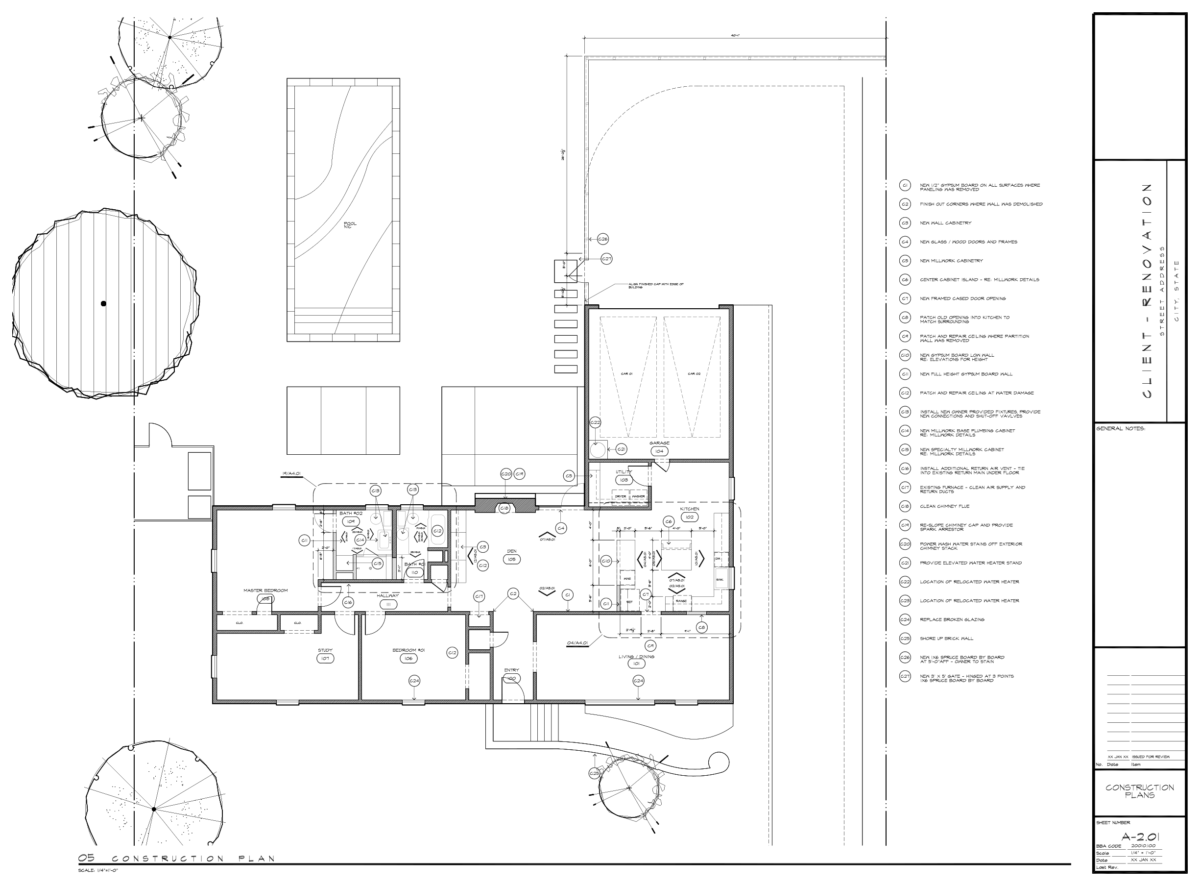
The “I already know what I want, I just need someone to draw it” moment almost always shows up right at the beginning of the process. It’s usually part of the first phone call or the initial meeting, and it arrives before there’s been any real opportunity to set expectations or explain how the process actually works. Architects hear that sentence and feel their shoulders tighten almost on reflex because it sounds like a reduction of expertise to drafting, or worse, responsibility without authority. That reaction makes sense, but it’s usually aimed at the wrong thing. At this stage, the client isn’t pushing back against the value of architecture, they’re trying to get their footing in something that feels expensive, unfamiliar, and full of risk. Saying they know what they want is less about asserting control over the architect and more about reassuring themselves that they’re not walking in completely blind. The problem isn’t the sentence itself, it’s how quickly architects treat it as a threat instead of a signal.
From the client’s perspective, that signal is rooted in exhaustion with ambiguity. By the time someone reaches out to an architect, they’ve usually spent a long time thinking about the project. They’ve collected images, toured spaces, talked to friends, and built a mental picture of what success looks like. Saying “I know what I want” is their way of communicating readiness to move forward, not a declaration that the process is unnecessary. Architects hear it differently because they understand how fragile early assumptions can be and how many constraints have yet to surface. That gap in understanding shows up immediately in tone. A defensive response confirms the stereotype that architects are rigid or precious. A corrective lecture shuts down curiosity, and ignoring the comment altogether leaves the misunderstanding in place. None of those responses help. The more productive move is to acknowledge the client’s clarity as a starting point and then expand the frame, explaining that the real value of the process is testing those ideas against budget, code, constructability, and long-term use. When drawing is repositioned as the record of decisions rather than the service itself, the conversation shifts from control to collaboration.
That early moment is also the right time to talk honestly about services and scope, because confusion here is what fuels so many later frustrations. Clients assume that all architects provide essentially the same services and that the difference comes down to style or personality. Architects know that the real difference is level of involvement, responsibility, and risk. Explaining that in plain language changes the entire dynamic. Full services stop sounding like an upsell and start sounding like comprehensive advocacy. Limited services stop sounding like a bargain and start sounding like a choice with trade-offs. That clarity doesn’t scare off good clients – it gives them a framework for making decisions they can actually stand behind. The “just draw it” moment isn’t a red flag, it’s a diagnostic. It tells you where the client is starting from and what they’re worried about. Architects who treat it as an early orientation exercise instead of an insult almost always see the relationship stabilize faster and the client experience improve from the very beginning.
Guides, Not Gatekeepers jump to 55:37

By the time you reach this point in the conversation, one thing should be pretty clear. Clients are not failing the process because they are unwilling to understand it. They are failing to understand it because nobody has made that understanding part of the work. Architects like to believe that competence will eventually speak for itself, that clarity will arrive once drawings exist or once a few good decisions have been made. In reality, the client experience is shaped long before any of that happens. It’s shaped in how the process is framed, how uncertainty is acknowledged, and how much responsibility the architect is willing to take for guiding someone through unfamiliar terrain. Clients don’t need architects to be mystified experts guarding access to knowledge. They need someone who understands where the risks are and is willing to point them out before they become problems. That role is closer to a guide than a gatekeeper, and it requires architects to accept that part of their job is translating judgment into language that makes sense to people who don’t live in this world every day.
This is where some architects bristle, because the word “service” still carries baggage. There’s a fear that leaning too hard into service means surrendering authority or creative control, or worse, becoming subservient to client whims. That fear misunderstands what good service actually looks like. Service in architecture isn’t about saying yes to everything or diluting professional standards. It’s about leadership. It’s about recognizing that clients hire architects precisely because they don’t know how to navigate the process on their own, and pretending otherwise helps no one. Educating clients isn’t an extra task layered on top of design. It is inseparable from it. Explaining why a decision matters, what a trade-off really costs, or where flexibility exists isn’t hand-holding – it’s risk management and it’s advocacy. Architects who avoid those conversations because they feel awkward or time-consuming usually end up having much harder conversations later, when trust is already frayed and options are limited. Architects who step into that role early often find that clients relax, ask better questions, and stop fixating on the wrong things because they finally understand what’s actually at stake.
The calm reality is this. Clients will never fully understand architecture, and they don’t need to. They don’t need to know how to size a beam, coordinate consultants, or reconcile competing code requirements. What they need is enough context to trust the process and the person leading it. When architects accept that responsibility, the dynamic shifts. Conversations become less adversarial because they’re no longer about control. They’re about alignment. Clients stop trying to manage the work they don’t understand, and architects stop feeling like their value is constantly under threat. The work gets better because expectations are grounded in reality instead of assumption. This isn’t about fixing clients or lowering standards. It’s about acknowledging where the leverage actually sits. Architects shape the client experience whether they intend to or not. Choosing to do it deliberately, with clarity and patience, turns frustration into momentum and confusion into trust. That’s not idealism, that’s professional pragmatism.
Ep 193: The Client Experience
Most of the frustration architects feel around clients isn’t rooted in bad intentions or unreasonable people. It comes from assumptions colliding early and then hardening before anyone takes the time to slow things down. Clients don’t arrive fluent in architecture, and there’s no reason they should. Architects are still service providers, and the service they offer isn’t just design, it’s judgment, guidance, and clarity inside a process that feels risky and unfamiliar. When architects accept that responsibility and make the invisible parts of the work visible, the client experience shifts from guarded negotiation to shared momentum.
Cheers, and best of luck!

Special thanks to our sponsor Construction Specialties, maker of architectural building products designed to master the movement of buildings, people, and natural elements. Construction Specialties has been creating inspired solutions for a more “intelligently built” environment since 1948. Visit MasteringMovement.net to learn more.