
Every decision eventually arrives at a point where more thinking stops helping and only starts postponing whatever is coming anyway. Nobody experiences that moment as procrastination while it is happening. It feels like diligence, like one more conversation or one more report will finally produce the certainty everyone is waiting on. Circumstances, unfortunately, don’t share that patience, and move forward whether the answer arrives in time or not. Welcome to Episode 207: Forward Beats Perfect.
[Note: If you are reading this via email, click here to access the on-site audio player] Podcast: Embed Subscribe: Apple Podcasts | Spotify | Android | iHeartRadio | TuneIn

Today we are discussing a habit that quietly costs more than almost any other in leadership: mistaking additional thought for actual progress. It rarely shows up looking like hesitation, it shows up dressed as responsibility, the sensible thing a careful person does before committing to something that matters. There’s nothing wrong with that instinct in moderation. The trouble starts at the point where more thinking stops sharpening a decision and starts protecting the person making it from the discomfort of being wrong later, and that point arrives a lot sooner than most of us want to admit. This conversation is about recognizing where that line sits, what it costs to stay on the wrong side of it, and what changes once you’re willing to move before everything feels settled.
What follows isn’t really a checklist, it’s a progression … four disciplines that build on each other, each one picking up right where the last one leaves off. You start by thinking, then you commit, then you observe what actually happened, and then you adapt based on what you saw. None of them are complicated on their own. What makes them hard is that they ask you to act while things are still unresolved, and then to keep paying attention after you’ve already committed, which is a very different skill than just making a call and hoping it holds. That’s where most of the real difficulty in this conversation actually lives, and it’s a good place to start.
This is how we have broken down today’s conversation: Think, Commit, Observe, Adapt … so let’s get into it.
Waiting for Perfect jump to 4:37

We’ve all sat through enough group discussions to notice a pattern that almost nobody acknowledges. At the start of any real decision, more thinking genuinely helps, and it’s worth being honest about that before making the rest of the argument. A second opinion catches something the first pass missed entirely, sometimes something obvious in hindsight and sometimes something nobody would have caught without a fresh set of eyes on it. Other times it’s smaller than that: somebody simply asks what happens if a key assumption turns out to be wrong, and the answer ends up changing the whole direction of the conversation. Early thinking earns its reputation honestly, and skipping it isn’t decisiveness, it’s recklessness pretending to be confidence. What doesn’t hold up, though, is the assumption that this value keeps climbing forever the longer you stay in it. It arrives early, does most of its real work fast, and then starts to flatten out without any kind of warning label attached to the moment it happens. A fifth conversation about the same decision rarely feels any different from the second one while you’re sitting inside it, mostly because everyone involved still treats it with the full ceremony of the first (agenda and all), as though a decision already discussed four times just needs one more respectful audience before it’s finally allowed to happen. Jeff Bezos has talked about this in terms of a rough 70% rule: if you wait until you have 90% of the information you’d like to have, you’ve usually waited too long. I wouldn’t put a number on it myself, life doesn’t hand out percentages that cleanly, but the instinct behind it holds up fine without one.
What replaces good judgment at that point rarely announces itself as avoidance, because it’s gotten very good at wearing diligence instead, and I say that as someone who has personally worn the costume. Nobody stands up and admits they’re stalling. What they say is that they want to be sure, or they’d feel better with another set of eyes on it first, and either version of that sentence sounds exactly like what a careful, responsible person is supposed to say before committing to something that matters (which is precisely what makes it such a comfortable place to move in and set up furniture). It’s rarely the lazy or the indecisive who fall into this particular trap. More often it’s the most conscientious people in the room, the ones who’ve built real pride around being thorough, and that pride turns out to be the easiest thing in the world to exploit, mostly by the person carrying it. Once being the one who doesn’t cut corners becomes part of how you see yourself, “let’s gather a little more before we commit” stops sounding like delay and starts sounding like integrity. You can ride that feeling for a surprisingly long time before anyone, including you, notices that nothing has actually moved. None of that extra waiting is preserving anything, either, because the situation everyone’s so carefully studying refuses to hold still long enough to be studied properly. Circumstances keep moving underneath the analysis, and whatever information gets so carefully assembled is often half-stale by the time someone finally acts on it, built for a version of events that quietly wandered off sometime around the third meeting.
The real choice was never between deciding now with incomplete information and deciding later with complete information, because that second option was never actually available to anyone, no matter how good the follow-up questions sounded. The real choice was between deciding now, imperfectly, and deciding later, just as imperfectly, except later (with the added cost of everything that sat frozen in the meantime). Learning to spot that difference is the entire job of this first discipline: noticing the point where the real work of preparing has already happened, so whatever follows can be recognized honestly for what it actually is- hesitation- dressed up and standing in for something more responsible.
Forward Without a Map jump to 21:17

I’ve told people for years that starting the blog felt like being dropped into dark, fast-moving water, alone, with no idea which direction led back to shore. That’s not an exaggeration for effect. When I started writing, there wasn’t an architecture blog out there I could point to and say “that’s roughly the shape of what I’m trying to do.” No format to borrow, no established voice in this profession to react against or build on, nothing showing me what a reasonable posting schedule looked like or what subjects an audience like this might actually want to read about. Every decision, and there were a lot of them, got made with whatever information I had in front of me at the time, which usually wasn’t much. I picked a name, picked a tone, decided how often I’d show up and what counted as worth writing about, and I made every one of those calls without the comfort of a single example proving any of it would work. Nearly a 12-hundred posts later, it’s easy to forget how much of that first stretch was built on nothing sturdier than a reasonable guess and a willingness to find out.
What I didn’t do, and this is the part that actually matters for this conversation, is wait until I had a clearer picture before I started. I didn’t spend six months studying blog structure or trying to track down other writers doing something similar, mostly because there wasn’t really anyone doing this to study, but also because waiting wouldn’t have manufactured the certainty I was looking for anyway. I had enough information to start reasonably, so I started, and what I built looked exactly like what I’d pictured, right up until it didn’t anymore. The posting rhythm has changed just four times in sixteen years, and each of those changes came at a point where the site had already outgrown the version before it, not because anything was broken, but because staying the same would have meant the site had stopped paying attention to its own audience. Topics I thought would define the site barely register anymore, and subjects I never planned on writing about turned into some of the most important work I’ve done here. None of that happened because the original plan was flawed. It happened because I was already in the water, and the only way to notice when it was time to move again was to keep paying attention to what the current was doing while I moved through it.
There could have been a version of this story where I wait a year, build a plan, study whatever comparable examples I could scrape together, and launch something more polished and better reasoned than what actually happened … but I don’t think that version turns out better, and I say that having lived with the actual one long enough to trust the comparison. A plan built entirely in advance would have been a plan built for a version of the audience, the profession, and the internet itself that didn’t exist yet and wasn’t going to hold still long enough to be planned for. The blog I’d have built on paper would have been optimized for guesses instead of evidence, and guesses don’t get smarter just because you spend more time refining them before testing any of them against something real. What actually taught me anything was publishing something imperfect and watching what happened next, then doing it again with slightly better information the second time, then again, for the better part of sixteen years now.
That’s really the whole lesson sitting inside this specific memory: the first version of a decision is rarely the version that survives contact with reality, and that’s fine, because it was never supposed to be. I wasn’t trying to get the blog right on the first attempt. I was trying to get it moving, and moving is what gave me something real to evaluate instead of a theory I’d never tested. Every adjustment I made after that first leap came from evidence the leap itself produced, not from more thinking I could have done beforehand, because that evidence simply didn’t exist yet. Nobody sitting on the shore, no matter how careful or well-read, could have told me what I learned in the first six months of actually being in the water. The decision to start wasn’t the smart part. The willingness to keep adjusting once I was already committed, that was the part that mattered.
Perfect in Hindsight jump to 32:50
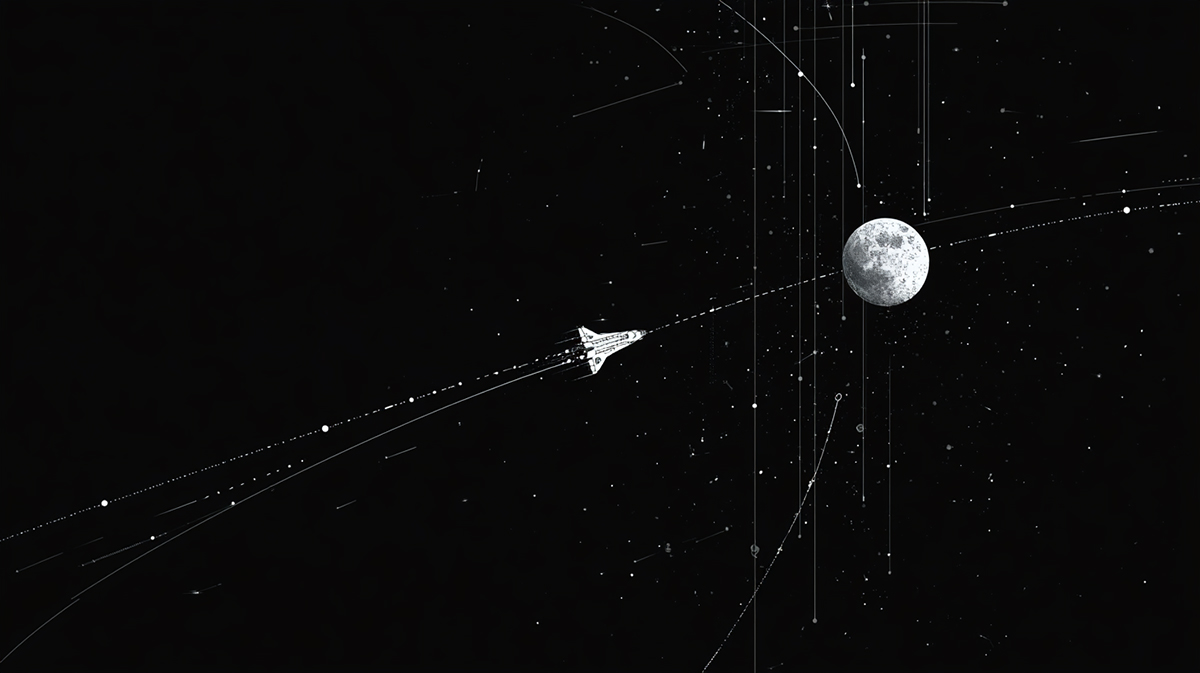
Once a decision is actually out in the world, something in most of us switches from trying to make the right call to trying to prove we already had. That shift is subtle enough that it rarely feels like a decision itself, it feels more like loyalty, and the instinct is to stand behind something you committed to instead of abandoning it the moment it gets uncomfortable. I understand the instinct even when I manage to resist it, because I’ve watched it happen to plenty of people whose judgment I otherwise trust completely, a result comes back a little sideways, and the explanation that shows up first isn’t “let’s look at this honestly,” it’s “here’s why that made sense given what I knew at the time,” which is true, and also completely beside the point. The job at this stage was never to defend the decision. The job was to find out what it actually did once it met the real world. A useful example to help clarify my point is the Apollo Guidance Computer, which every crewed Apollo mission relied on to get to the moon and back. It didn’t chart a single trajectory at launch and hold to it out of loyalty to the original math. It tracked the spacecraft’s actual position continuously, compared that against where the mission plan expected it to be, and made small corrections along the way, dozens of them across a single flight, specifically because the first calculation was never expected to still be correct hours later. Nobody considered those corrections a failure of the original plan. The plan was working exactly as intended, and the astronauts would have been in real trouble if the computer had simply insisted that the first heading was still correct out of some misplaced sense of consistency.
The trouble is that admitting a decision needs correcting can feel like admitting the decision was wrong in the first place, and those aren’t the same thing, even though they get treated as identical more often than they should. A decision can be exactly right given what was known at the time and still need real adjustment once new information shows up, the kind of information that was never available before the decision actually got made and the world had a chance to react to it. Treating every correction as a confession invites exactly the wrong behavior: people start protecting the original call instead of evaluating what it produced, and a project, a strategy, or a relationship keeps drifting in a direction nobody would choose on purpose, purely because changing course now would look like losing an argument that was never actually being fought. I’ve watched good, capable people talk themselves into staying the course on something everyone in the room privately suspected wasn’t working, mostly because nobody wanted to be the one who said it first (myself very much included, on more than one occasion I’d rather not list here). Evaluation is treated like a courtroom rather than a checkup, and once that happens, the incentive flips from finding out what’s true to defending what’s already been said.
Honest observation means being willing to look at a decision the same way you’d look at anyone else’s, without the emotional interest that comes from having made it yourself. That’s a harder trick than it sounds, because the decision usually carries your name on it somewhere, your judgment, your reasoning, sometimes your reputation, and separating the evaluation from the ego that made the original call takes real, deliberate effort rather than good intentions alone. It helps to ask a specific, almost clinical question instead of a defensive one: not “was I right,” but “what is this actually doing now, today, regardless of what I expected it to do.” Those two questions sound similar but yield completely different answers because the first is looking for vindication, while the second is just looking for the truth. A decision that’s drifting off course doesn’t need someone standing over it insisting the original heading was fine. It needs the same kind of continuous, unemotional correction the Apollo computer was quietly running the whole way to the moon, not because the first plan failed, but because no plan was ever built to survive the entire trip unchanged.
Never Actually Perfect jump to 46:13
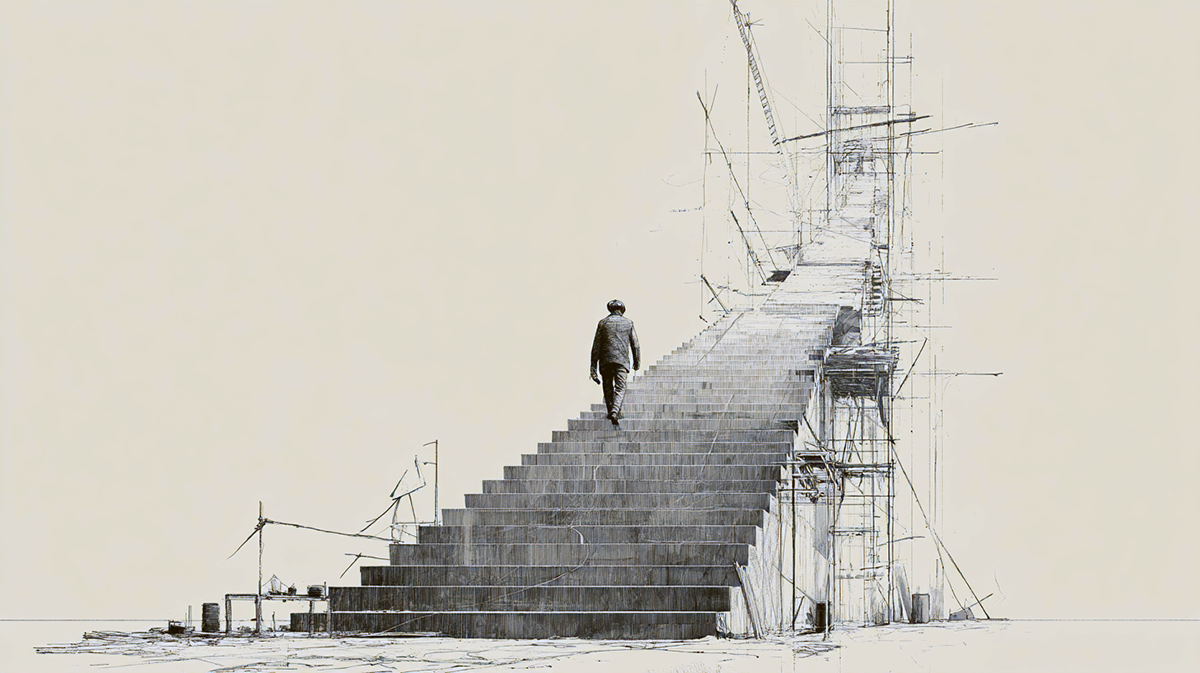
Adapting continuously sounds like it should be the easiest part of this process, since by this point you’ve already done the hard work. You’ve thought carefully, you committed before you felt ready, and you learned to evaluate the result honestly instead of defending it … what’s left seems like it should just be maintenance. It isn’t, and the reason it isn’t is that adapting continuously asks you to give up something the earlier parts of this process never actually required, the idea that there’s a finished version of this decision waiting for you somewhere up ahead, a point where you’ll finally have it right and can stop paying attention. There isn’t one. Circumstances that were true when you committed won’t stay true indefinitely, the people involved change, the information changes, the whole landscape the original decision was built for quietly becomes a different landscape while you’re still standing in what you built for the old one. Growth, in this specific sense, was never about protecting a decision well enough that it never had to change. Growth was always about getting better at noticing when it needs to, and getting comfortable enough with that process that noticing it doesn’t feel like failure every single time it happens.
That comfort is really the whole trick, and it’s harder to build than it sounds. Most of us were taught, somewhere along the way, that consistency is a virtue and that changing your mind needs a good excuse attached to it. Neither of those things is entirely wrong, but neither of them is quite right either, not when the decision itself was never meant to be permanent. It was just your best answer for that moment.
What actually separates people who improve their decisions from people who just keep defending them isn’t intelligence, and it isn’t even courage exactly, it’s a kind of ongoing humility about the fact that getting it perfect was never actually the standard you were working toward. You were working toward a decision that made sense given what you had, and whether it turns out perfect or not was never really the point. The goal was to keep moving in a direction that made sense with what you knew, and then to keep paying close enough attention that you’d notice the moment it stopped making sense, and adjust again, and keep going. That’s not a weaker standard than getting it right the first time. It’s actually a much higher one, because it never lets you stop working, never lets you coast on an old decision just because it used to be correct, and never lets you mistake the comfort of consistency for the actual job, which was always to keep the decision honest, one adjustment at a time, for as long as it takes to matter. Forward was never about being fast. It was about being willing to keep moving instead of standing still, waiting for a kind of certainty that was never going to show up and call your name.
Ep 207: Forward Beats Perfect
Thinking, committing, observing, adapting, none of it is really about moving fast. It’s about refusing to let the search for certainty stand in for the work of actually deciding, and that’s harder than it sounds, because waiting rarely announces itself as waiting. It shows up looking responsible, right up until you notice that nothing has actually moved and the only thing that’s grown is how confident everyone feels about staying still. Every real decision gets made on incomplete information, and no amount of extra thinking was ever going to change that, it was only ever going to change how long you waited before admitting it. The people who get good at this haven’t found a way around uncertainty. They’ve just stopped expecting it to go away, made the best call they could, and stayed honest enough afterward to keep adjusting. That’s not a lesser standard than getting it right the first time. It’s the only one that was ever actually available to any of us.
Carry on,

Special thanks to our sponsor, Construction Specialties, maker of architectural building products designed to master the movement of buildings, people, and natural elements. Construction Specialties has been creating inspired solutions for a more “intelligently built” environment since 1948. Visit MasteringMovement.net to learn more.