
Asking a good question is a skill, not a personality trait, but most people treat it like something you either have or you don’t. It works more like a muscle – the more deliberately you use it, the stronger it gets. What separates a good question from a bad one isn’t intelligence or time on the job, it’s a specific habit of thinking, slowing down enough to actually look at a problem before reacting to it. That habit is something anyone can build with attention and practice. This episode is about that habit, not about handing you a script of clever questions to memorize instead. Welcome to Episode 208: Ask Better Questions.
[Note: If you are reading this via email, click here to access the on-site audio player] Podcast: Embed Subscribe: Apple Podcasts | Spotify | Android | iHeartRadio | TuneIn

Today, Andrew and I are going to discuss how to ask better questions (the why should be obvious, but we’ll touch on that as well). A good question tends to end with an answer … while a poorly phrased question just produces more questions, sending you back to revisit ground you thought was already settled, and sometimes changing the outcome entirely simply because the first question never understood what it was actually trying to ask. Today’s conversation is about a specific kind of thinking – it’s about what actually happens in the pause between noticing a problem and reacting to it. Most people assume this ability just shows up eventually, given enough years on the job, but the case we’re making today is that it can be built on purpose, and built faster than waiting for it ever would. That matters just as much for a homeowner trying to pick the right contractor as it does for the architect sitting across the table from them.
I need to extend some grace to Andrew because he is having to endure the topics I have been coming up with lately; most of them have fallen squarely into the “self-serving exercise” category.
The Guess in Disguise jump to 9:31
Most people believe they’re asking a question when they’re actually asking for permission. “Does this look right to you?” sounds like an invitation to think something through together, but it usually isn’t, the speaker already landed on an answer and just wants to know if anyone’s going to make them defend it. I’ve asked that exact sentence in meetings I was running, which is a strange thing to admit out loud, since running the meeting was supposed to mean I’d already done the thinking. The words carry a question mark, but the shape underneath them is closer to a statement in disguise, and most of us walk around fluent in that disguise without ever noticing we’re doing it. It shows up in client meetings, in design reviews, in conversations with a spouse about where to hang a piece of art, anywhere a decision has quietly already been made, and the question is just there to collect a nod on the way out the door.
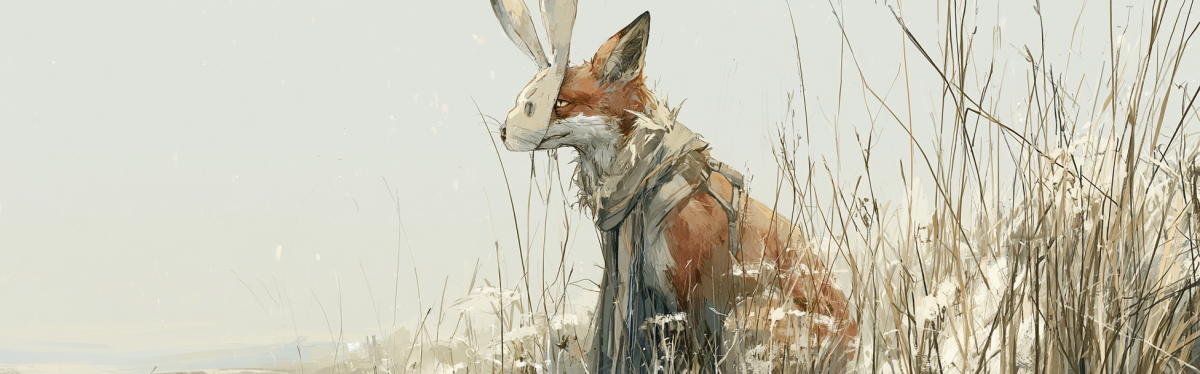
The tell isn’t in the words, it’s in what happens to the person asking once the answer comes back different than expected. Someone asking a real question treats a surprising answer as information worth having, they pause, they reconsider, and the shape of the conversation actually bends toward whatever just got said. Someone asking a guess in disguise treats that same surprising answer as an obstacle, something to talk their way back around until the room lands where they’d already decided to land before they opened their mouth. This is a habit that hides even from the person doing it, which is exactly why it survives as long as it does. A genuine question requires sitting inside not knowing something in front of other people, and that’s uncomfortable in a specific, ordinary way, the same way it’s uncomfortable to admit you’re lost while everyone else seems to be following the map fine. The guess skips that discomfort entirely and still gets full credit for sounding open-minded, which is exactly why it’s the default setting for most people most of the time – it’s the version anyone can perform without ever paying what real uncertainty actually costs.
There’s a simple enough test for telling the two apart, and it has nothing to do with tone or sincerity, both of which are easy to fake by accident. Ask what kind of answer the question was actually built to accept. “What am I not seeing here?” can absorb almost anything, including an answer that changes the whole direction of the conversation, because the question was built with room for that outcome from the start. “Does this look right?” was never built to absorb much of anything – it was built to be agreed with, and most people who ask it already know that on some level, whether they’d admit it or not. That’s not dishonest so much as it’s a different job using the same punctuation, and learning to hear which job is actually happening in your own mouth, before you can hear it in anyone else’s, is where the rest of this conversation has to start.
Manufacturing Experience jump to 24:03
People talk about experience like it’s something that just piles up on its own, like putting in the years is the whole job and the rest takes care of itself. Stick around long enough, and eventually you’ll just know things you didn’t used to know. It’s a convenient idea, because it means nobody has to do anything except keep showing up and let the years handle the rest. Plenty of people show up for decades and never develop the instincts a few sharp years should have given them, which tells you time alone was never the ingredient doing the work. What happens when experience pays off looks more like a habit than a byproduct – going back afterward and looking honestly at what you got wrong instead of filing it away, paying attention when the same shape of problem shows up under a different name. Neither of those requires waiting – they require a level of exposure most people avoid because honest self-review is uncomfortable, and avoiding that discomfort is usually the real reason someone’s experience isn’t compounding the way it should.
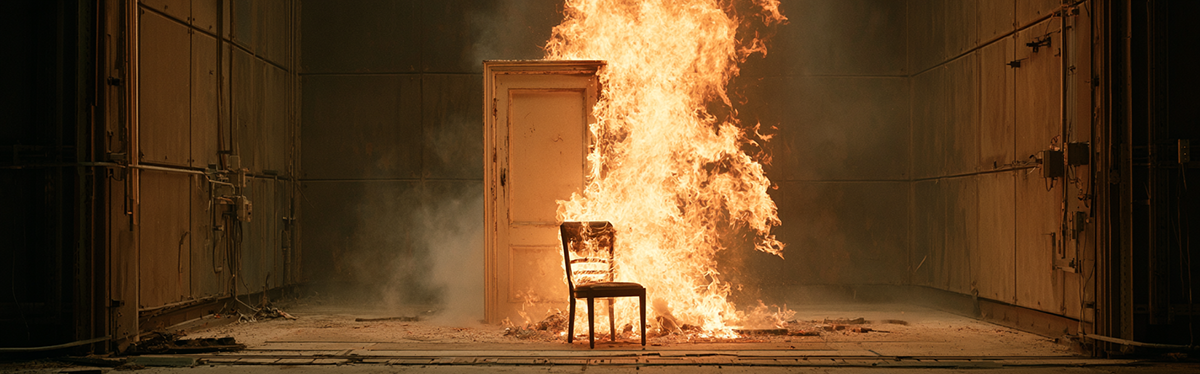
The blog became part of that process for me. I started writing about projects and decisions, and the by-product turned out to matter more than the writing itself. Putting a half-formed thought in front of strangers is a different exercise than having that same thought privately, since privately you’re allowed to stop the moment it feels finished, while publicly you have to finish it, defend it against a reader who wasn’t in your head while you had it, and live with it once it’s out there whether it holds up or not. I gave a talk a while back called “How Public Thinking Shapes Private Judgment,” and that title says the whole thing plainly, the public part isn’t decoration on top of the thinking, it’s what forces the thinking to get sharper in the first place.
None of this requires a blog. It requires a colleague who’ll actually disagree with you instead of nodding along, or the habit of writing a decision down and reading it again once you know how it turned out. Twenty years of putting my thinking in front of people did more for my judgment than twenty years of keeping those same thoughts to myself ever would have. The passage of time never did that work on its own, the honest collisions with my own thinking did.
Slowing Down to Look jump to 33:03
The habit underneath all of this is simpler to name than it is to practice, pausing long enough to actually examine a problem before reacting to it. That pause is where a guess gets caught before it disguises itself as a question, and where the deliberate exposure from the last section actually gets used instead of just accumulated. Everything before the pause is instinct, the reflex answer that shows up before you’ve looked at anything. Everything after it is execution, carrying out whatever got decided. The pause is the only part of the whole sequence that’s actually yours to control, and it’s also the part almost everyone skips, because skipping it feels like efficiency right up until it doesn’t, and by the time it doesn’t, the cost has already been paid in an answer aimed at the wrong question.

Andrew and I used to close every podcast episode with a segment built entirely around a typically ridiculous hypothetical question. It was meant to give listeners a chance to see us as two regular people rather than two hosts on a show, and it did that, but the part that actually mattered wasn’t the answer at all. Most of the time on that segment went into negotiating the question itself, agreeing on what would even count as a legitimate answer, arguing over the boundaries of the hypothetical before either of us was willing to commit to a response. Half the fun for the listener was hearing two “grown” men argue about the rules of a game neither of us had written down anywhere. That negotiation was the real exercise, and deciding what qualifies as a fair question and what would qualify as a real answer to it is critical thinking in its purest form, stripped of any professional stakes that might make either of us defensive about being wrong, which is probably why it came so naturally there and so much less naturally everywhere else.
The negotiation itself was the discipline in miniature, and the segment is a useful example precisely because the format did the hard part for us. Neither of us was allowed to skip the negotiation and jump straight to an answer – the whole bit fell apart if we tried, which meant the pause got built into the structure whether we wanted it there or not. Most situations in a normal week don’t come with a format holding you to that same standard. There’s no bit, no audience, no rule forcing you to argue with yourself about what a question is actually asking before you answer it. Which means the discipline has to come from somewhere else entirely, from choosing to do on purpose what that segment used to require of us by design, and that’s a harder thing to build than it sounds, mostly because nothing punishes you in the moment for skipping it.
Better Questions, Better Outcomes jump to 43:01
A better question changes what happens next, not just what gets said in the room. Once a guess can be caught before it earns a question mark, and once the pause is a chosen habit rather than something that only shows up by luck, the questions coming out the other side are built differently – they’re constructed to accept new information instead of agreement, and that changes what comes back. None of this depends on getting the answer right more often. It depends on being wrong less expensively, since a well-built question surfaces a bad assumption before it gets poured into a foundation or a client relationship where undoing it costs real money and real trust later. The value shows up after the room empties out, in what doesn’t have to get rebuilt six months down the road, not in how smart the question sounded at the time.

Architects live inside a version of this that’s harder to escape than most professions, because the job asks two disciplines to share the same decision at the same time. A structural requirement and an aesthetic instinct don’t negotiate with each other on their own, someone has to sit between them and ask the question that finds where they actually overlap instead of picking one side and apologizing to the other. Do that badly, and a project ends up technically sound but forgettable, or beautiful and unbuildable within what everyone agreed to at the start. Do it well, and the two sides stop looking like competing demands and start looking like the same question asked from two directions, which is only possible if someone was willing to sit in the discomfort long enough to see it. The architects who pull this off didn’t arrive with some talent the rest lack, they’re practicing the same discipline the rest of this conversation has been describing, applied to a field where the constraints happen to be unusually loud and unusually public about announcing themselves.
The real payoff of treating this as a skill instead of a trait shows up here. A guess disguised as a question still gets you an answer eventually, but it’s an answer shaped by whatever assumption was sitting underneath it, and you rarely find out how much that assumption cost until much later. A question shaped by the discipline this conversation has described earns something else, an answer that holds up, because it was made to survive being wrong before it ever got asked out loud. That’s worth doing on purpose, in any field, long before anyone else notices the difference.
Ep 208: Ask Better Questions
A good question was never about sounding smart in the room. It’s about being willing to sit inside not knowing something long enough to find out what you’re looking at, instead of reaching for whatever answer gets you out of the discomfort fastest. That’s a skill, not a personality trait, which means it’s available to anyone willing to build it on purpose rather than wait for it to show up on its own timeline. The habit is simple to describe and hard to keep, pause before reacting, examine the question before answering it, and stay honest enough with yourself to notice when you’ve called a guess by a better name. None of that requires decades, only the willingness to do it today, on whatever is in front of you.
Keep on keeping on,

Special thanks to our sponsor, Construction Specialties, maker of architectural building products designed to master the movement of buildings, people, and natural elements. Construction Specialties has been creating inspired solutions for a more “intelligently built” environment since 1948. Visit MasteringMovement.net to learn more.