
There are certain buildings that are worth going out of your way to see, not because someone told you they were important, but because being there changes the experience. Museums are especially good at this when they get it right, because the building, the art, the light, the route, and the city around it all start working together. The best museum buildings do more than store culture behind climate-controlled walls and unnecessarily expensive gift shops. They give you a reason to slow down, look harder, and remember the visit as something larger than the objects on display. Welcome to episode 203: Ten Museums to Visit Before You Die
[Note: If you are reading this via email, click here to access the on-site audio player] Podcast: Embed Subscribe: Apple Podcasts | Spotify | Android | iHeartRadio | TuneIn

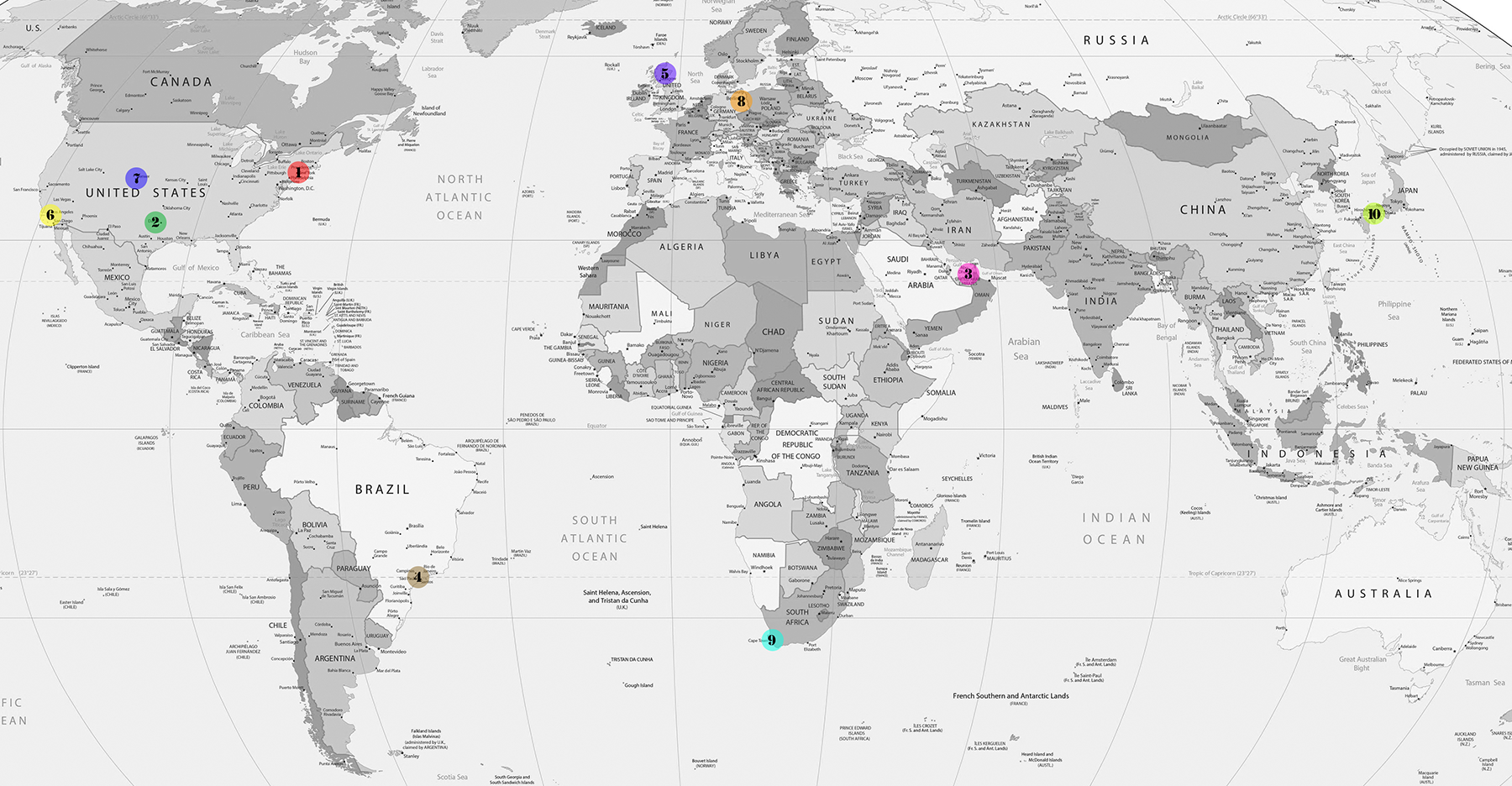
Museums have always had a particular hold on architects, partly because they sit in that rare category of building where the architecture is allowed, and often expected, to matter to the public experience. Most project types are judged first by efficiency, cost, schedule, entitlement risk, parking, leasing logic, and the long list of practical obligations that slowly beat the joy out of everyone involved. Museums still have all of those problems, because civilization has not yet found a way to build anything without meetings, but they also tend to come with a different kind of ambition. There is usually a recognition that the building itself can help attract visitors, shape civic identity, and create a memorable experience before anyone has read a wall label or pretended to understand the more difficult pieces in the collection. Many of these projects are selected through design competitions, invited shortlists, or rigorous architect-selection processes, which means they are not always awarded simply because someone was nearby, inexpensive, or already knew the owner’s cousin. That matters because the museum type gives architects room to demonstrate a wide range of skills: controlled daylight, spatial sequencing, material restraint, gymnastic form-making, technological integration, complicated environmental systems, and sometimes construction techniques that appear to have been developed by people who enjoy making contractors quietly stare into the middle distance. For this episode and accompanying post, the format is simple: ten museums worth seeing before you die, selected not because of the quality or importance of the exhibits themselves, but because the building changes the visit. The criteria here are architectural experience, cultural or civic significance, the relationship between the building and the act of viewing, and the presence of a story behind the design that makes the place more memorable once you understand why it exists the way it does. In other words, this is not a list of the greatest collections in the world. It is a list of museum buildings where the architecture earns the trip.
These are not in order of priority – mostly because I would choose the ones that I haven’t been to first, and that doesn’t help you much.
Solomon R. Guggenheim Museum jump to 08:16
Museum Name: Solomon R. Guggenheim Museum
Architect: Frank Lloyd Wright
Date of Opening: October 21, 1959
Location: New York, New York
Size: could not reliably confirm
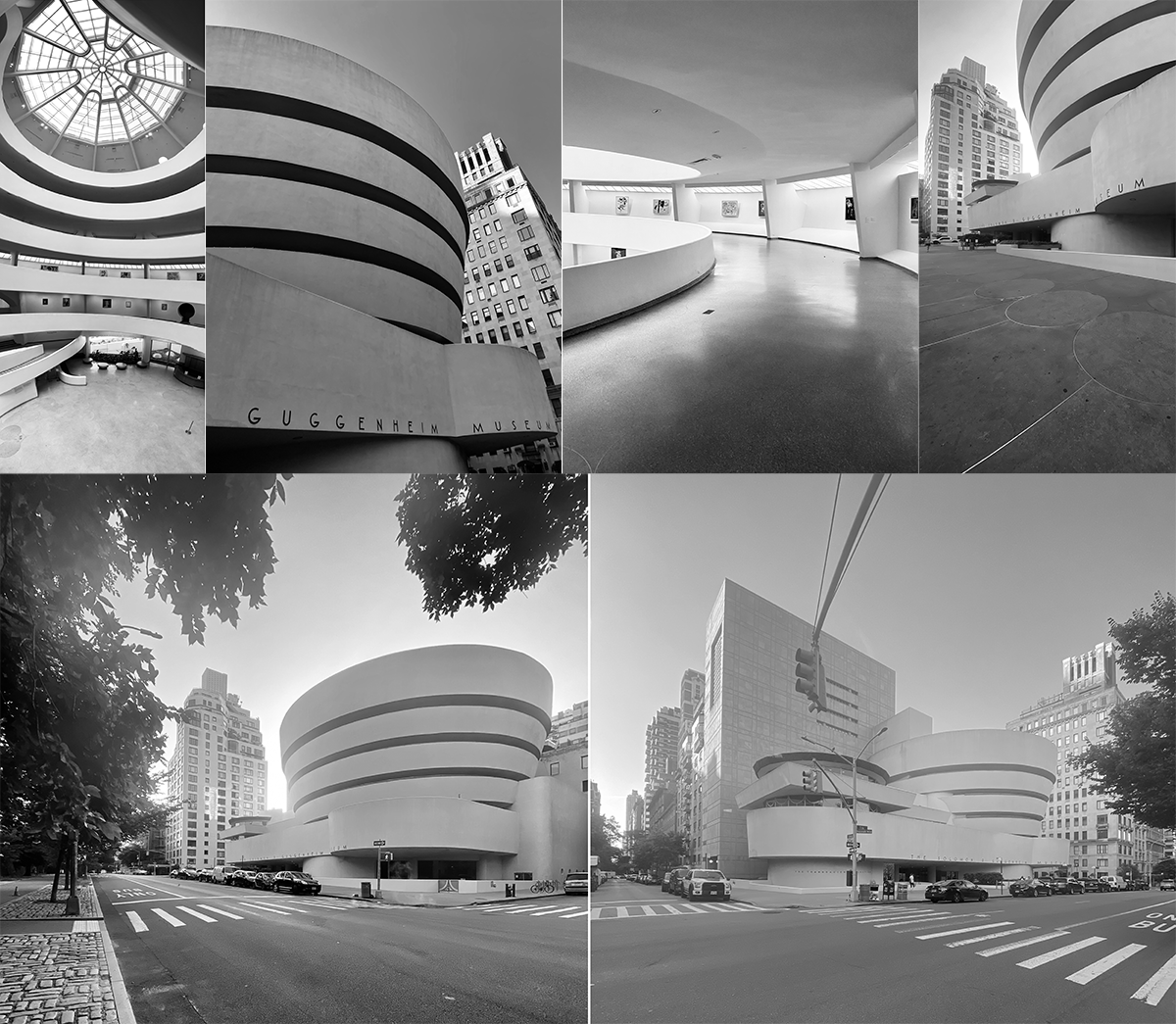
The Guggenheim makes the list because it is one of the few museums where almost everyone remembers the building before they remember what they saw inside it. That is not always a compliment, which is part of why it remains useful as a story. Wright was asked to design a home for Solomon Guggenheim’s collection of non-objective art, and instead of producing the polite sequence of galleries that museums had trained people to expect, he gave New York a concrete spiral. The visit becomes a slow promenade around a central void, with the ramp doing what most museum corridors are too timid to attempt: it imposes a physical rhythm on the act of looking. The building does not simply hold art. It choreographs the visitor.
The story worth using is the long, stubborn birth of the building. Wright received the commission in 1943, but the museum did not open until 1959, six months after his death. The delay involved site acquisition, design revisions, postwar cost issues, and the deaths of key figures, including Solomon Guggenheim himself. The result is a building that arrived almost as a posthumous argument. Wright wanted something radically different, and the art world was not entirely charmed by the idea of hanging paintings on sloped walls in a building that seemed to believe it was the main exhibit. That tension is the narrative hook: the Guggenheim is not a perfect museum if your definition of perfection is neutrality. It is, however, a perfect example of architecture refusing to be background noise. Architecture, naturally, heard “please make us a museum” and responded with “what if I make the museum the thing?”
Kimbell Art Museum jump to 17:29
Museum Name: Kimbell Art Museum (Louis I. Kahn Building)
Architect: Louis I. Kahn
Date of Opening: October 04, 1972
Location: Fort Worth, Texas
Size: 120,000 square feet
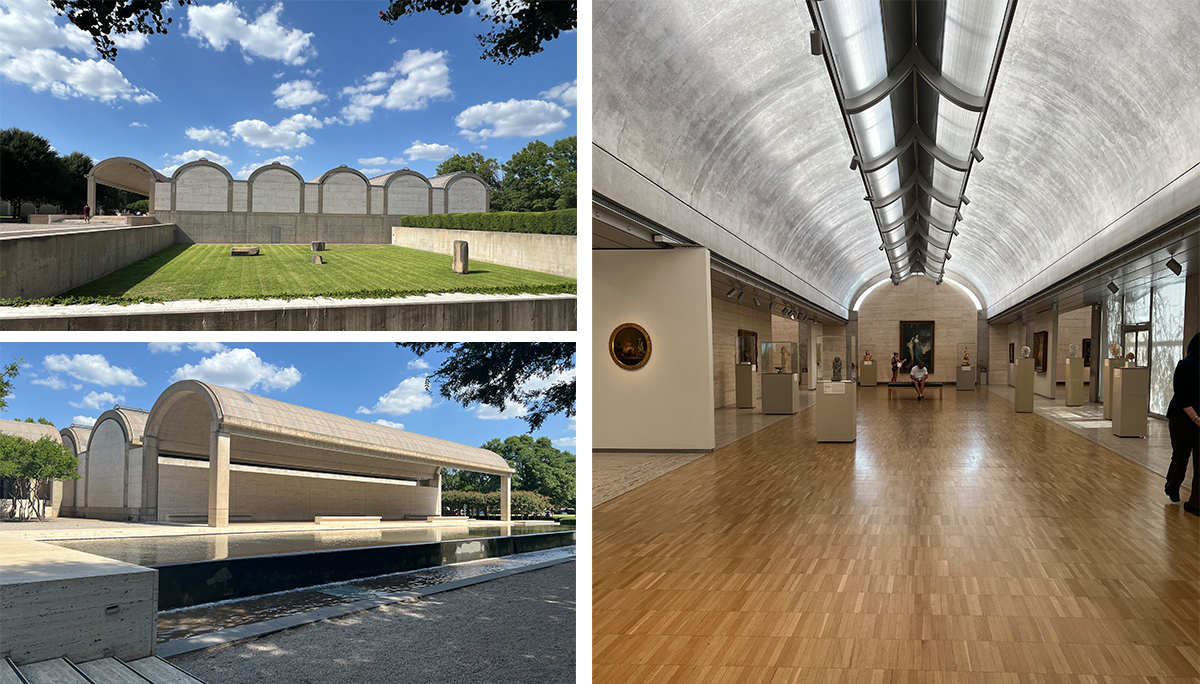
The Kimbell Art Museum is often described as one of the greatest museum buildings ever designed, but what makes it so special is that it was never intended to be a grand monument. The museum is located in Fort Worth, Texas, and was designed by Louis Kahn. The museum opened in 1972, and emerged from the ambitions of the Kimbell Art Foundation. Kay Kimbell’s collecting philosophy centered on acquiring exceptional works rather than building an enormous collection. As a result, the trustees were not seeking a building that would dominate a skyline or compete with the art it contained. They wanted a place where visitors could experience art thoughtfully and without distraction. When Kahn was selected for the commission in the mid-1960s, he approached the project less as a designer of objects and more as a designer of experiences. Kahn was very deliberate and thoughtful in his belief that architecture should elevate human experience rather than simply provide enclosure. He reportedly spent considerable time studying how people view art and move through galleries. That mindset ultimately shaped every aspect of the building. The museum does not rely on spectacle or dramatic gestures. Instead, it achieves its esteemed reputation through an almost relentless pursuit of clarity, proportion, restraint, and atmosphere.
If there is one story that defines the Kimbell, it is the manipulation of light. Kahn believed natural daylight was essential to experiencing art, even though museums traditionally avoid direct sunlight because of the damage it can cause to collections. His solution became one of the most celebrated daylighting systems in architectural history. Sixteen concrete vaults, each 20 ft x 100 ft, are clustered together to form the gallery spaces. Each vault contains a narrow skylight that directs sunlight onto a precisely shaped aluminum reflector. The reflected light is then diffused evenly across the vaulted ceiling and into the gallery below, creating spaces that feel warmly illuminated without glare or harsh shadows. An intriguing part of this story that is less widely known is that developing this system required unusually advanced analysis for the late 1960s. So, engineers used early computer modeling to study the behavior of light within the galleries, making the Kimbell one of the earliest examples of computational tools assisting architectural design.
The building’s palette of concrete, travertine, white oak, stainless steel, and glass reinforce the sense of quiet precision. Nothing appears or feels decorative, yet every material contributes to the serene experience. More than fifty years after opening, architects continue to travel to Fort Worth specifically to study the museum, treating it almost as a pilgrimage site. This project is not an iconic object or extreme architectural gesture, it is a building that demonstrates how light, proportion, material, and structure can be resolved into a remarkably complete architectural idea.
One reason architects continue to study the Kimbell is that the entire building grows from a single idea. The repeated vault serves simultaneously as structure, lighting system, gallery space, and architectural identity. Few museums demonstrate such clarity, which is why this building remains a benchmark for museum design more than fifty years after it opened.
Theme: Pure repeated geometry. One vault module becomes structure, light system, gallery order, and architectural identity.
Louvre Abu Dhabi jump to 31:31
Museum Name: Louvre Abu Dhabi
Architect: Jean Nouvel / Ateliers Jean Nouvel
Date of Opening: November 11, 2017 to the public
Location: Saadiyat Island, Abu Dhabi, United Arab Emirates
Size: Approximately 1,044,098 square feet
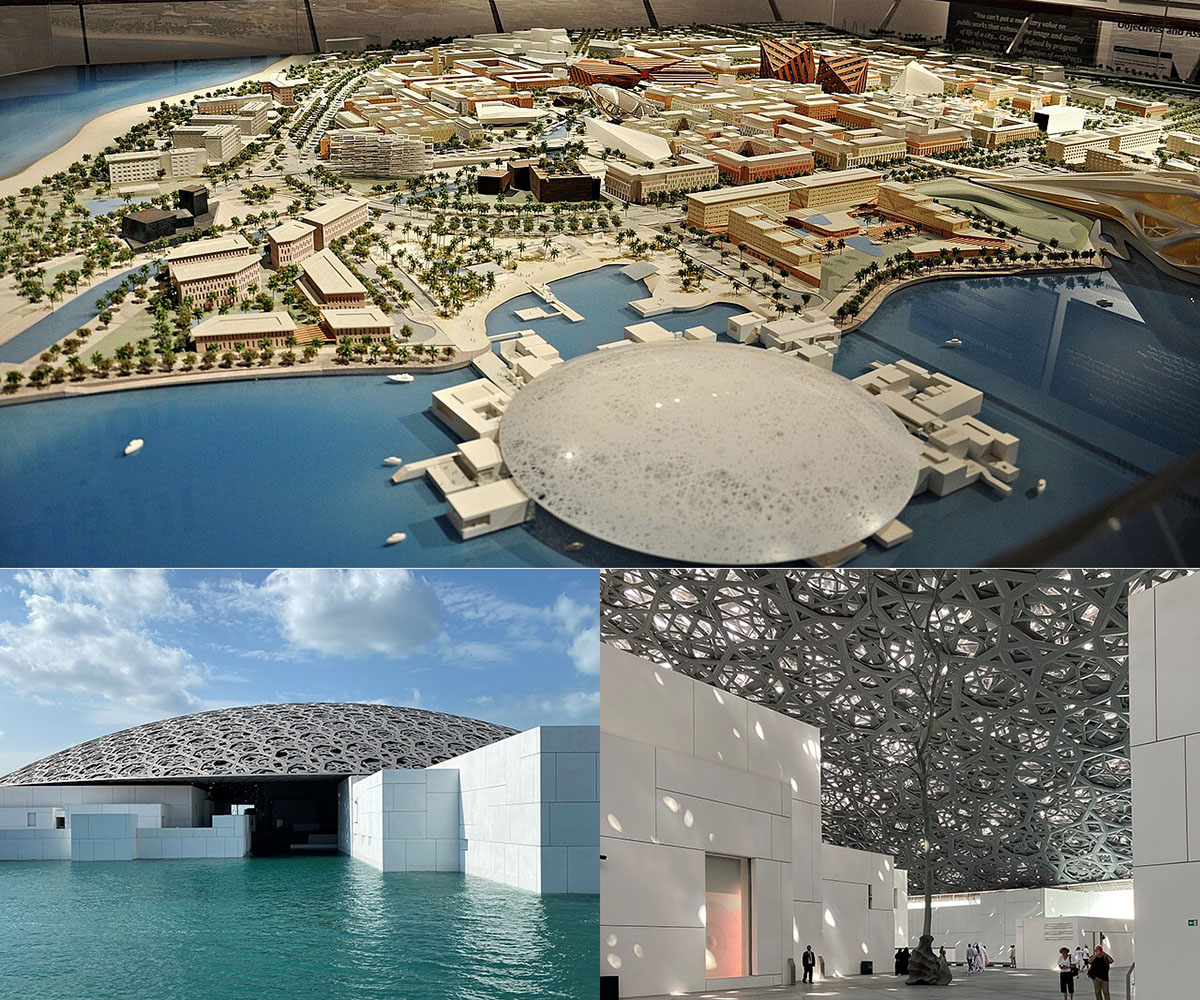
Louvre Abu Dhabi is a museum that begins with atmosphere before it ever gets around to acting like a museum. Before the galleries, before the collection, and before the inevitable conversation about whether attaching the Louvre name to a museum in the United Arab Emirates is culturally elegant or geopolitically complicated, there is the dome, the water, the shade, and the light. Jean Nouvel designed the museum on Saadiyat Island as a kind of museum city in the sea, which matters because this is not a single sealed box with galleries stacked inside it like cultural filing cabinets. The building is composed as a cluster of low white forms gathered beneath an enormous patterned dome, with exterior walkways, water, courtyards, covered passages, and moments where the sea and sky become part of the architectural experience. Moving through it feels less like entering a conventional museum and more like wandering through a shaded urban fragment, where the building is spread across movement, temperature, reflection, and pause. The dome is the image everyone remembers, and for good reason. It filters sunlight through thousands of geometric elements layered overhead, creating what the museum calls a “rain of light,” which sounds dangerously like marketing until you understand what is actually happening. The light is broken, softened, scattered, and animated across the surfaces below, giving the building a sense of movement even when nothing is moving except the sun, which remains one of architecture’s more reliable consultants, mostly because it does not attend meetings.
The deeper story is about climate and cultural translation. Nouvel did not design a museum that pretends Abu Dhabi is Paris with more sun, which would have been the obvious bad version of this project and, sadly, not at all hard to imagine. Instead, the building borrows from regional ideas about shade, water, low-rise urban fabric, screened light, and the basic human need to survive heat without giving up public life. The museum is often described through the idea of a medina, which generally refers to the traditional walled city quarters found throughout North Africa and the Middle East, and that idea helps explain why the project feels less like one monumental object and more like a place to move through. Shelter becomes spectacle, but not in an empty way. The building takes one of architecture’s oldest responsibilities – protection from the sun – and turns it into the central experience. The institution itself adds another layer, since Louvre Abu Dhabi was created through an agreement between France and the United Arab Emirates, giving the museum global ambition, local climate, cultural diplomacy, and architectural theater all at the same time. That combination could have become hollow and over-branded, because architecture and branding have committed plenty of crimes together, but the building has enough spatial and environmental intelligence to hold the tension. The galleries are part of the visit, but the architecture begins before the ticketed room and continues after it. Louvre Abu Dhabi is not only a museum you enter. It is a place you pass through, under shade, beside water, inside filtered light.
Fun Fact: The project initially generated controversy, including an op-ed and petition against it by curators.
Museu de Arte de São Paulo jump to 36:09
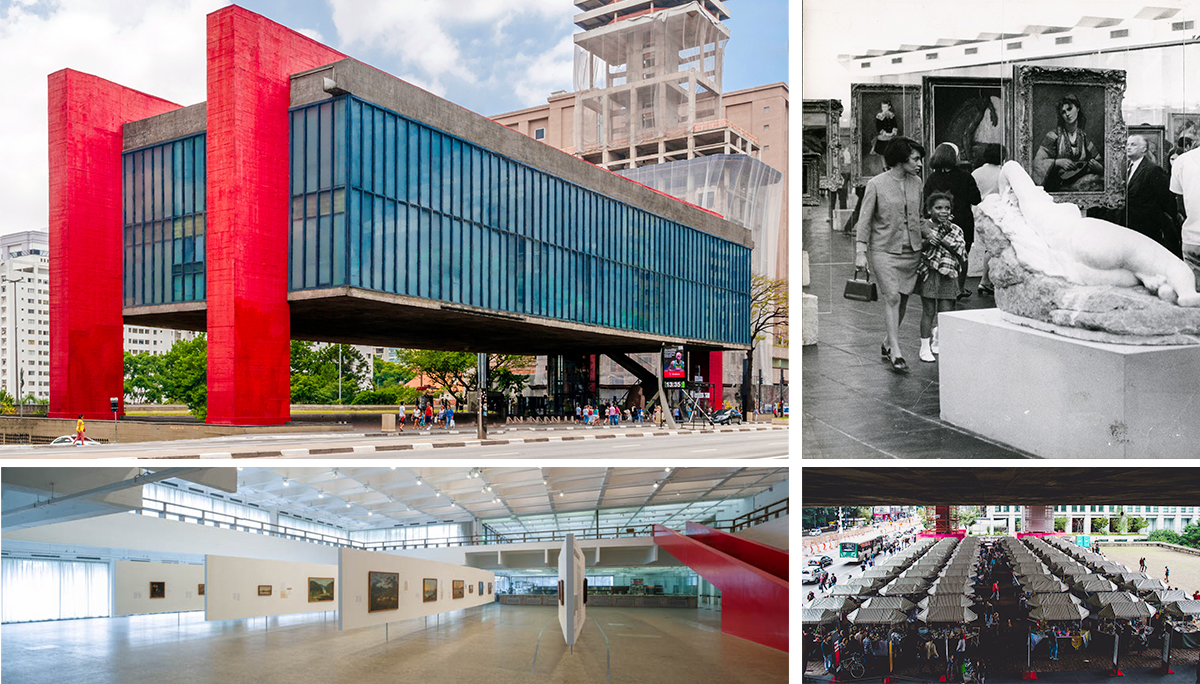
Museum Name: Museu de Arte de São Paulo, MASP
Architect: Lina Bo Bardi
Date of Opening: November 8, 1968 for the Lina Bo Bardi building on Avenida Paulista
Location: São Paulo, Brazil
Size: Approximately 107,639 square feet
The São Paulo Museum of Art, better known as MASP, is one of the most recognizable museum buildings in the world, largely because its response to the constraints of its siting. The museum’s selected site offered one of the most important public views in São Paulo, and local regulations required that the view down the valley remain unobstructed. Many solutions might have responded by shrinking or relocating because of the restriction. But the architect, Lina Bo Bardi, chose a concept that was far more radical. She lifted the museum into the air above the view corridor to create one of the most iconic projects of modernism. Completed in 1968, MASP suspends its primary gallery volume between two massive red concrete beams, creating a vast open space beneath the building. What began as a regulatory constraint became the defining architectural gesture. Yet, for Bo Bardi, the museum was not simply a structural performance. Bo Bardi, an Italian-born architect who immigrated to Brazil after World War II, believed museums should participate in public life rather than isolate themselves from it. By raising the building above the ground, she preserved the city’s view while simultaneously creating a new civic space beneath it, transforming the museum into both a cultural institution and a piece of urban infrastructure. The space “below” the museum has been the scene for many types of community events, from markets, to concerts, to protests.
The engineering required to create this grand gesture was remarkable, especially for that time. The suspended gallery spans approximately 240 feet, making it one of the largest reinforced concrete spans in the world at the time of its completion. More notably, the structure is not hidden behind architecture; it becomes the architecture. The giant beams, exposed supports, and suspended volume collectively define the building’s identity. Equally evocative was her original approach to displaying art. She developed a system of glass easels mounted on concrete bases that allowed works to appear as if they were floating within the gallery. Visitors could move around the paintings in any sequence, challenging many of the assumptions of traditional museum design. The concept, as you can imagine, was controversial, and the easels were removed after her death. But in recent years, as Bo Bardi regained mainstream appreciation for her work, the glass easel system was reinstated as originally intended. MASP was ahead of its time in many aspects, proposing ideas about public space, accessibility, and cultural participation long before those topics became central to architectural discourse. Today the building functions as a museum, a public square, a structural landmark, and ax example that architecture can shape how art is viewed and how that experience can fit into the fabric of a city.
MASP remains influential because it demonstrates how much architecture can accomplish with just a few simple moves. A suspended box, two giant beams, and an open plaza create a museum that is simultaneously a gallery, a landmark, and a public gathering place. The building feels larger than its footprint because its architecture extends into the life of the city around it.
Theme: Pure geometric objects in tension. A suspended rectangular volume, massive beams, vertical supports, and an urban void. Simple in concept, but broader in its public and civic impact
V&A Dundee jump to 40:40
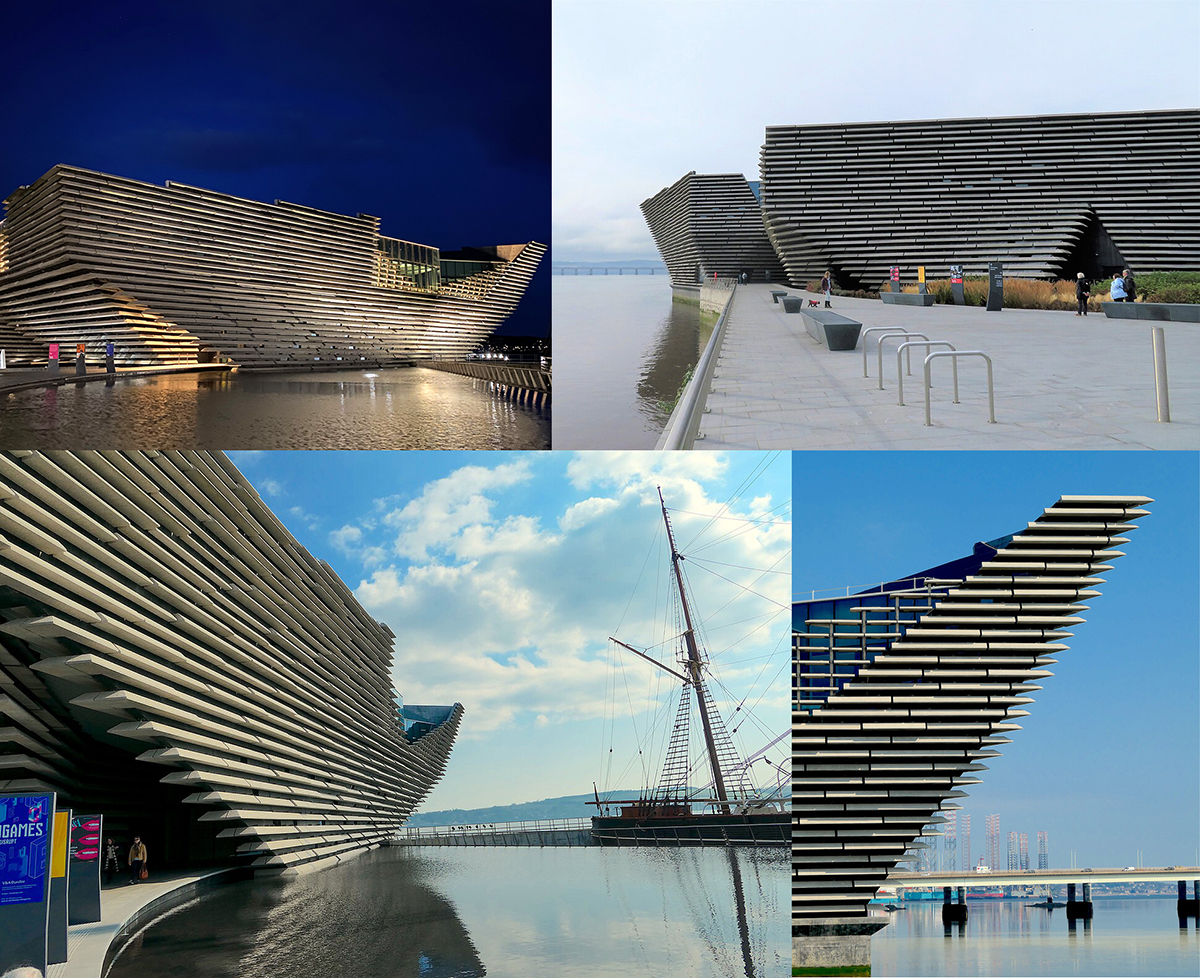
Museum Name: V&A Dundee
Architect: Kengo Kuma & Associates
Date of Opening: September 15, 2018
Location: Dundee, Scotland
Size: Approximately 90,901 square feet
V&A Dundee is interesting because it was never just asked to hold exhibitions. It was being asked to help repair a relationship between a city and its river, which is a lot to put on a museum, but apparently buildings do not get to have manageable job descriptions anymore. Dundee had a long history with the River Tay, but over time, infrastructure, filled docks, roads, and waterfront development had weakened that connection. The river was still there, obviously, because rivers tend to be stubborn that way, but the city’s public relationship to it had been compromised. When Kengo Kuma won the international competition for the project, the building became part of a larger effort to bring people back to the water and make the waterfront feel civic again, not just leftover space at the edge of town. That is part of what makes the museum worth considering for this list. It is not only about what happens inside the galleries. It is about whether a building can change how people move through a city and how they understand the place where they live.
The building opened in 2018 as the first V&A museum outside London, and Kuma’s design has a rugged, layered quality that feels appropriate for the edge of a Scottish waterfront. The exterior is wrapped in horizontal precast concrete elements that suggest cliffs, erosion, weather, and geology, which gives the building a kind of rough coastal presence rather than the polished look of something dropped in from a luxury retail district. Kuma’s office has described a central void, or cave, running through the building to connect the River Tay with the axis of Union Street, and that idea gives the project its most important architectural move: the museum is not just an object sitting at the water, it is a passage toward it. The technical side matters too, because that cliff-like form had to become curving walls, thousands of panels, structure, drainage, tolerances, and all the other unglamorous realities that stand between a poetic idea and an actual building that does not leak itself into embarrassment. V&A Dundee may or may not be the most dramatic museum on the list, but its ambition is different and worth evaluating. It treats the museum as connective tissue – part cultural destination, part waterfront marker, and part attempt to make a city look back toward the river that helped shape it.
The Getty Center jump to 44:35
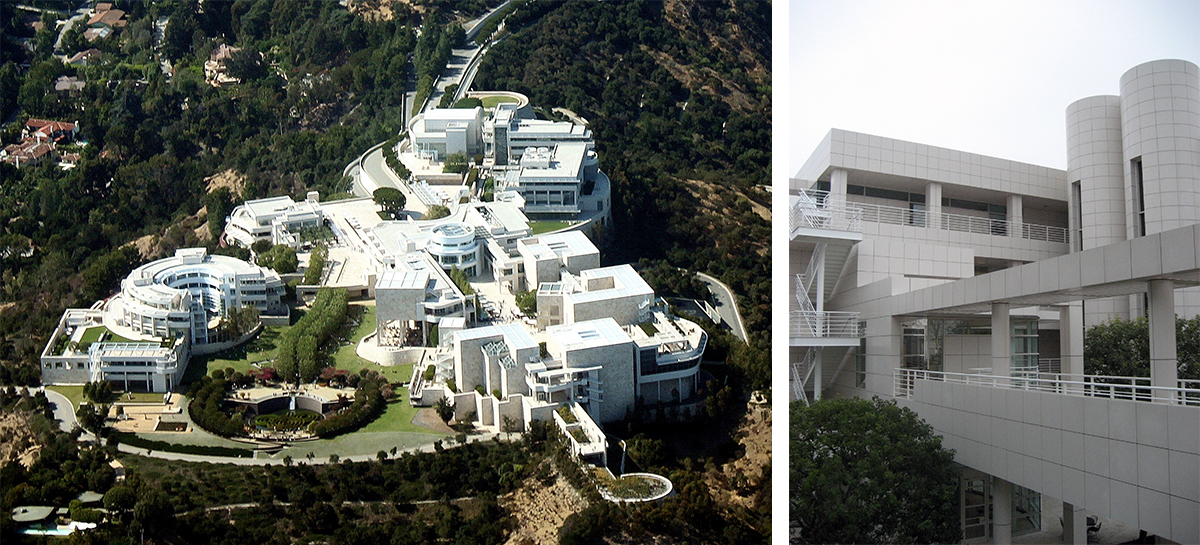
Museum Name: Getty Center
Architect: Richard Meier & Partners Architects
Date of Opening: December 16, 1997
Location: Los Angeles, California
Size: approximately 360,000 square feet main museum (110 acre total site)
Perched high in the Santa Monica Mountains above Los Angeles, the Getty Center by Richard Meier occupies a ridgeline overlooking the city below. The institution grew from the vast fortune and art collection of oil magnate J. Paul Getty, but by the late twentieth century the Getty Trust had ambitions that extended well beyond exhibition galleries. The complex consists not just a single building but as a collection of museums, research facilities, courtyards, gardens, terraces, and public spaces assembled across 110 acres. The project is notable for its extraordinary cost, exceeding one billion dollars when completed in 1997, making it one of the most expensive cultural projects ever undertaken. Yet much of that investment is hidden within conservation labs, archives, research facilities, and infrastructure that support the institution’s broader mission. Designed by Richard Meier and opened in 1997, the Getty remains one of the most ambitious cultural projects of the modern era, not because of any single building, but because of the scale and precision of the entire composition.
That precision and control begins when visitors park at the base of the hill and board a tram that carries them up the mountain toward the campus. The sequence is deliberate, creating a gradual transition between the city and the institution. That precision becomes even clearer the longer time spent on the campus. Meier’s reputation was built on geometric clarity, and nowhere is that more evident than here. The architecture reflects a larger ambition for precision and control. Rather than organizing the project around a single form, Meier developed a network of buildings, courtyards, terraces, gardens, and circulation routes governed by overlapping grids and geometric systems. The campus appears effortless, but it is remarkably controlled. Nearly every element, from walls and windows to paving and railings, relates back to a rigorous ordering framework. The resolution of the multiple and complex geometries is astonishing. While Meier was unable to use his characteristic white exterior due to city regulations, even the use of Italian travertine reinforces the architecture’s sense of order, introducing warmth and texture without disrupting the rigor of the larger composition. The result is a campus that feels both monumental and remarkably coherent despite its size and complexity.
The Getty remains influential because geometry is central to the design, but it operates across an entire campus of interconnected spaces and institutions. The result is a museum that functions not only as a place for art, but as a cultural landscape at an almost urban scale.
Theme: Geometry as campus system. Multiple grids, rotations, axes, courtyards, terraces, and material modules are resolved into a larger institutional landscape.
Clyfford Still Museum jump to 46:50


Museum Name: Clyfford Still Museum
Architect: Brad Cloepfil / Allied Works Architecture
Date of Opening: November 18, 2011
Location: Denver, Colorado
Size: 28,500 square feet
The Clyfford Still Museum is unusual because it does not start with a city deciding it needed another museum, or a board trying to raise money for a new cultural attraction, or some institution looking for a better lobby with a donor wall and improved restroom access, although I’m sure those conversations eventually showed up like they always do. The story really begins with Clyfford Still himself, one of the major figures associated with Abstract Expressionism, who did not follow the normal script of art-world fame. Still pulled away from the commercial gallery system, resisted the regular circulation of his work, and put strict conditions on what would happen to his estate after his death. Most artists want their work to spread as far as possible. Still held much of his back. He wanted a permanent home dedicated solely to his work, and until a city agreed to create that place, a huge portion of his life’s output remained largely unseen. Denver eventually became that city, and when the museum opened in 2011, it was not simply putting a collection on display. It was unlocking decades of work that had been protected, restricted, and waiting.
That makes the building feel different before you even start talking about the architecture. Designed by Allied Works Architecture, led by Brad Cloepfil, the museum has a kind of grounded seriousness that fits the story behind it. It is a textured concrete building, dense and quiet, with galleries shaped around Still’s paintings rather than around the vague promise of future flexibility, which is usually how institutions politely avoid making decisions. Still’s work is large, vertical, rugged, and forceful, and the building does not try to outmuscle it. It gives the paintings weight, light, and room without turning the visit into an architectural fireworks show. That restraint is what makes the museum so compelling. It feels part archive, part sanctuary, part vault, and part delayed public reckoning. The building does not treat Still’s biography as something to explain on a wall label. It becomes the place where that biography finally resolves into public experience, quietly but firmly, on the artist’s own terms.
Jewish Museum Berlin jump to 50:29
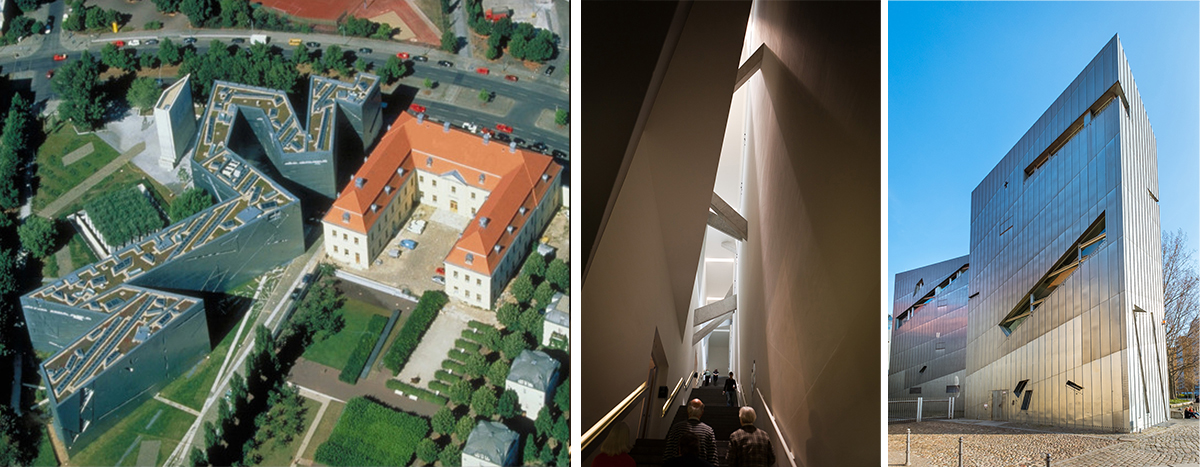
Museum Name: Jewish Museum Berlin
Architect: Daniel Libeskind
Date of Opening: September 9, 2001 (official) 1999 (tours/construction completed)
Location: Berlin, Germany
Size: 166,840 square feet
The Jewish Museum Berlin is one of the few museums where visitors often remember the building as vividly as the exhibitions themselves. Designed by Daniel Libeskind and opened in 2001, the project emerged from Germany’s effort to acknowledge and communicate the long and complex history of Jewish life within German society. Libeskind won an international competition from among nearly 200 entrants. This project was his first ever built work. What makes the museum belong on this list is that it became famous before it even contained a collection. The museum construction was completed in 1999, but exhibitions were not installed until two years later. During that two year period, hundreds of thousands of visitors came simply to experience the architecture and the building itself had become the attraction. For many, this museum represented a new way of thinking about cultural institutions, one in which architecture could actively participate in telling the story rather than simply providing a neutral backdrop for exhibitions and artifacts.
From the exterior, Libeskind’s addition appears as a sharply fractured zinc-clad form, often compared to a lightning bolt cutting across the city. The building resists the clarity and symmetry typically associated with public architecture. Instead, its angled walls, irregular windows, and jagged geometry create an immediate sense of disruption. Libeskind developed the form based on a concept he called “Between the Lines,” exploring the relationship between the continuity of German-Jewish history and the rupture caused by the Holocaust. The entire experience of this museum is unique. Visitors enter through an adjacent historic structure before descending underground and emerging into Libeskind’s fractured zinc-clad addition. Inside, a series of intersecting circulation routes, known as the Three Axes, guide visitors through spaces associated with continuity, exile, and the Holocaust. The building’s most memorable spaces, including the Holocaust Tower, the Garden of Exile, and the vertical Voids that cut through the museum, are designed to evoke feelings of absence, disorientation, and loss. Even the irregular windows contribute to the building’s unsettling character. Unlike many museums that seek clarity and comfort, the Jewish Museum intentionally introduces uncertainty and emotional tension, making architecture itself part of the visitor’s experience.
This museum utilizes its geometry does more than organize space. The fractured form, angled walls, and interrupted circulation all contribute to the story being told. Architecture becomes part of the narrative, demonstrating how form can communicate ideas, memory, and meaning in ways that extend beyond the exhibits themselves.
Theme: Geometry as narrative force. The line is fractured, symbolic, directional, and emotionally charged. Geometry is no longer just order. It carries historical meaning.
Zeitz MOCCA jump to 53:16
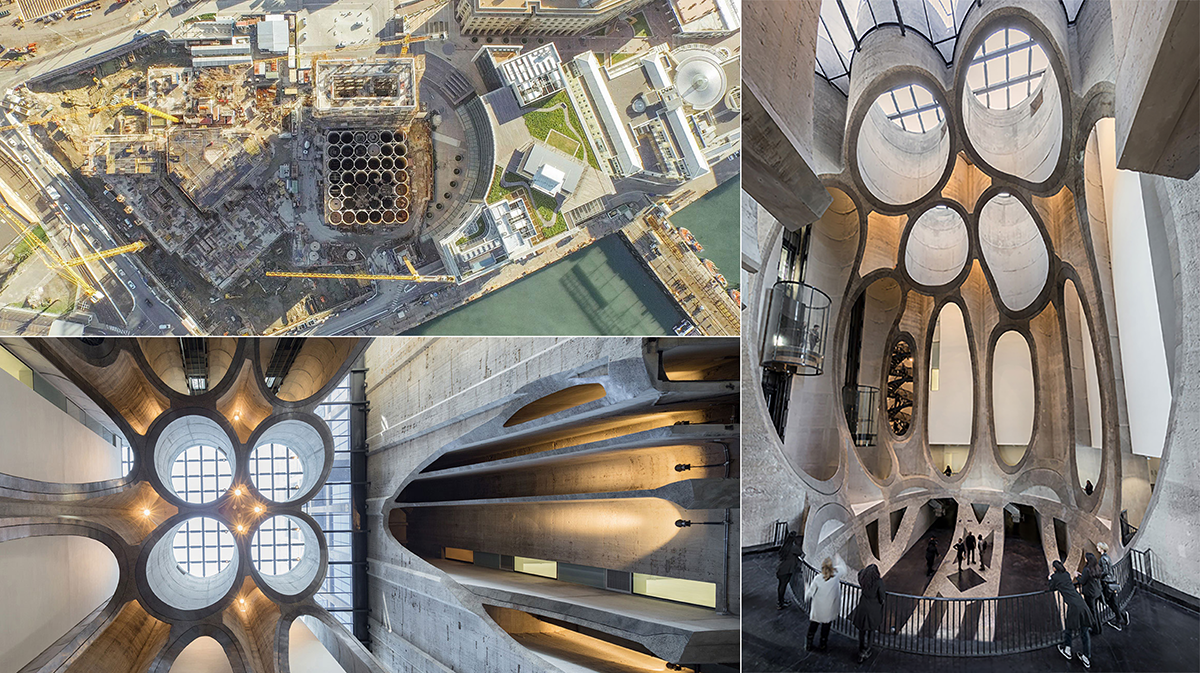
Museum Name: Zeitz Museum of Contemporary Art Africa, Zeitz MOCAA
Architect: Heatherwick Studio
Date of Opening: September 22, 2017
Location: Cape Town, South Africa
Size: Approximately 102,257 square feet
Zeitz MOCAA starts with a building that had no original intention of being a cultural space, which is part of what makes it such a good story. It was a grain silo complex in Cape Town, part of the working machinery of the harbor, designed to store and move maize rather than frame contemporary art. The original structure was repetitive, massive, blunt, and practical, which is another way of saying it had the kind of architectural honesty people spend a lot of money trying to fake later. By the time Heatherwick Studio was brought in, the silo had outlived its original purpose, and there were plenty of easier ways this could have gone. It could have been demolished. It could have been preserved as a shell while something ordinary happened inside. It could have become one of those adaptive reuse projects where everyone points reverently at an old wall while the rest of the building quietly gives up. Instead, Heatherwick Studio cut into the concrete tubes of the silo to create the museum’s central atrium, using the enlarged geometry of a grain kernel as the conceptual starting point. That idea is almost too neat, except it works because it is tied directly to what the building used to be. A structure that once stored grain was opened around the shape of grain, turning its former purpose into the memory of the new space.
That is what makes the interior so memorable. It feels less assembled than excavated, as if someone discovered a public room hidden inside the solid mass of the building and then had the good sense not to smooth away all the evidence. The cut concrete tubes rise around you with the force of an industrial cathedral, which is a phrase that gets overused until a building actually earns it, and this one does. The concrete is not decoration. It is the old body of the building, altered but still present, and that gives the visit a physical charge before the art even enters the conversation. Zeitz MOCAA was also created as a major museum for contemporary art from Africa and its diaspora, located in Cape Town, inside a former piece of waterfront infrastructure rather than in the usual orbit of European and North American museum power. That shift matters, and the building carries it well because its transformation is easy to understand without flattening it into a slogan. Storage becomes culture. Infrastructure becomes public space. A harbor machine becomes a museum. The building was not cleaned up and disguised as something polite. It was opened, and the cut is the story.
Chichu Art Museum jump to 56:27
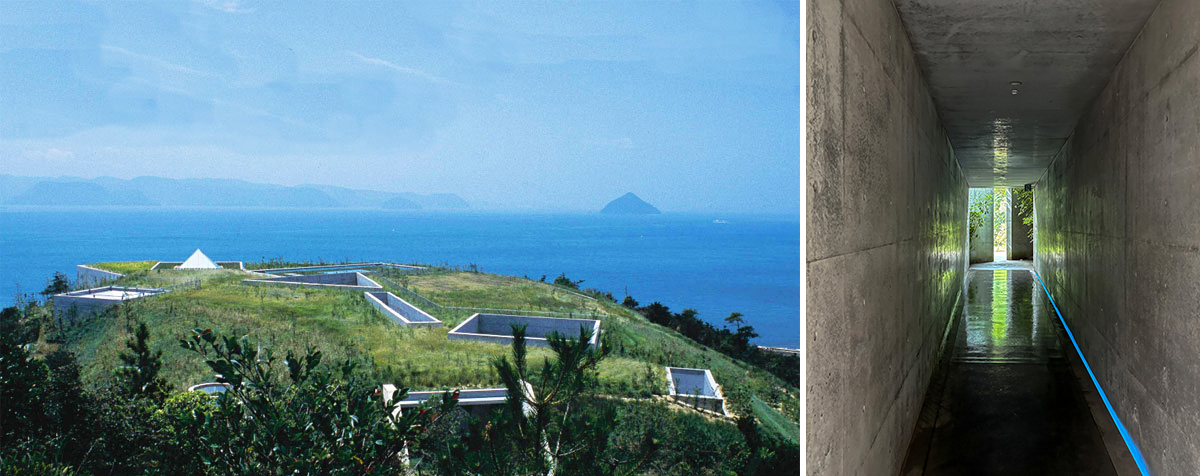
Museum Name: Chichu Art Museum
Architect: Tadao Ando
Date of Opening: July 18, 2004
Location: Naoshima, Kagawa Prefecture, Japan
Size: 29,060 square feet
The Chichu Art Museum is on this list because of its defining architectural decisions to disappear and be anti-object. Designed by Tadao Ando and opened in 2004 on the island of Naoshima, Japan, the museum is built almost entirely underground to preserve the surrounding landscape and views of the Seto Inland Sea. The project emerged from the Benesse Art Site Naoshima initiative, which was an effort to transform the small island into an international destination for art and architecture. While many modern museums seek visibility in the use of grand forms and gestures, the Chichu does exactly the opposite and almost hides itself from view. As a visitor, you can stand near the building and have little understanding of its true size or complexity. Rather than creating a monumental object, Ando developed a museum where art, landscape, and architecture become inseparable. Even the name reflects this idea. Chichu translates roughly as “within the earth.”
Although largely hidden from view, the museum is anything but informal. Ando organized the project through a series of precise geometric forms carved into the landscape. Squares, triangles, rectangles, courtyards, and light wells are connected through carefully choreographed sequences of movement, creating an architecture that unfolds gradually rather than revealing itself all at once. Natural light becomes the primary building material, entering galleries through carefully positioned openings cut into the earth and changing throughout the day and across the seasons. The experience is one of both indoors and out, illumination and shadows. The museum was designed around a collection of less than ten permanent installations by Claude Monet, James Turrell, and Walter De Maria, allowing architecture and artwork to develop in unusually close dialogue. The famous Monet Gallery, illuminated entirely by natural light, feels more like a contemplative sanctuary than a conventional exhibition space, while Turrell’s installations blur the distinction between architecture, light, and perception. Throughout the museum, visitors are constantly moving between enclosed concrete volumes and open courtyards, creating a sequence of compression, release, darkness, and illumination that becomes central to the experience of the building itself. The result is a museum that is difficult to fully understand through photographs because its power depends on movement, sequence, and experience.
The Chichu Museum is important because it abandons the idea of museum as an architectural object. Beneath the landscape, a series of precise geometric forms organize light, movement, and perception, yet most of that remains invisible from outside. The architecture has to be discovered. Arguably, Chichu represents a point where geometry stops being something to look at and becomes something to experience.
Theme: Geometry as hidden experience. The exterior almost disappears, while the interior uses precise geometric volumes, cuts, courts, and light wells to shape perception.
Ep 203: Ten Museums to Visit Before You Die
What makes museums so valuable to visit, especially for architects, is that they ask more of a building than simple accommodation. A good museum has to support the work inside while also shaping the experience of moving through it, and that balance is harder than it looks. The best examples can be quiet or theatrical, buried or monumental, civic or intensely personal, but they all remind us that architecture is not only about solving practical problems. It is also about shaping attention, memory, and the way people understand a place. For architects, visiting these buildings is not just architectural tourism. It is a chance to see the profession working at full range, occasionally even behaving itself.
Travel on,

Special thanks to our sponsor Construction Specialties, maker of architectural building products designed to master the movement of buildings, people, and natural elements. Construction Specialties has been creating inspired solutions for a more “intelligently built” environment since 1948. Visit MasteringMovement.net to learn more.