
Starting something new is usually less about knowing what you are doing and more about being just uncomfortable enough with the way things are to try something different. That was more or less how this podcast began, with a website that had grown beyond the casual creative outlet it was supposed to be, a schedule that no longer seemed interested in personal boundaries, and the vague belief that talking into microphones might somehow be easier than writing another post. The first episode was called “Character Development,” which at the time sounded like a reasonable introduction to who we were and what we thought the show might become. More than 200 episodes later, it feels less like a title and more like evidence. Welcome to episode 204: Character Development – Revisited.
[Note: If you are reading this via email, click here to access the on-site audio player] Podcast: Embed Subscribe: Apple Podcasts | Spotify | Android | iHeartRadio | TuneIn

Today we are going to be revisiting the very first topic we ever recorded, which was “Ep 001: Character Development.” At the time, that episode was mostly an introduction – who we were, why the podcast existed, and what we thought we might talk about if this thing somehow lasted more than a few episodes. Since we are now more than 200 episodes in, which feels both impressive and mildly irresponsible, I thought it would be worth going back to that first conversation and asking what we thought this show was going to be, what it actually became, and what it probably reveals about us now.
What Ep 001 Was Trying To Do jump to 06:58

Episode 001 was trying to do something pretty straightforward. We needed to introduce ourselves, explain why the podcast existed, and give people some sense of what we thought it might become. At the time, the Life of an Architect website had grown into something larger than I expected, which sounds like a good problem to have because, in many ways, it was. People were reaching out, asking questions, looking for advice, and sharing their own experiences with the profession. That was meaningful. It was also taking over. I was spending more than 15 extra hours a week just responding to emails, and while I genuinely appreciated that people trusted me enough to ask for help, the website was starting to feel less like a creative outlet and more like another job with no clear off switch.
The podcast was partly an attempt to protect the original intent of the website. I wanted a place where I could still think through architecture, practice, and the profession in a way that felt more immediate and conversational. The slightly ridiculous part is that I had barely listened to podcasts before deciding to start one. I spent the two weeks leading up to that first recording listening mostly to podcasts I had been a guest on, not because I needed more of my own voice in my life, which would be a troubling diagnosis, but because I was trying to understand the shape of the thing. I was essentially trying to bubble diagram a podcast. How does it start? How does it move? How much structure does it need before it stops feeling like a conversation?
A lot of that first episode was also about documenting our own thinking. What do we think is important? What kinds of conversations are worth having? At the time, the possible topics were broad and fairly predictable – salary, sketching, software, architecture school, firm size, residential work, construction, architectural photography, products we liked, and even architects designing their own houses. Some of those topics eventually became episodes, and some became recurring themes, whether we planned it that way or not. Landon being part of that first version of the show was also intentional. I did not want the podcast to become two older architects explaining the profession from a single generational viewpoint, which is how you end up with Old Timer’s syndrome and a microphone. The first episode was trying to establish that this would be a conversation, not a lecture, and that the value of the show would come from working through the profession in public rather than pretending we had already figured it out.
What We Both Misunderstood jump to 24:12

At the beginning, I thought the hard part of podcasting would be the technology. Microphones, recording software, editing, uploading, file management, and all the small mechanical pieces that make you question whether progress is actually helping anyone. Those things mattered, and there was definitely a learning curve, particularly for someone who had not really listened to podcasts until about two weeks before starting one, which is a ridiculous sentence but also completely true. What I did not fully appreciate was that the technical side was not what would make the show work. The harder thing was learning how to create a conversation with enough direction to be useful, but not so much structure that it sounded like two people politely reading talking points at each other.
The same was true of the audience. Early on, I probably assumed people were coming primarily for the topic – salary, sketching, architecture school, firm size, residential work, or whatever else we had decided to put in front of the microphones that day. The topic still matters because otherwise, we are just two architects circling the drain in real time, but I think (and hope) people stay because they recognize the thinking behind the topic. They hear us working something out, changing our minds, disagreeing with ourselves, or realizing halfway through an answer that the thing we used to believe was maybe only partly true. That is different from simply delivering information. It is messier than that, but probably more useful.
Editing and preparation became part of that same lesson. In the first episode, I said I did not intend to edit much because real conversations have stumbles, and I still mostly believe that. What has changed is that I now understand editing less as correction and more as rhythm. It is knowing when a tangent is adding energy and when it has wandered into the weeds and started ordering mail. Preparation works the same way. Being prepared is not just knowing what I want to say. It is knowing what kind of conversation we are trying to have, while still leaving enough room for the better ideas to show up uninvited. Too much structure can flatten the whole thing before it starts, and too little structure leaves us discovering, in real time, that enthusiasm is not the same thing as a point of view.
The biggest shift has probably been understanding chemistry. I used to think chemistry meant two people got along, which is part of it, but not nearly enough. In a podcast, chemistry is timing, trust, restraint, recovery, and knowing when to let the other person keep talking because they are actually getting somewhere. It is knowing when to push back, when to make the joke, when to move on, and when to admit that the thing you just said was probably not as smart as it sounded in your head. More than 200 episodes later, I think podcasting is less about talking than I once believed. It is about listening in public, which is a strange thing to build a show around, but it is probably why this one still works. The audience is not just listening to what we think. They are listening to us figure out why we think it.
Why the Podcast Is Still Worth Recording jump to 41:58
What still feels true is that the podcast gives us a place to think out loud about the profession in a way that feels honest. Not perfect, not overly prepared, and definitely not polished to the point where all the useful edges have been sanded off. Architecture can be a strange profession because everyone seems to have opinions about what matters, but most of those conversations happen in rooms where people are either trying to sound smarter than they are or trying not to get fired. This show has always worked best when it gives us permission to talk about the parts of practice that are harder to explain – how decisions get made, why certain things matter, what we used to believe, and where we might have been wrong.
The other thing that still feels true is that the podcast creates a record of how our thinking changes over time. That was part of the original idea, even if I probably didn’t understand it that way at the beginning. We are documenting a version of professional growth that is less about credentials and more about judgment. The topics matter, but the real value is often in the conversation around the topic – the side roads, the disagreements, the moments where one of us says something and realizes halfway through the sentence that it might be more true than we expected. That still feels worth doing.
I also think the show continues to matter because it makes the profession feel a little less opaque. There are plenty of places to see finished buildings, awards, photographs, diagrams, and all the other architectural evidence we like to polish for public consumption. There are fewer places where people talk plainly about what it feels like to actually do the work, manage the expectations, learn from mistakes, and keep showing up after the original novelty has worn off. If the podcast still has a reason to exist, I think that is probably it. It gives us a way to talk about architecture as a lived experience, not just a finished product.
What the Show is Now 200+ Episodes Later jump to 53:12
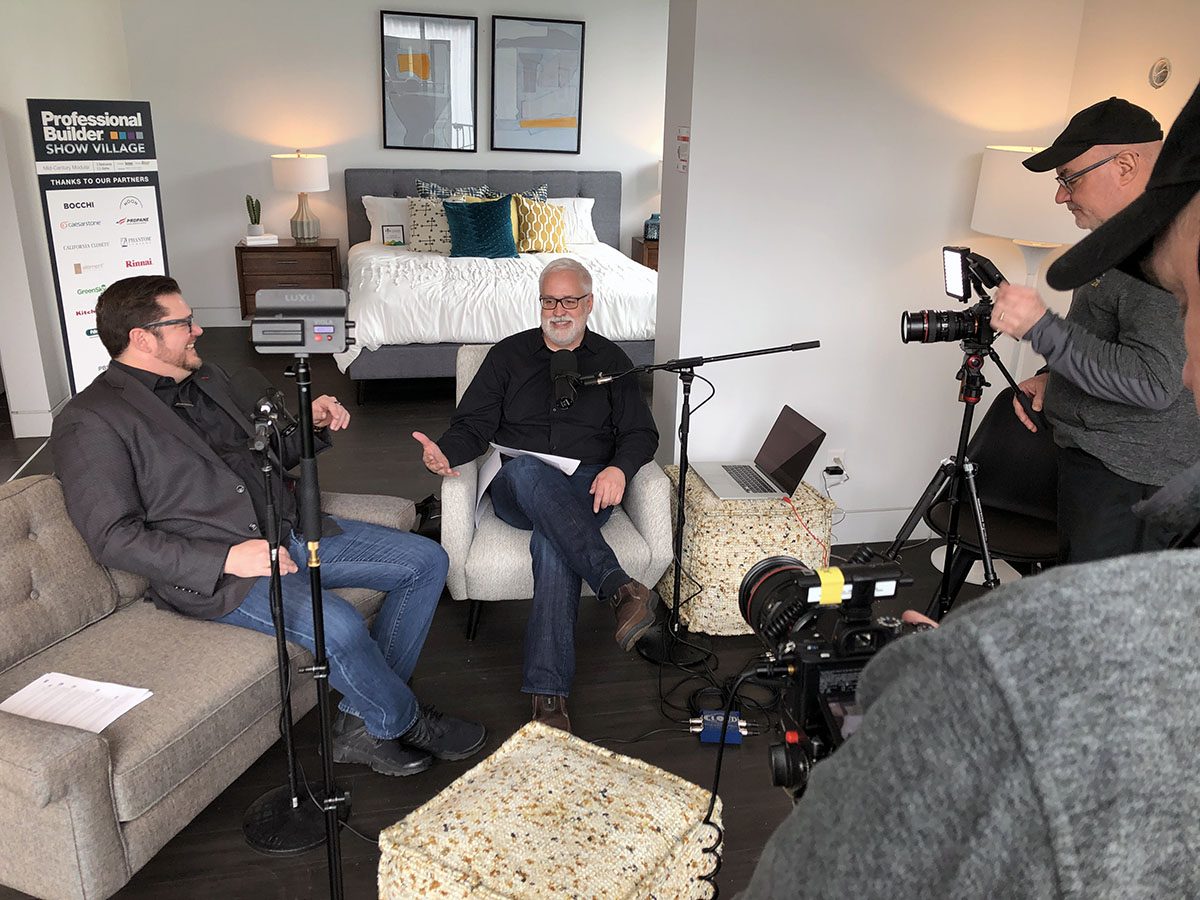
The show now is different because we are different. That sounds obvious, but it matters. We are not the same people who started this, and we are definitely not the same people who thought a podcast would be a simple way to keep a creative outlet alive. More than 200 episodes later, the show has become less about introducing topics and more about testing what we actually think about them. Sometimes that is energizing. Sometimes it feels like we are walking into the same room from a different door, hoping there is still something useful to say once we get there.
There is also the reality that the longer you do this, the more difficult it becomes to pretend every topic is brand new. We have talked about design, clients, school, practice, leadership, technology, mentorship, firm culture, and the strange emotional damage that seems to come free with a career in architecture. At some point, the question is not whether there are more topics. There are always more topics. Architecture is very generous that way, mostly because it refuses to solve its own problems. The better question is whether we have a new enough perspective to make the conversation worth having again.
That is where career changes matter. The show has followed us through different stages of practice, responsibility, leadership, and life. The things I cared about when this started are not always the same things I care about now. Some of that is experience. Some of it is fatigue. Some of it is probably the accumulated effect of answering too many emails from people who begin by saying, “I have a quick question,” and then proceed to describe a constitutional crisis. The podcast has changed because our sense of what matters has changed.
Burnout is part of the conversation, whether we call it that or not. There are times when preparing for another episode feels like pulling one more chair up to a table that is already too crowded. The topics do not always arrive neatly, and the energy is not always there just because the calendar says it should be. It is not powered by novelty anymore, it is powered by the belief that, even after all this time, there is still value in slowing down long enough to say what we actually think.
More than 200 episodes later, I think the show is less about proving we have answers and more about showing how our answers have changed. That feels like the evolution. We are not trying to be the definitive voice on architecture, which would be unbearable for everyone involved. The show works because it is two people still paying attention, still arguing with their own assumptions, still finding the parts of practice that are worth talking about after the shine has worn off. That may not sound like a grand mission statement, but it is probably a more honest one.
Ep 204: Character Development Revisited
Revisiting the first episode is less about nostalgia for me than recognizing how much this show has tracked my own change. What started as a way to keep the website from becoming nothing but maintenance has turned into a place where I can still work through what I think about practice, leadership, judgment, and the profession I have now spent most of my life trying to understand. The title still fits, probably better now than it did then, because character is not something established in an introduction. It gets revealed over time, usually through repetition, adjustment, fatigue, and the occasional realization that I was more confident than correct. More than 200 episodes later, that still feels like a reason to keep showing up and working things out in public.
Carry on, and thanks for the ride.

Special thanks to our sponsor Construction Specialties, maker of architectural building products designed to master the movement of buildings, people, and natural elements. Construction Specialties has been creating inspired solutions for a more “intelligently built” environment since 1948. Visit MasteringMovement.net to learn more.